
Wind Breaks The Seal Long Before It Takes The Shingle
The shingles on your lawn are the obvious part. The expensive part is the eighty shingles still on the roof whose seal strips let go in the same gust and laid back down looking untouched. We find those, and we find the framing damage under them that most inspections never get to.
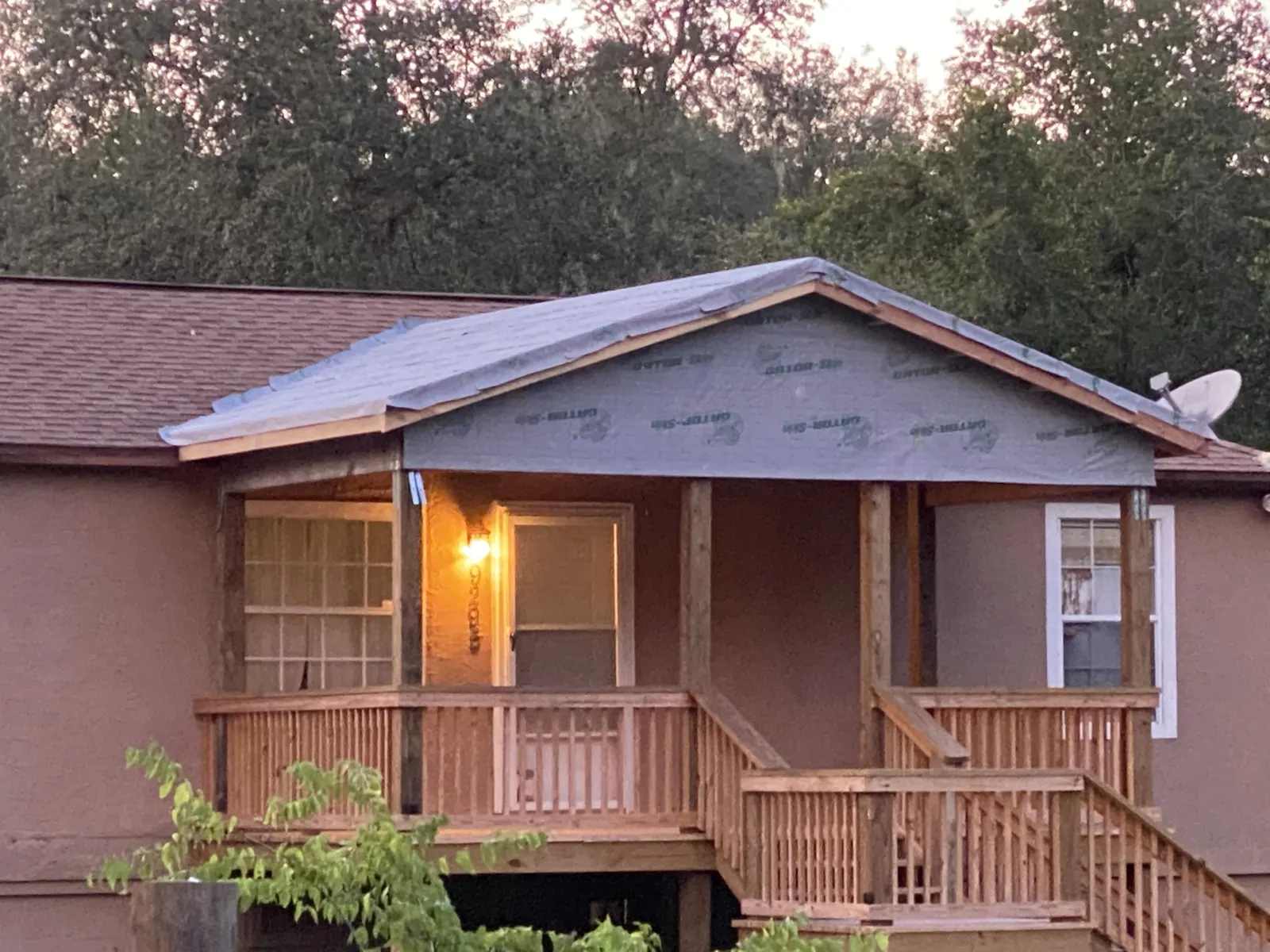
Gable reframed and wrapped · Structural wind repair
The Seal Strip Is The Whole Story
Every asphalt shingle has a bead of thermally activated adhesive across its face. Sun heat softens it, the shingle above settles into it, and the two bond into what is effectively one surface. That bond is the only reason a roof survives a Chicago wind at all. Nails hold the top edge. The seal strip holds the bottom edge down, and the bottom edge is what the wind grabs.
When a gust gets under a tab, one of three things happens. Best case the seal holds. Worst case the tab tears off and lands in the driveway, which at least tells you something happened. The middle case is the one that costs people money: the seal breaks, the shingle flexes up, the gust passes, and gravity drops the tab right back into place. From the driveway that roof is perfect. In reality that section has no wind resistance left, and the next thirty mile an hour day will lift it again until eventually it goes.
That is why we do not inspect wind damage from the ground and neither should anybody who quotes you. Broken seals are found by hand, by lifting tabs across the slope and feeling whether they release. It is tedious. It is also the entire job.
Creased Shingles Look Fine And Are Not
The other signature of wind is the crease. When a tab folds back on itself and drops down again, the fold leaves a line across the shingle where the mat has fractured and the granule surface has cracked. Sometimes you can see it as a faint horizontal line, most often on the courses nearest the ridge and along rake edges. From forty feet down on the lawn it is invisible.
A creased shingle is finished. The fracture runs the width of the tab, water finds it, and freeze-thaw opens it the same way it opens hail bruising. That shingle comes out. When we count creases in a slope we are counting how much of that slope has already failed, and that count usually decides whether you are looking at a repair or the whole elevation.
What We Check On A Wind Call
Wind damage is rarely limited to shingles, and this is where a lot of inspections stop too early:
- Ridge caps first. They are the most exposed part of the roof and the first thing a straight-line gust unzips. A missing ridge cap opens the ridge vent to driven rain.
- Rake and eave edges, where uplift pressure concentrates. Also the first place drip edge peels away from the deck.
- Every slope by hand for broken seals, and every course near the ridge for creasing.
- Fascia and soffit. Wind that gets into a soffit vent pressurizes the attic and lifts sheathing from underneath. Torn soffit panels mean we look inside the attic before quoting anything.
- Flashing at chimneys, walls and skylights, where wind pulls counter flashing loose and leaves a gap nobody sees until the next rain from the same direction.
- Decking and framing from inside the attic: cracked rafters, popped sheathing nails, daylight at the ridge, sheathing that has separated from a truss.
Gutters get checked too. A wind event that pulls a gutter run off its fascia usually took some fascia with it, and water running behind a gutter rots a fascia board faster than anything else on a house.
When Wind Damage Is Structural
Most wind calls end in shingles. Some do not. The photo at the top of this page is a gable end we reframed and wrapped after wind pushed it out of plumb, and that work has nothing to do with roofing material and everything to do with whether the house is sound.
Straight-line wind loads a Chicagoland house in ways it was never designed for, especially older frame homes in the south suburbs where a gable end is sheathed but not braced. Uplift on the roof plane transfers into the top plate, the top plate pulls on the rafters, and the whole assembly racks a little. You get popped drywall seams at the ceiling, doors that suddenly stick, and sheathing nails backing out. A contractor who lays new shingles over a racked frame has sold you an expensive delay.
We do the framing work ourselves: rafters, fascia, decking, gable reframing, sheathing replacement. If the wind did enough that the structure moved, that goes in the scope and in the claim, with photos from inside the attic to back it up.
When Wind Justifies Whole Slopes
A handful of missing tabs on one elevation is a repair, and we will do it as a repair. The math changes when broken seals are widespread. If we lift tabs at ten spots on a slope and eight of them release with no resistance, that slope is done regardless of how it looks in a photograph.
Carriers understand this and often approve slope by slope, which is fair since wind hits directionally. If three of four slopes are compromised, a full shingle roof replacement usually costs less than three separate slope replacements with mismatched shingles. We will walk you through the honest comparison and put whatever the roof needs in front of your adjuster with the evidence attached. That process is covered on our roof insurance claims page.
Get It Looked At While The Date Is Clear
Wind claims live and die on the date of loss. Illinois carriers track wind events by zip code and by hour, so an inspection days after a named storm is easy to document. An inspection eighteen months later, after four more windy seasons, becomes a debate about whether your roof simply wore out. If a real blow came through your neighborhood, get on a schedule.
Wind repairs and reframing jobs are in the gallery. We work wind calls out of Alsip into Chicago Ridge, Joliet and Harvey, and the contact page is the fastest way onto the list if nothing is actively leaking.
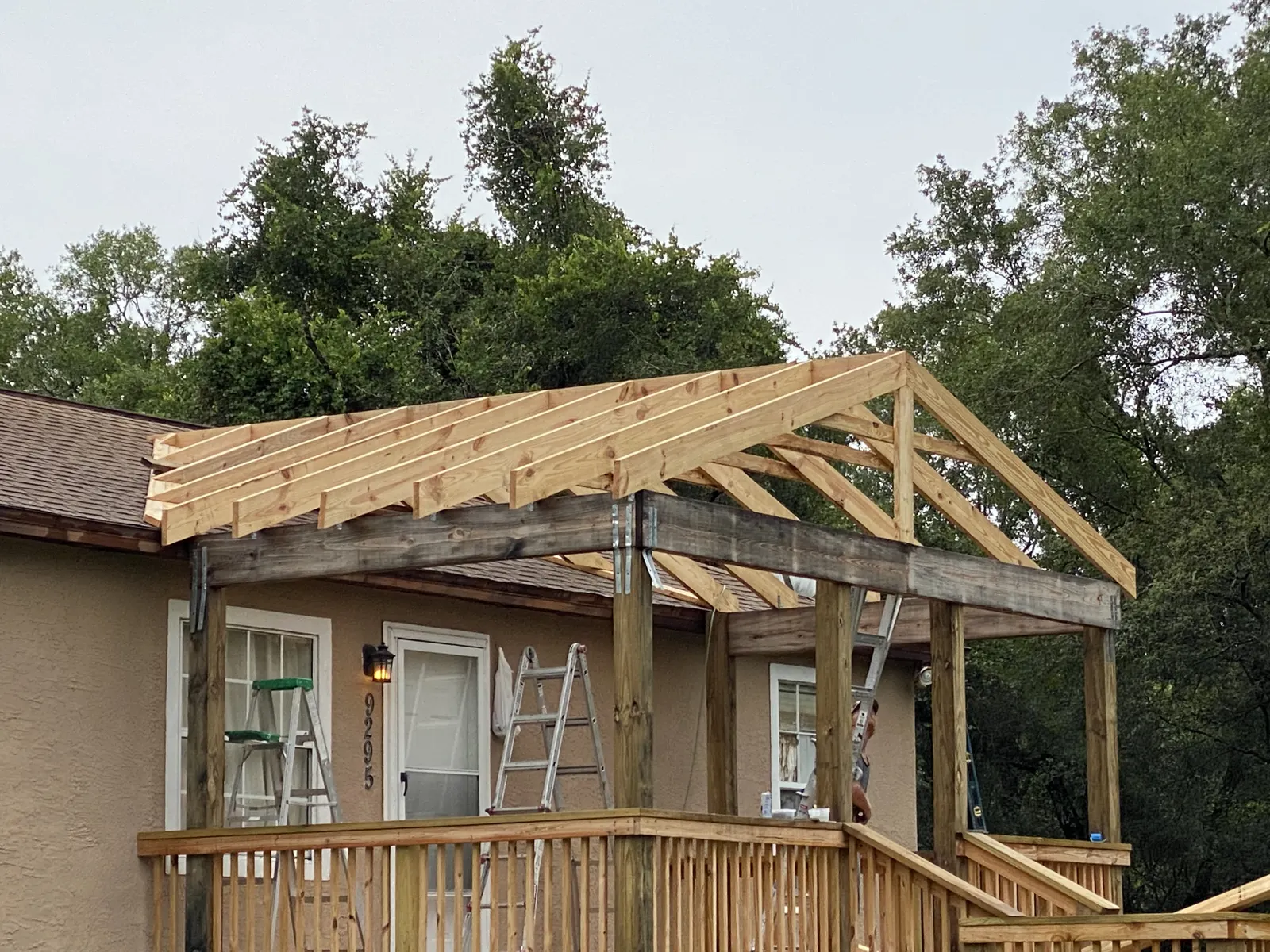
Porch roof reframed with new trusses
What Gets Missed
Broken seal strips and creased shingles. Both look perfect from the ground and both mean the slope has no wind resistance left.
We lift tabs by hand on every slope, check the attic for framing movement, and photograph it all for your carrier.
(312) 590-4853How We Work A Wind Call
Ridge And Edges
Ridge caps, rake and eave edges, drip edge and flashing. The wind starts at the edges and works inward.
Hands On The Slope
Tabs lifted across every elevation to find broken seals, creases counted course by course near the ridge.
Into The Attic
Rafters, sheathing nails, daylight at the ridge. If the frame moved, it goes in the scope with photos.
Repair Or Reframe
Shingles, flashing, fascia, decking or full framing. Angelo on site, and the warranty registered to you.
Related work: bruised mat and dented gutters from the same front mean hail damage repair. Active water inside gets triaged under storm damage repair first. When a carrier is paying, see roof insurance claims. Wind calls run from Alsip to Chicago Ridge, Joliet and Harvey.
Wind Damage Questions
How much wind does it take to hurt a roof?
Less than people expect. Shingles are rated for high speeds on a lab test rig with a perfect seal, and real roofs do not have perfect seals. Gusts in the fifty to sixty range regularly break seal strips on Chicagoland roofs over ten years old. Age matters as much as speed.
Only three shingles blew off. Do I really need an inspection?
Yes, and this is the most common mistake we see. The three that left are proof the wind got under that slope. What matters is how many stayed put with the seal already broken, and there is no way to know that without somebody lifting tabs by hand. Three missing shingles is a symptom, not the diagnosis.
Can you just replace the shingles that blew off?
Sometimes, and we do it often. It depends on what the rest of the slope tests like and whether we can get a reasonable color match. On a roof with sound seals elsewhere, a targeted repair is the right answer. On a slope where seals are gone everywhere, patching is throwing money at it.
What is a creased shingle and why can it not be repaired?
It is a shingle that folded back on itself in a gust and dropped down again. The fold fractures the fiberglass mat and cracks the surface along a line, and no sealant or adhesive puts that back. The shingle has to come out. We photograph creases specifically because adjusters count them.
My ceiling has new cracks after that windstorm. Is that related?
It can be. New drywall cracks at ceiling seams, doors that suddenly stick, or nail pops appearing across a room after a big blow can mean the roof structure moved under uplift. That is worth an attic inspection before anybody touches the shingles, because framing repairs belong on the claim too.
Do you handle the gutters that came down with it?
Yes. Gutter repair and replacement is in house, and when wind pulls a run off a house it usually damaged the fascia behind it. We repair the fascia, then hang the gutter properly rather than screwing new aluminum into rotted wood.
Find Out What The Wind Left Behind
If a real blow came through your street, get somebody on the roof with hands on the shingles. We will tell you whether you have a repair, a slope or nothing worth filing.