
When The Membrane Is Done, Replace It Once
Old TPO tells you it is finished. The sheet goes chalky, then brittle, then it cracks when you kneel on it. Seams open in more than one place at a time. At that stage patching is throwing money at a roof that has already quit. We replace it, on a schedule your building can live with.
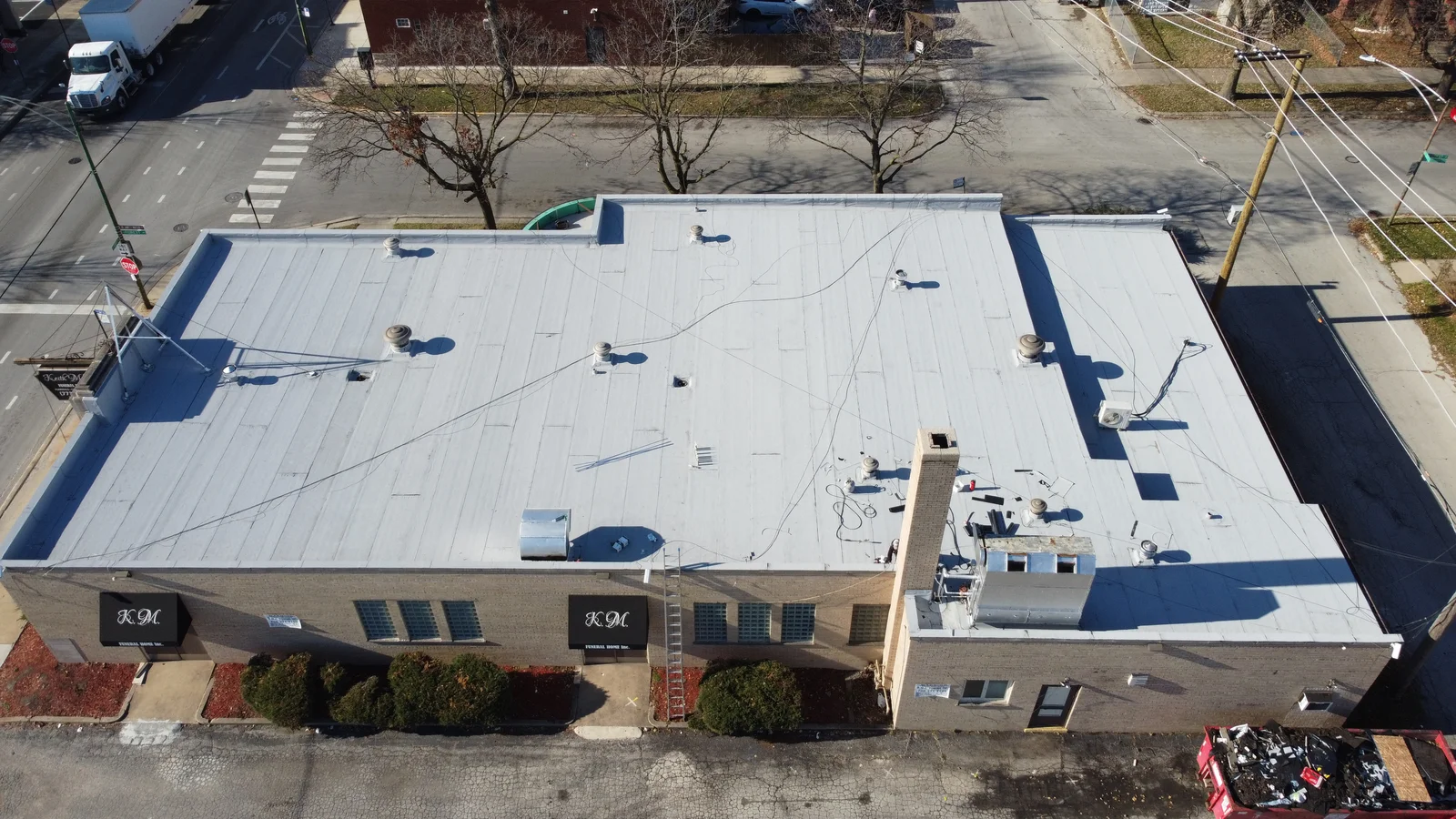
Commercial field, coated end to end
How An Old Membrane Announces Itself
TPO ages by losing the additives that keep it flexible and UV stable. In the first decade you barely notice. Somewhere past that, depending on thickness, exposure and how hot the roof ran, the surface starts to chalk. Rub it with a thumb and you get white powder. That is the sheet giving up its stabilizers, and it is the first honest signal.
Next comes brittleness. A healthy membrane gives under a knee. An old one crackles, and eventually a crew member’s boot leaves a star-shaped crack instead of a footprint. Roofers call this shattering, and it is the point past which repair becomes unreliable, because you cannot weld a patch to a sheet that fractures every time you press on it.
Then the seams go, and not one at a time. Seam failure at scale is the signature of an end-of-life membrane: the same weld, made by the same crew on the same day with the same settings, reaches its limit across the whole roof within a season or two of itself. If you are getting calls about three different leaks in three different quadrants in the same year, that is not bad luck.
The other tell nobody watches for is shrinkage. Membrane pulls as it ages, and on a mechanically fastened roof that tension shows up as ridging along the fastener rows and as flashings getting pulled down off parapets and curbs.
Tear-Off Or Recover: How The Code Decides
Two ways to put a new membrane on a building. Tear-off strips everything down to the deck and rebuilds the assembly. Recover leaves the existing system in place and installs the new roof over it, usually with a new layer of insulation or a cover board between. Recover is cheaper and faster, and it is the right answer on some buildings and completely wrong on others.
Illinois code follows the standard limit of two roof coverings on a structure. If your building already has an original roof plus one recover, the next one is a tear-off, full stop. Any contractor offering you a third layer is going to fail an inspection or hide the work. Beyond layer count, three things kill a recover:
- Wet insulation. If the existing board holds water, covering it seals that moisture against the deck permanently. Metal deck rusts, wood rots, and you pay for the roof twice.
- Structural load. Adding an assembly means adding weight, and older buildings with marginal capacity or heavy existing systems need that checked rather than assumed.
- A wrecked surface. Recover needs a substrate that is reasonably flat and sound. A shattered membrane with ridging, blisters and failed flashings does not give a new roof anything to sit on.
We settle this with moisture readings and core cuts, not with a look from the parking lot. Sometimes the answer is a partial tear-off: strip and rebuild the saturated sections, recover the sound ones. That option gets lost when a contractor bids a single number without doing the diagnostic work, and it can save a building owner real money.
Thicker Sheet, Longer Horizon
A replacement is your one chance to fix whatever the original roof got wrong. Usually that means thickness. If the roof coming off is 45 mil and it lasted a short life on a building with regular rooftop traffic, putting 45 mil back on buys you the same outcome. Eighty mil takes hail, foot traffic, dropped tools and grease exposure dramatically better. On restaurants, on buildings with monthly HVAC service, the thicker sheet is the cheaper roof measured over its life.
Replacement is also the moment to correct drainage, upgrade insulation to current R values, add walkway pads on the service routes, replace tired edge metal, and put proper sleepers under the gas lines and conduit that have been sitting on the membrane since the building opened. None of that is realistically fixable during a repair call. All of it is straightforward while the roof is open.
Staging Work Over An Operating Business
Nobody closes a warehouse, a church, a restaurant or a medical office for a roof. So the plan matters as much as the roofing. We break a replacement into sections sized so that whatever gets opened in a day gets closed and watertight the same day. No open deck goes into a night, and no section gets started against a weather window we do not trust.
The rest is coordination. Loud fastening work gets scheduled around the hours that actually matter to you: before a restaurant opens, outside of service hours for a clinic, around a church’s weekend. Crane time gets booked when the parking lot can spare the space. Tenants get notice before the noise starts, not after they call the property manager.
Debris handling is planned the same way. Dumpster placement, the route from roof to container, and daily cleanup all get agreed on before day one so your customers and staff are not walking through the job.
Numbers, Timing And Warranty
Pricing starts on the phone. Satellite measurements give us square footage without a site visit, so you get a realistic range in the first conversation, then we walk the roof and firm it up before any contract. If a storm did the damage we will document the claim with you. Our roof insurance claims page covers that process.
Manufacturer warranty terms depend on the system, the membrane thickness and an inspection by the manufacturer’s rep. We install to the spec that keeps the warranty valid, file the paperwork in your name, and hand you the documents. On a commercial roof that paperwork is an asset: it follows the building through a sale or a refinance.
Angelo Ristich supervises replacements in person, second generation at this, taught by his father Frank. On a building where nobody but the crew ever sees the roof, that supervision is the whole quality control system. See completed flat roof projects in our gallery, or send the building address through the contact page.
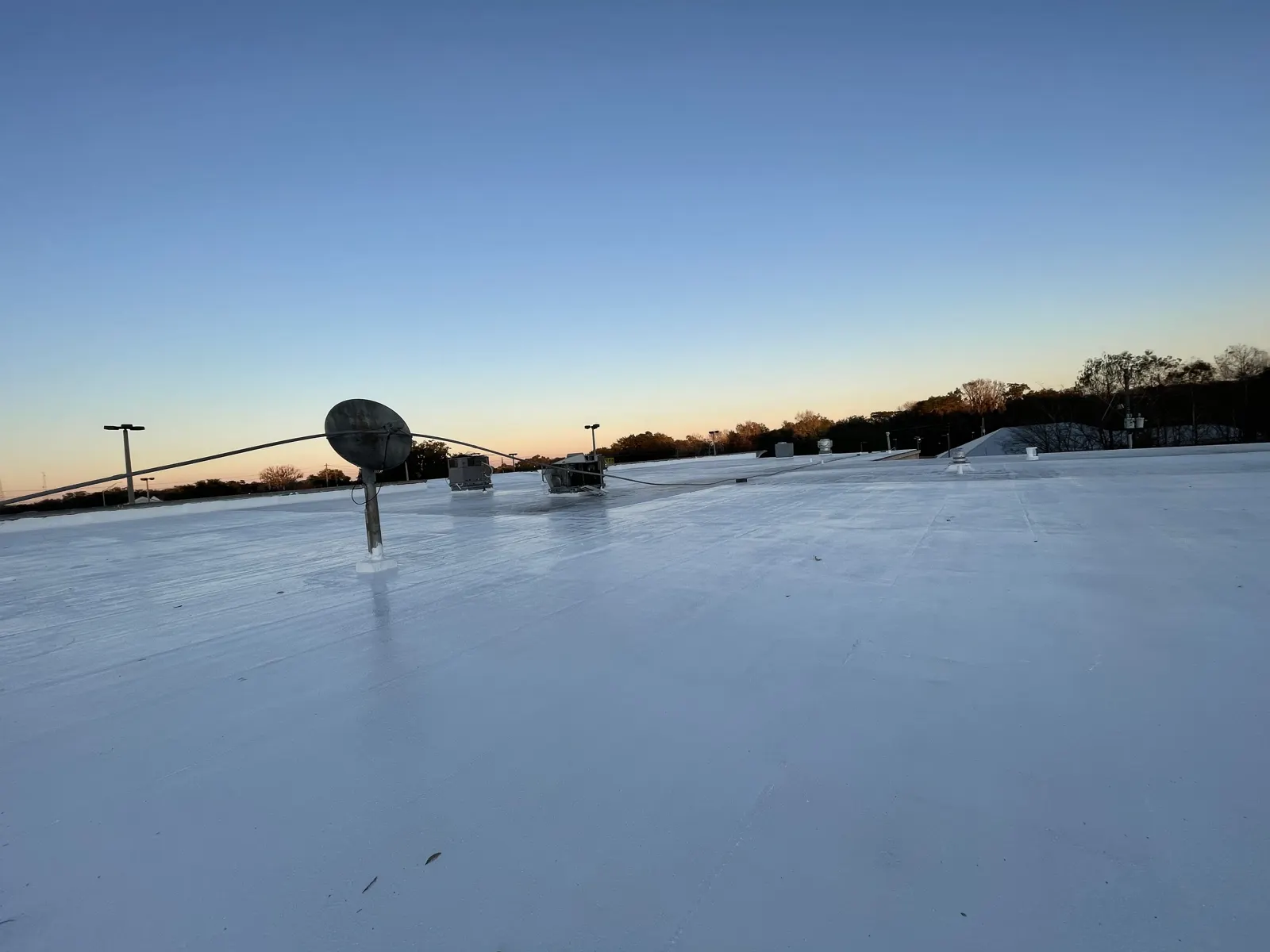
New membrane at dusk · Section closed same day
The Short Version
Moisture scan and core cuts decide tear-off versus recover, not a guess from the ground. Two-layer code limit respected.
Thicker mil where traffic warrants it. Work staged so nothing opens that cannot be closed the same day.
(312) 590-4853Replacing A Commercial Membrane
Scan And Core
Moisture readings across the field, cores through the assembly, layer count checked against code. The data decides the method.
Plan Around You
Sections sized to close daily, loud phases scheduled around your hours, dumpster and access routes agreed before day one.
Rebuild The Roof
Old system out, deck repaired, insulation and drainage corrected, new membrane welded, edge metal and flashings all new.
Inspect And File
Seams probed, manufacturer rep inspection where the warranty requires it, documents filed in your name and handed over.
Related work: still fixable? Try TPO roof repair first. Building new or adding on? TPO roof installation. Other low-slope systems: flat roofing replacement and commercial flat roofs. Want the roof looked at before budget season? Commercial roof inspections. We replace membrane roofs around Chicago, Romeoville and Villa Park.
Replacement Questions From Building Owners
How many years should I get out of a new TPO roof?
Twenty to thirty is realistic on a properly built assembly with adequate thickness, good drainage and some maintenance. Roofs that fall short of that usually had thin membrane, ponding water, or heavy unprotected service traffic. We address all three during a replacement rather than repeating the original roof’s mistakes.
Is a recover always cheaper than a full tear-off?
Cheaper on day one, yes. Cheaper over the life of the roof, only when the existing system is dry, sound and under the code layer limit. A recover over wet insulation traps the moisture and you end up tearing off anyway in a few years, paying for both.
Will the work interrupt what we do in the building?
Minimally, if it is planned. Fastening is genuinely loud in the space directly below, so that phase gets scheduled around your hours. Access, dumpster placement and delivery routes get worked out with you before we start.
What happens if it rains partway through?
Nothing opens that we cannot close. We size daily sections to the forecast and to crew capacity, and every section gets dried in before the crew leaves. If weather turns mid-day, work stops and the open area gets sealed.
Do you replace roofs on churches and restaurants specifically?
Regularly. Both have scheduling constraints that generic commercial crews handle badly: a church cannot have noise on a weekend and a restaurant cannot have a crane in its lot at dinner service. Grease exposure near kitchen exhaust also changes the membrane spec.
Can you handle a multi-building property at once?
Yes, and it is usually better sequenced than done all at once. We prioritize by condition so the worst roof gets replaced first, then phase the rest across budget cycles with a written condition report on each. That gives you a capital plan instead of a surprise. Ask about it on the contact page.
Find Out What The Roof Actually Needs
Give Angelo the address and rough square footage and get a realistic range on the phone. If a scan shows the roof has years left, he will say so and quote you a repair instead.