
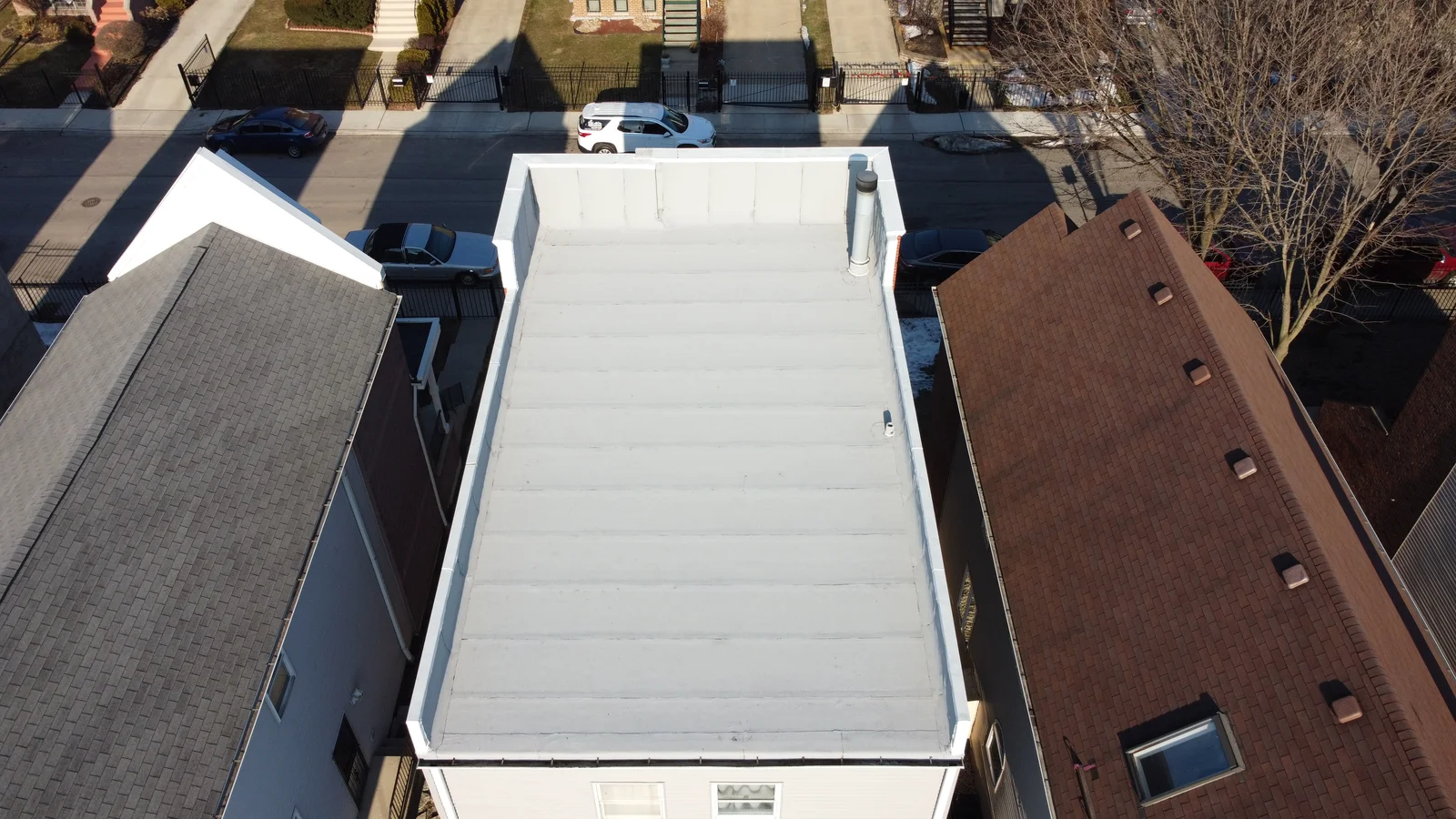
New granulated flat roof from above
When The Back Roof Is Past Patching
The back bedroom, the sunporch, the garage behind the house: on plenty of brick homes in this village, that low-slope roof is the oldest surface on the property and the first one to quit. After the third patch that still drips, patching is over. We strip the section to the deck, replace the boards that have rotted, and build a roof that sheds water off the edge. Angelo is on site while it goes on.
Signs The Rear Roof Is Done Taking Patches
A low-slope roof rarely fails in one afternoon. It wears out a seam at a time, and each repair buys a season until the repairs cost more than they save. These are the conditions that tell us a section has reached the end:
- Soft spots underfoot, where the deck below has been wet long enough to lose its stiffness.
- Ponding that is still sitting on the surface long after the rain has stopped.
- Blisters and bubbles spread across the field, a sign that moisture is trapped between layers.
- A stained or sagging ceiling in the back room, especially one that returns after every repair.
Any one of those can be a repair. Two or three together usually mean water has been getting in for a while and the deck under the membrane has been soaking it up. At that point, a new layer laid over the old one would simply seal the damage in.
Inside the house, the back room usually tells the story before the roof does. Paint bubbling along the wall where the addition meets the original house points at the tie-in. A stain in the middle of the ceiling points at the field. A musty smell with no visible stain often means the insulation above has been wet for a while and the deck is going soft. We go up and look either way, because the roof is where the answer is.
Down To The Boards
A replacement on these houses means a full tear-off. Every layer comes up, including any that somebody installed over an older roof instead of removing it, until the crew is standing on bare deck. On the postwar houses here that deck is wood plank or early plywood, both good materials for as long as they stay dry.
Wet ones do not stay good. We walk the exposed deck, mark every board that is soft, split or coming apart in layers, and cut it out. New decking goes down before anything else does. Those boards show up in your photo report, so the decking line on the bill matches something you can actually look at.
What Goes Back Down
With sound deck underneath, the new membrane goes on. Flat roofs are a specialty of ours, and we install TPO, EPDM and torched modified bitumen, so the system gets chosen for the section rather than for whatever is already on the truck. On a small back room or garage, a granulated cap sheet like the one in the photo at the top of this page is a common pick, since the mineral surface takes the sun that would otherwise age the asphalt beneath it.
Where the roof runs into a brick wall, the membrane turns up the wall and new metal counterflashing covers the top of it, so the section is sealed along every edge where water could reach it.
Building In The Slope The Old Roof Never Had
Bellwood sits flat and drains slow, and many of these back roofs were framed close to dead level. Water with nowhere to go sits on the membrane until it finds a seam. When we rebuild, the new roof gets positive slope toward the edge, built into the layers under the membrane so the pitch is there before the finished surface goes on. On a garage, that usually means pitching toward whichever side lets the gutter reach a downspout without crossing the driveway or a walk.
At that edge, new metal passes the water to a gutter instead of letting it run down the brick. A low roof that empties onto the ground beside the house only moves the leak from the ceiling to the basement, and these older foundations were never waterproofed to handle that.
Where The Flat Section Meets The House
The joint between the low roof and the steep main roof is where most rear additions start leaking. Two different roofing systems meet there, usually installed years apart by different people. On a replacement we lift the bottom courses of shingles, run the new membrane up beneath them, and lay the shingles back down over it so water stays on top the whole way down.
If the main roof is close to the end of its own life, you hear that from us while we are up there. Sometimes the right call is rebuilding the tie-in now and planning the house roof for later.
One Trip For The Garage And The House
Detached garages behind these homes are often low-slope and older than the roof on the house. When both need work, we do them while the crew and the dumpster are already on site, and the quote lists the garage and the house as separate lines. Do both, or do one now and keep the other number for when you are ready. The garage is also the roof nobody checks until the rafters start to stain, so it is worth a look whenever the house is being priced.
Guardian is a second-generation roofer working out of Alsip since 2013. Angelo Ristich learned the work alongside his father Frank, now runs the company, and is the one you talk to about your roof. If you want the full rundown on tear-offs beyond Bellwood, read our flat roof replacement page. Back rooms and garages we have already redone are pictured in the gallery, and photos of yours can be sent in from the contact page.
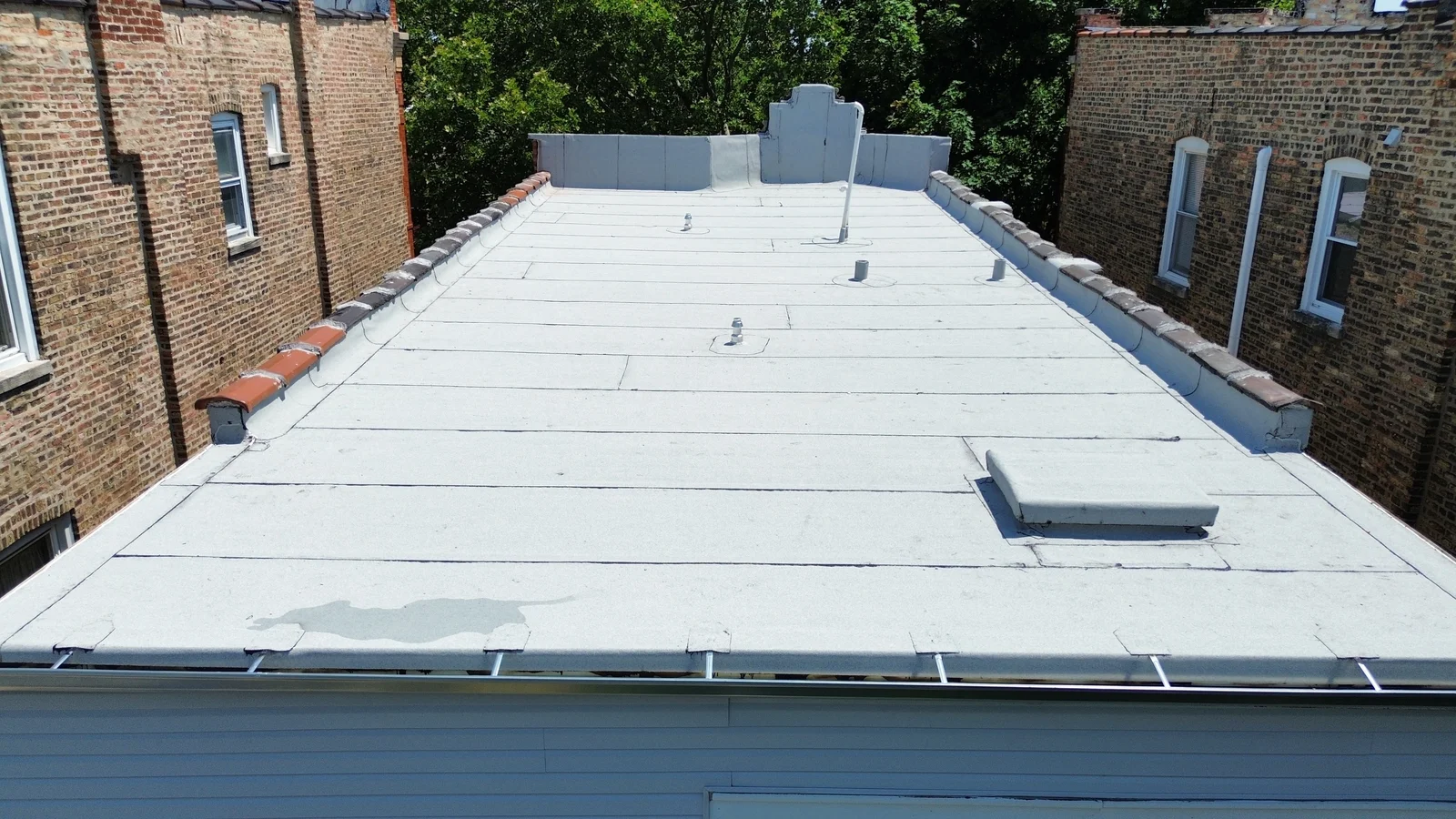
Cap sheet finished to a gutter edge
Repair Or Replace
One soft spot or one blister is usually a repair. Soft deck, standing water and a ceiling stain that keeps coming back together usually mean a tear-off.
Before Anyone Climbs Up
Satellite measurements give you a first number over the phone. Standing on the deck confirms it, and anything rotten underneath is priced board by board.
If financing makes the difference, we help you get pre-approved.
(312) 590-4853A Replacement Day From Tarp To Gutter
Strip It Bare
Yard and walls covered, then every old layer comes off down to the deck.
Swap Bad Boards
Soft or split decking cut out and replaced, each board photographed first.
Pitch It Out
Slope toward the edge goes in before the membrane does.
Seal And Hand Off
Tie-in under the shingles, edge metal into the gutter, photos to you.
Related low-slope work in the village: a back room that never had a real flat roof falls under flat roof installation, and a brick building with several units is covered on multi-family roofing. Businesses have their own pages for restaurant roof repair and commercial flat roofs. The Bellwood page covers the houses here as a whole.
Questions Homeowners Ask Before A Tear-Off
Can a new flat roof go over the old one?
Not on a section that has been leaking. A layer over wet decking traps the moisture and hides the rot, and the new roof inherits every soft spot underneath it. We tear down to the boards so the damage gets found and fixed instead of sealed in where nobody will see it.
How do I know if it needs replacing or just a repair?
Count how many problems show up together. A single open seam or one cracked flashing is usually a repair. Soft spots, standing water and blisters at the same time mean the deck has been taking on water, and a patch will not stop that. We tell you plainly which one you have.
What happens if you find rotten decking under the old roof?
We cut it out and replace it before the new roof goes on. Every board we swap is photographed, so you can see the damage that was hiding under the old layers. Plank and early plywood both get replaced with sound material sized to match what was there.
Will the new roof drain better than the old one?
It should, because we build slope in. Many back roofs on older houses were laid nearly flat, so water sat until it found a way through. The new one pitches toward the edge, where metal flashing sends the water into a gutter and away from the foundation.
Do you have to touch the main house roof?
Only at the joint where the two roofs meet. We lift the lowest shingle courses, run the new membrane up underneath, and lay the shingles back over it. If the main roof is worn out, we say so, and you decide whether to replace it now or later.
Who do I deal with during the job?
Angelo. He does the walkthrough, gives you the price and is there while the crew works, so the person you call with a question has seen your roof. The company is licensed and insured in Illinois, carries an A+ with the BBB and holds a HomeAdvisor Elite Service award.
Find Out Where The Back Roof Stands
Tell us what the low roof covers and what it has been doing lately: where the stains are, how long water sits after a storm, how many patches it has had. Photos from the yard help more than you would think.
We measure by satellite while we talk, so a straight price often comes on the first call. A job with rotten decking or more than one addition gets a walkthrough first, and the number holds after that.