
Flat Roofs Are The City’s Roof, And They Are Our Trade
Chicago does not roof like the suburbs. Behind the cornice of a two-flat, a three-flat or a courtyard building is a low-slope deck ringed by parapet walls, drained by internal downspouts and interrupted by a back porch. That is the roof we have been building, patching and replacing for thirteen years, run out of a shop in Alsip and driven up any street in the city.
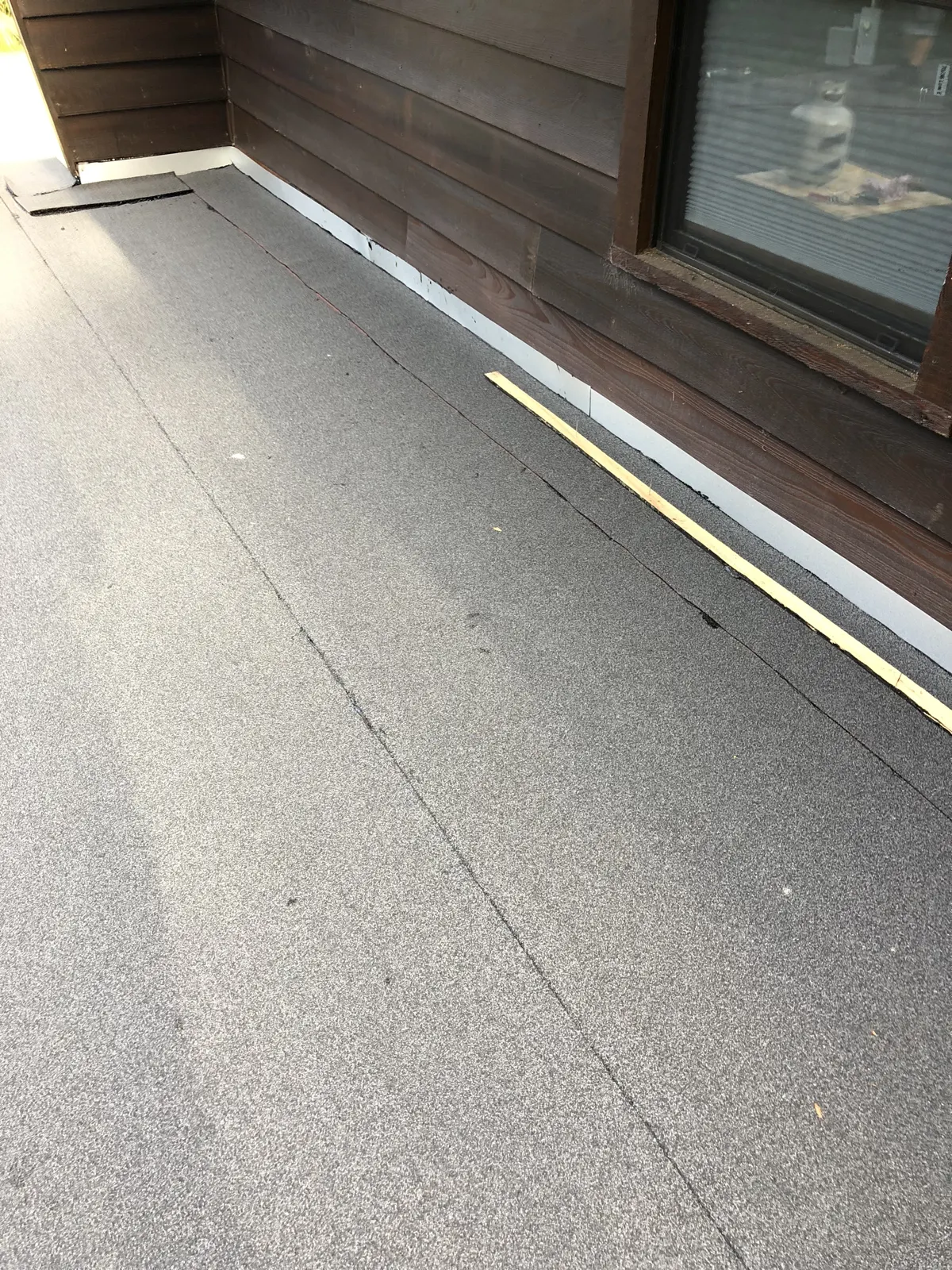
Modified bitumen, balcony deck, city building
The Chicago Roof, Building Type By Building Type
The two-flat and three-flat, stacked from Pilsen to Logan Square to Bronzeville, carry a flat deck with a parapet on three sides and a wood back porch off the rear. Water on those roofs does not run off an edge, it runs to a drain or a scupper, and when that path plugs with maple seeds or ice, the roof turns into a pond that finds the weakest lap seam. The courtyard buildings on the North and Northwest Sides multiply the problem across four or five roof planes with valleys, mechanical curbs and shared parapets between owners.
Then there is the bungalow belt, the ring of brick 1920s bungalows through Portage Park, Garfield Ridge, Chatham, Beverly and Ashburn. Those are pitched roofs with a low-slope section over the rear kitchen addition or the dormer shed, so a single house needs two different roofing systems that have to marry at a flashing. Half the leaks we chase in bungalows live exactly at that transition.
Greystones and old frame workers cottages add masonry and settling to the mix. Chicago clay soil moves, buildings rack a little over a century, and the parapet coping opens up joints that let water down inside the wall cavity. When a tenant reports a stain on a third-floor ceiling, the leak is often three feet of wall away from where the water shows up. We chase it with a hose test rather than guessing.
What We Do Most Inside The City
- Flat roof repair on two-flats, three-flats and courtyard buildings, from a single blistered seam to a full section of ponding deck.
- TPO roof installation and TPO replacement where an owner wants a white membrane that reflects the July sun off a top-floor unit.
- Flat roof replacement with modified bitumen or EPDM when the building calls for a torch-down or rubber system instead of a single-ply.
- Multi-family roofing for owners, landlords and small management companies with tenants living under the work.
- Commercial flat roofs on the storefronts, corner taverns and light industrial buildings that share the block with the flats.
- Gutter repair and downspout work where a bungalow’s system was built for 1925 rainfall and now overflows every storm.
Porch roofs deserve their own line. A Chicago back porch takes weather from every direction, the roof over the top deck is usually the oldest surface on the building, and the city has strong opinions about porches after 2003. When we rebuild a porch roof we look at what it is landing on before we cover it up, which sometimes means telling an owner the carpentry comes before the roofing.
Permits, Parapets And Working In A City
Roofing inside city limits carries paperwork the suburbs do not. Chicago requires a permit for a tear-off and replacement, contractors have to be licensed and bonded with the city, and inspectors do come look. We handle the filing rather than handing an owner a folder, and we plan the job around the reality of the block: where the dumpster can legally sit, whether the alley gives us a shot at the roof, whether we need to protect a neighbor’s car.
Parapet walls are the other city-specific piece. A parapet gets weather on both faces and on top. Coping stones or metal caps have to shed water outward, the counterflashing has to be cut into a mortar joint rather than smeared with caulk, and the membrane has to run up and over the top or terminate in a bar that holds. Most of the chronic leaks we inherit in the city are parapet leaks that three previous contractors treated with a bucket of black plastic cement. That works for one winter. It is not a repair.
The Friday Night In A Three-Flat
One of our reviews comes from Jimmy Proctor. He called on a Friday night with a leak coming into a Chicago three-flat. It was a blizzard. Our crew came out the next morning, shoveled ice off the roof to get down to a surface worth patching, found the failure, and stopped the water. A leak on a Friday night in a three-flat means three households have water running through their ceilings all weekend, and that is not something you tell a landlord to sit on until Monday.
That is the pattern for storm damage repair in the city. We stabilize first, get the water stopped and the interior protected, then come back in daylight to talk about whether the section needs a repair, a recover or a full replacement. When the failure traces to a storm event, we photograph it the way an adjuster wants and walk owners through roof insurance claims.
Winter Is The Real Test
Lake effect snow sits on a flat roof and does not slide off. It melts from the bottom where the building’s heat escapes, runs to a cold spot at the parapet or the drain, and freezes there. The ice grows, the drain plugs, and now there is standing water backing up under laps that were never designed to be submerged.
Our winter advice for city buildings is short. Keep drains and scuppers clear in the fall before the leaves come down, get a look at the roof after the first hard freeze rather than after the first ceiling stain, and put insulation and ventilation on the list, because a warm roof deck makes its own ice.
Who Shows Up
Guardian Roofing Systems is second generation. Angelo Ristich learned the trade from his father Frank, took the company over in 2013 and modernized how it runs, and he is on the jobs himself. When an owner in the city calls, the person quoting the roof is the person who will be standing on it. We pull satellite measurements while you are on the phone, and we help owners work out financing when a building needs more roof than the month’s rent roll covers.
We are A+ with the BBB, hold a HomeAdvisor Elite Service award, and stay licensed and insured in Illinois. The gallery has city work in it: torch-down sections, white membrane on a top floor, balcony decks, tear-offs down to good decking. If you want a reference on a building near yours, ask.
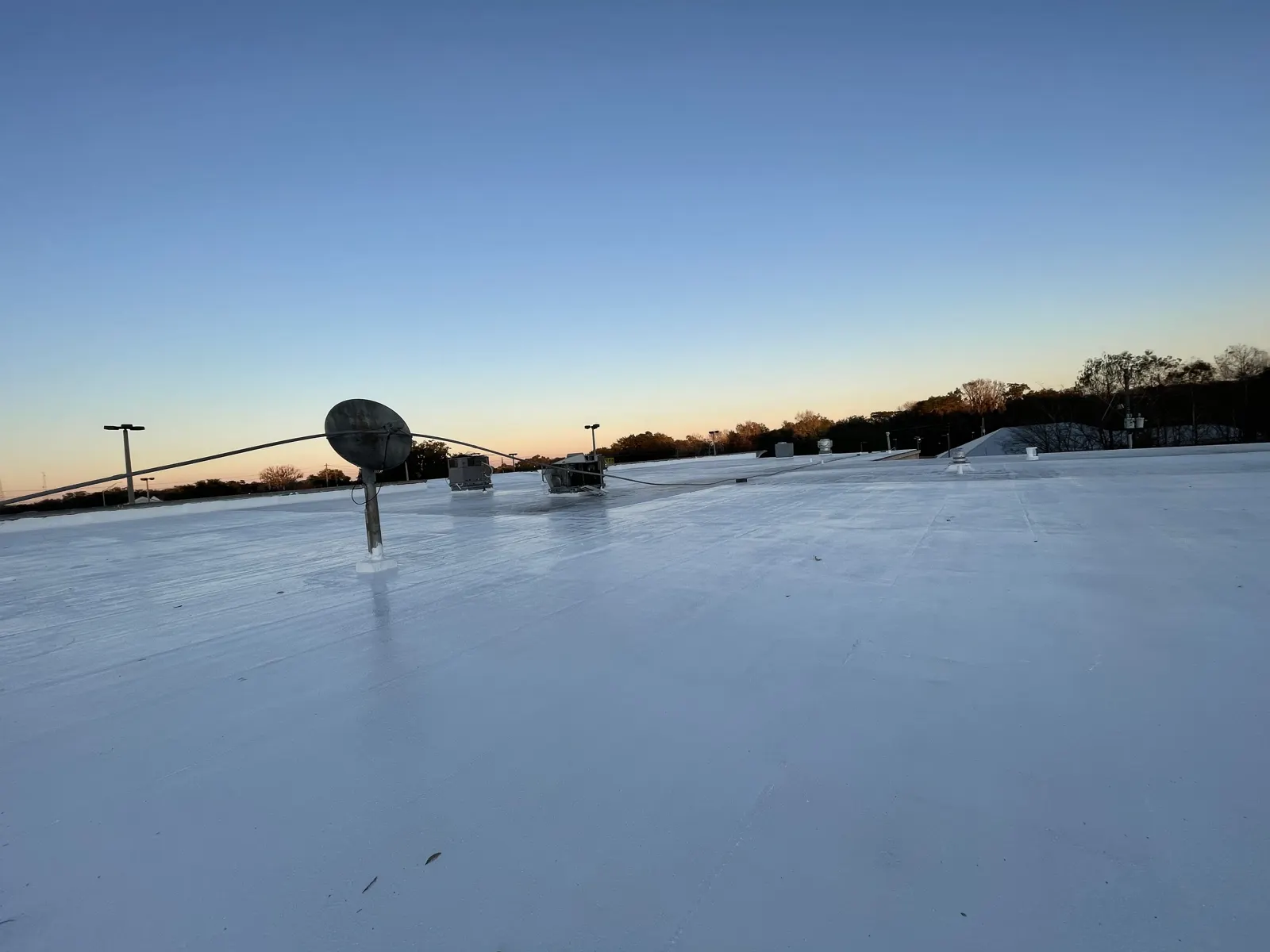
White membrane, city building at dusk
Chicago At A Glance
Two-flats, three-flats, courtyard buildings and the bungalow belt. Flat and TPO systems, parapets, porch roofs, internal drains.
City permits filed by us. Mon to Sat, 9 to 5, with emergency patch response when a roof opens up overnight.
(312) 590-4853The City And The Towns Around It
Chicago is the north end of a run we make every day across Cook County. Head southwest on Cicero Avenue and you are in Cicero, where the same brick two-flats sit shoulder to shoulder with bungalows. Keep going and you reach Oak Lawn and our shop in Alsip. South on the Dan Ryan puts our crews in Harvey by mid-morning. A storm cell that runs the Stevenson or the Ike does not stop at the city line. The full picture is on the service areas page.
Chicago Roofing Questions
Do I need a permit to replace a roof in Chicago?
For a tear-off and replacement, yes, and the contractor has to be licensed and bonded with the city. We file it. Small repairs generally do not require one. If somebody offers to replace your roof without pulling a permit, that is a reason to hang up.
My third-floor ceiling is staining but the roof looks fine. What now?
On a masonry building that usually means the parapet wall, the coping joints or the counterflashing, not the field of the roof. Water gets into the wall and travels before it shows. We run a hose test to find the real entry point rather than patching the ceiling side and waiting for the next rain.
Is TPO the right call for a two-flat?
Often, yes. White single-ply reflects heat, which the top-floor tenant notices in July, and it handles ponding better than an old built-up roof. If the deck, the drainage or the detail work around the porch points to modified bitumen or EPDM, we say so on the flat roof installation side instead.
Water is coming in tonight and it is snowing. Will anyone come?
That is a call we take. We have shoveled ice off a Chicago three-flat the morning after a Friday-night blizzard leak to get a patch down. Emergency work is about stopping water and protecting the interior. The real repair gets scoped in daylight.
Can you work on a building with tenants in it?
Yes, and most of our city work is occupied. We coordinate access, dumpster placement and alley staging in advance, keep the gangways and parked cars protected, and give owners notice they can forward to tenants. Details on the multi-family roofing page.
My bungalow has shingles in front and a flat section in back. Two contractors?
One. That transition is where bungalows leak, and splitting it between two crews means nobody owns the flashing. We quote both surfaces together so the marriage between them is a single crew’s responsibility and a single warranty.
Tell Us What Your Building Is Doing
Call Guardian Roofing, describe the roof and the leak, and get a straight price off satellite measurements while you are still on the phone. Or send the address through the contact page for a same-day callback.