
Four Rings Of Housing, Four Different Roof Problems
Arlington Heights did not grow evenly. It grew in rings, decade by decade, out from the downtown Metra platform. Where your house sits in those rings tells us more about what is wrong with your roof than any phone description does, and it is the first thing we ask about when an Arlington Heights address comes in.
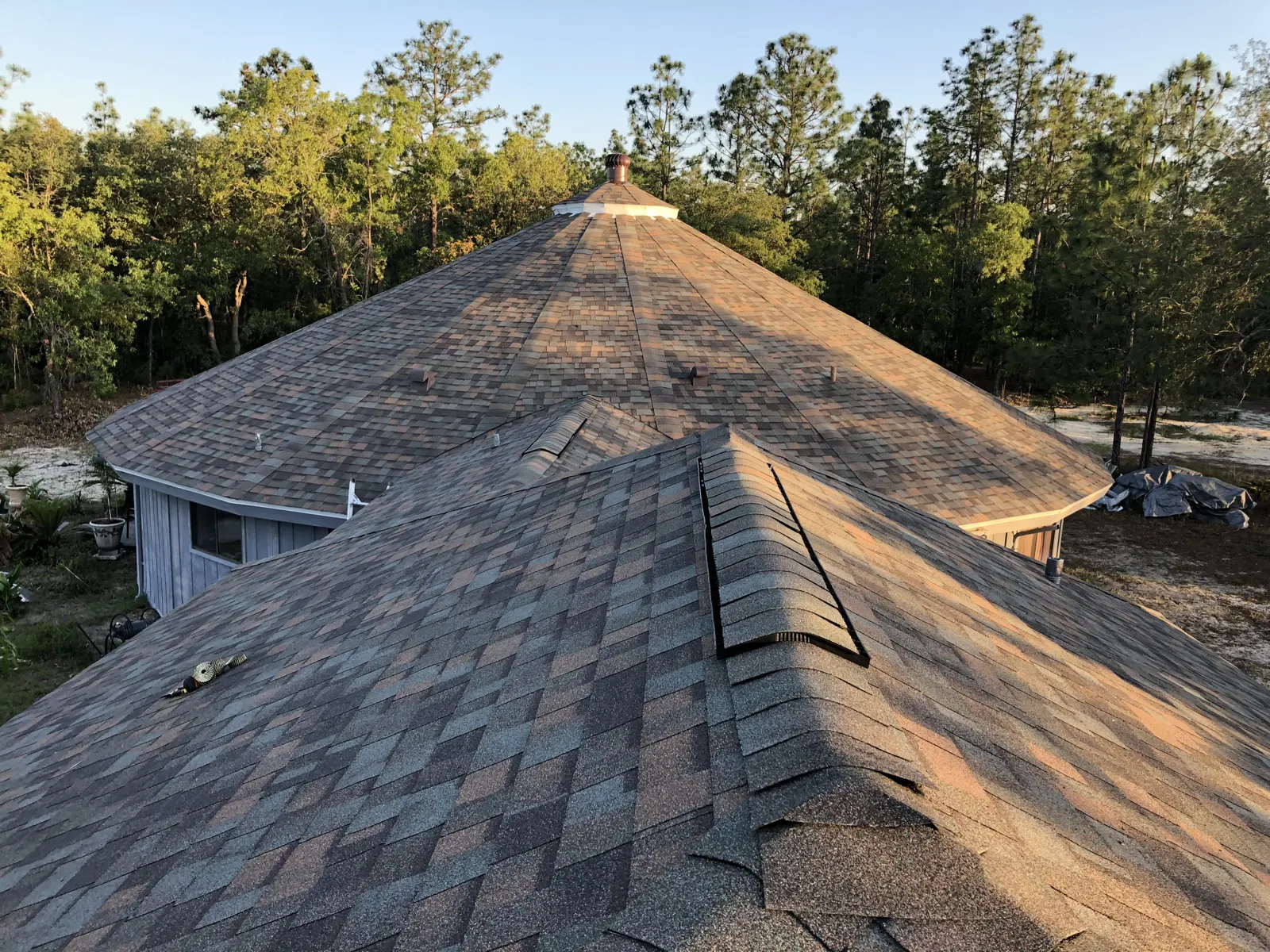
Architectural shingle, finished at dusk
Reading An Address Before We Read The Roof
The blocks closest to downtown carry the oldest housing: prewar frame houses and small Cape Cods on narrow lots, many of them re-roofed four or five times by now. Move out a ring and you hit the big 1950s and 60s ranch belt, long low roofs with wide overhangs and the original plank decking still underneath. Push out toward the village edges and you are into 1970s and 80s splits and two-story colonials, then the newer construction and the townhome and condo blocks that filled in later along Rand Road and Golf Road. Four eras, four framing methods, four sets of things that go wrong.
That matters on the deck. Older Arlington Heights houses were sheathed in wide pine boards with gaps between them, which held nails fine in 1955 and holds them poorly now that the wood has dried out for seventy years. Newer sections of town got plywood or OSB, which fails differently, usually at the edges where water sat. We do not know which we are dealing with until the old shingles come off, so we write the deck repair rate into the paperwork before we start rather than surprising you with it at four in the afternoon.
Downtown is its own conversation. The transit-oriented redevelopment around the station put mid-rise buildings, mixed-use blocks and structured parking where small commercial buildings used to be, and those carry flat and low-slope membrane roofs rather than shingles. The older brick storefronts nearby still have the built-up and modified bitumen roofs they have always had, patched by whoever was cheapest that year. Both need somebody who works flat systems as a specialty rather than as an afterthought between shingle jobs.
What Gets Us Called Out Here
- Shingle roof replacement across the ranch and split belts, torn off to bare deck, with plank decking assessed board by board.
- Shingle roof repair on newer roofs that lost tabs off one exposed slope and have plenty of life left everywhere else.
- Flat roof repair on downtown commercial buildings, rear additions and the flat-topped garages behind older houses.
- Hail damage repair with the photo record an adjuster will actually accept, backed by insurance claim help.
- Gutter replacement on the wide-overhang ranches, where the original runs are undersized for what storms drop now.
The commercial side runs alongside it. Medical offices, restaurants, small retail and the buildings that came out of the racecourse-area redevelopment all sit under membrane roofs we inspect and repair on schedules that work around business hours. Details on the commercial roofing page.
The Ranch Belt Is Aging All At Once
There is a pattern we see on the 50s and 60s streets that homeowners rarely notice until a neighbor mentions it. Whole blocks were built within a couple of years of each other, re-roofed within a couple of years of each other after the same storm, and now they are all coming due together. That is why three houses on one street call us in the same month. It also means we can often quote a neighbor while the crew and the dumpster are already parked on the block, which takes real money off both jobs.
What we find under those ranch roofs is consistent enough to predict. Ventilation is usually the problem. A 1958 roof was built with a couple of gable louvers and no ridge vent, and by the time a 1990s re-roof went on, somebody added a few can vents and called it done. Hot attic air that cannot escape cooks the shingles from below, which is why so many Arlington Heights roofs look fine from the curb and are brittle to walk on. When we tear off, we cut proper ridge venting and make sure the soffit intake is actually open, because a roof that breathes lasts closer to its warranty.
Storm Weeks And What To Do In Them
Northwest Cook takes its share of summer hail and straight-line wind, and the aftermath here follows a script. Out-of-state trucks appear on the block within a day, knocking doors, offering to handle everything, sometimes writing contracts on hoods. Some are legitimate. Plenty are not, and the ones that are not will be unreachable when the warranty question comes up in three years. Our advice is simple: get any hail or high-wind event looked at within two weeks even if nothing is dripping, keep the photos whether or not you file, and do not sign anything before a local contractor has been on the same roof.
We do not charge to look. If the damage is genuinely there, we document it the way adjusters need and meet them on the roof. If it is not, we tell you that too, and you keep a clean claim history plus a written record of the roof’s actual condition. Emergency patching runs regardless of where the schedule sits, because water in a ceiling is not a next-week problem.
Straight Talk About Coming From Alsip
Our shop is in Alsip, which is the opposite corner of Cook County from you. We are not going to dress that up. What we do is run northwest Cook as grouped work, booking jobs in this area into the same stretch of days so the crew, the material and the dumpster are already up here. A non-urgent replacement might wait a few days for the next run to line up. You do not pay a travel charge for the mileage, and leaks jump the line.
Angelo Ristich runs the company, second generation, trained under his father Frank, and he walks the job himself rather than sending a salesman and disappearing. We hold an A+ rating with the BBB, carry a HomeAdvisor Elite Service award, and are licensed and insured in Illinois. Most quotes start on the phone using satellite measurements, so you get a real number before anyone climbs a ladder, and we can point you toward financing if the job lands at a bad month. Finished work is in the gallery.

Starter courses, set before the field
Arlington Heights Notes
Booked in grouped northwest Cook runs from our Alsip shop. No travel charge for the drive. Leaks get patched on their own timeline.
Prewar frame downtown, the big 50s and 60s ranch belt, 70s and 80s splits, plus flat membrane work near the station.
(312) 590-4853Who Else Shares Our Northwest Week
Arlington Heights is usually the anchor when we book time in this corner of Cook County, and two neighbors ride along on the same schedule. Rolling Meadows sits directly south with its own postwar story and roofs aging on the same clock, and Palatine is a short run west with the split-levels and hilly lots that come with it. Booking those towns together is how a crew based on the south side ends up on your roof at a normal price. The full territory is on the service areas page.
What Arlington Heights Homeowners Ask
My whole block is getting new roofs. Is that a coincidence?
No. Streets here were built in tight windows and re-roofed in tight windows, so they come due together. It works in your favor. If a neighbor is going ahead, tell us, because a crew and dumpster already parked on the block make both jobs cheaper.
What is under a 1950s ranch roof around here?
Usually wide plank decking with gaps between the boards, dried out and softer than it was. Sometimes it is fine. Sometimes a third of it needs replacing. We cannot know until tear-off, so the per-board rate is written into your paperwork up front, not invented mid-job.
Do you handle the flat roofs on downtown buildings?
Yes. The mixed-use and mid-rise buildings near the station, the older brick storefronts, restaurants and medical offices are regular commercial stops. We schedule around your hours and send photo reports a property manager can forward without explaining them.
Someone knocked on my door after the hailstorm. Should I sign?
Not that day. Get a second look from somebody with a local address you can drive to. We inspect at no charge, photograph everything an adjuster will want, and tell you honestly if the damage does not justify a claim. That answer costs you nothing and saves your claim history.
My roof is only twelve years old and already brittle. Why?
Almost always ventilation. Older houses here got a couple of gable louvers, then a few can vents during a 90s re-roof, and never enough intake air. Trapped attic heat bakes shingles from the back side. We cut real ridge venting and open the soffit intake during tear-off.
How long is the wait, given you are based in Alsip?
For a planned replacement, usually until the next grouped northwest run lines up, which is typically a matter of days rather than weeks. Active leaks get an emergency patch without waiting for that. Call with the address and we will tell you where the calendar actually stands.
Tell Us Which Ring Of Town You Live In
Call Guardian Roofing with the address and what the roof is doing, and get a straight price without a pitch attached. Or send the details through the contact page and we will come back to you the same business day.