
New Low-Slope Roofs Built To Actually Drain
Additions, garages, dormers, porch decks and the low-slope backs of Chicago two-flats. A new flat roof is a system: deck, insulation, slope, membrane, edge metal and terminations. Get any one of those wrong and you own a puddle. We build all six right, and Angelo is on site while it happens.
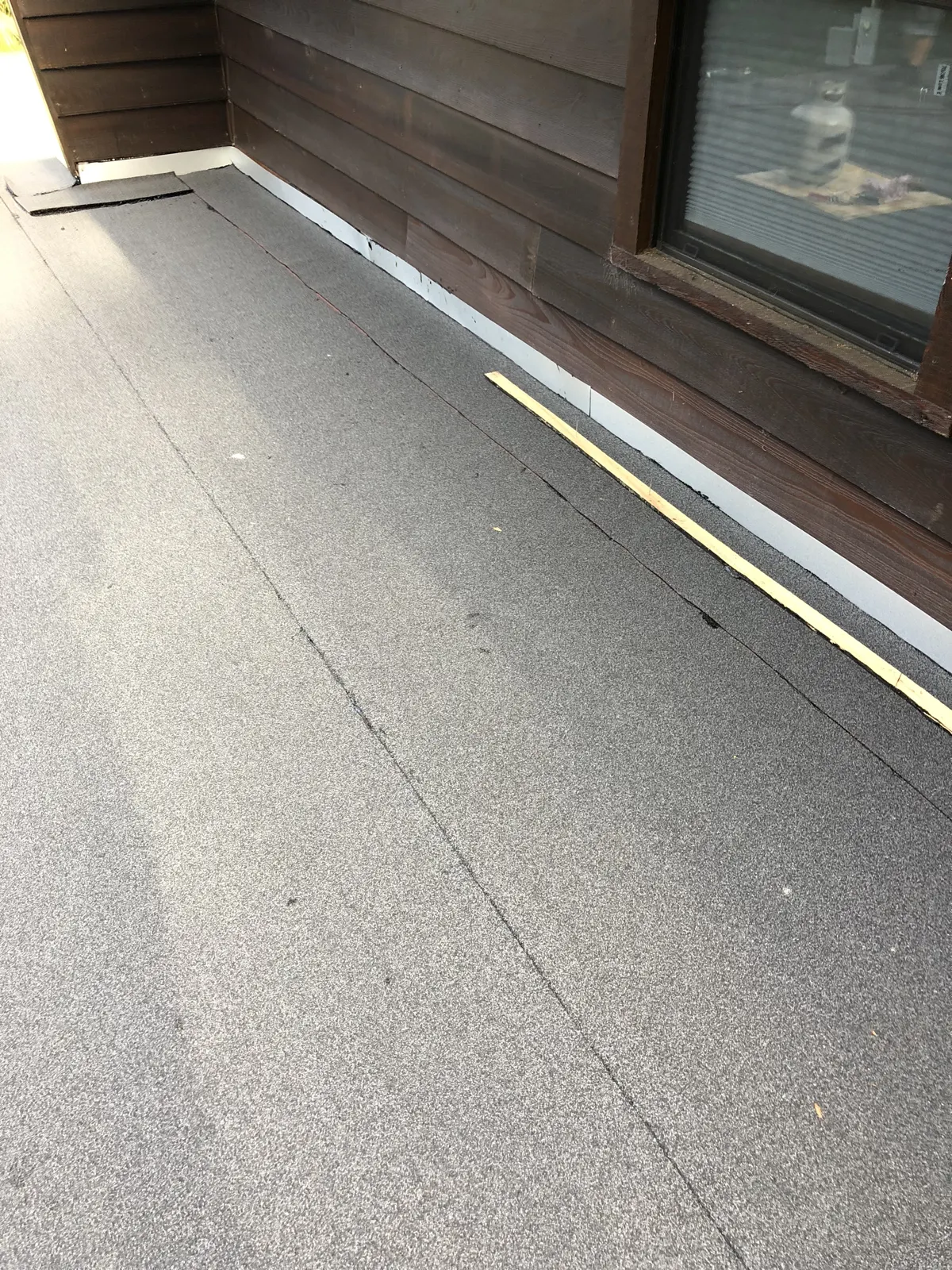
Mod-bit balcony deck · Torched and sealed
Chicago Was Built Flat On Purpose
Drive any block off Archer or Western and count the roofs. Two-flats, three-flats, brick bungalows with a flat back porch, garages sitting tight on the alley line, storefronts with apartments over them. Chicago built low-slope because lots are narrow and deep, because party walls and parapets were fire code after 1871, and because a flat back half was the cheapest way to add rooms. That housing stock is still here, and most of it is on its third or fourth roof.
Which means new flat roof work in Alsip and the south suburbs is rarely a blank slate. It is a garage that finally got framed, a kitchen bump-out on a bungalow, a rear porch rebuild after a deck failure, a dormer that turned attic into bedroom. You are tying new low-slope work into old brick, old parapets and old drainage that was designed for a building that has since been remodeled twice. That tie-in is where most flat roofs fail, and it is where we spend most of our planning time.
Picking The Membrane: TPO, Mod-Bit Or EPDM
There is no single best flat roof membrane. There is a best one for your building, your budget and how the roof gets used. Here is how we actually decide:
- TPO. White, heat-welded seams, reflective. Best on anything with sun exposure all day, anything with rooftop equipment, and anything where cooling load matters. The welded seam is the strongest joint in low-slope roofing when a trained hand runs the welder. Our first pick on garages, additions and small commercial.
- Modified bitumen. Torch or self-adhered, asphalt based, multi-ply. Tough underfoot, forgiving around odd shapes, and the right answer on balconies, porch decks and anything that gets walked on. Also the traditional match on older Chicago buildings where the neighbors and the existing details are all asphalt.
- EPDM. Black rubber, huge sheets, very few seams on an open field. Excellent cold-weather flexibility, which matters more here than most contractors admit. Shaded roofs and large simple rectangles are where it earns its keep. Less ideal where summer heat gain is a concern.
We will tell you which one we would put on our own building and why. If two options both work, you get both prices and the honest tradeoff between them instead of a sales pitch for whatever is on the truck.
Slope And Insulation Are The Real Job
Flat roofs are not flat. Code wants a quarter inch of fall per foot toward a drain or a scupper, and a roof that does not have it holds water. Ponding is not cosmetic. Standing water doubles the UV and freeze-thaw punishment on a seam, grows organic gunk that eats coatings, adds real weight during a wet spring, and turns into a skating rink of ice that pries at every lap in January.
On new work we build the slope in with tapered polyiso insulation. That means laying out the roof on paper first: where the water goes, where the crickets sit behind curbs and chimneys, how deep the fill needs to be at the high corner, whether the existing scupper is where the water actually wants to go or just where someone put it in 1962. Tapered layout takes an afternoon of planning and saves a decade of headaches.
Insulation depth is the other half of that conversation. Polyiso does double duty on a flat roof: it carries the slope and it carries the R-value. On a Chicago rear addition with living space underneath, going from an old uninsulated deck to modern polyiso changes what the room feels like in February more than any window ever will. We size it to what the assembly can carry and what the height of the existing door thresholds and window sills will allow.
Edges, Parapets And The Details Nobody Photographs
A flat roof field almost never leaks. Leaks live at the edges. New installation means new edge metal, new counterflashing let into the brick where a parapet meets the membrane, proper base flashing turned up at least eight inches, corners fabricated instead of folded and hoped for, and every pipe, vent and curb getting a real boot instead of a smear of sealant.
On Chicago parapets we cut a reglet into the mortar joint and set the counterflashing in it, then seal. Surface-mounted metal caulked to old brick lasts about four winters. That kind of detail is invisible from the ground and it is the entire difference between a roof that goes twenty-five years and one that has you calling somebody in year six.
Timeline, Pricing And Financing
A garage or a modest addition is usually one day. A full two-flat rear roof with tapered insulation and new parapet flashing is two to three. We give you the schedule before the truck shows up and we do not open a deck we cannot dry in the same day. Chicago weather does not give long windows in spring, so we plan around the forecast honestly instead of gambling with your ceiling.
Pricing starts on the phone. Satellite measurements get us square footage and a real number fast, and then we confirm on the roof before anything gets signed. Financing pre-approval is available if you want the payment spread out. What you will not get is a low number on day one and a change order on day three. Ask us on the contact page and we will send photos of finished low-slope work near you.
Owner On The Roof, Second Generation
Angelo Ristich learned low-slope from his father Frank, back when everything was hot asphalt and a kettle in the alley. The materials changed. The standard did not. Angelo supervises flat roof installations in person, which is why customers keep writing that the trucks show up at nine and the job is finished when it was promised. Browse completed low-slope decks in the gallery. We install new flat roofs regularly in Chicago, Cicero and Blue Island.

Cover board first, membrane next
The Short Version
TPO, modified bitumen or EPDM, picked for your building instead of our truck. Tapered polyiso for real slope. New edge metal and reglet-cut counterflashing.
One to three days on most jobs. Straight price by phone, confirmed on the roof.
(312) 590-4853How A New Flat Roof Goes In
Layout & Drainage Plan
We map where water goes before we buy anything. Drain and scupper locations, tapered fill depths, crickets behind every curb.
Deck & Insulation
Deck checked and repaired, polyiso laid to the taper plan, boards fastened to spec so nothing telegraphs through the membrane.
Membrane & Welds
TPO welded, mod-bit torched or peel-and-stick, EPDM seamed. Every lap probed by hand before we call a section done.
Flash & Water Test
Edge metal, counterflashing into the mortar joint, boots on every penetration. Then we flood the low spots and watch.
Related work: want the white reflective version specifically? TPO roof installation. Existing low-slope roof leaking? Flat roof repair. Old roof past saving? Flat roof replacement. Apartment buildings and storefronts go through commercial flat roofs.
New Fields, Documented From Above
Every flat roof we install gets flown and photographed when it is done, so you see the whole field, not the one corner that happened to look good.
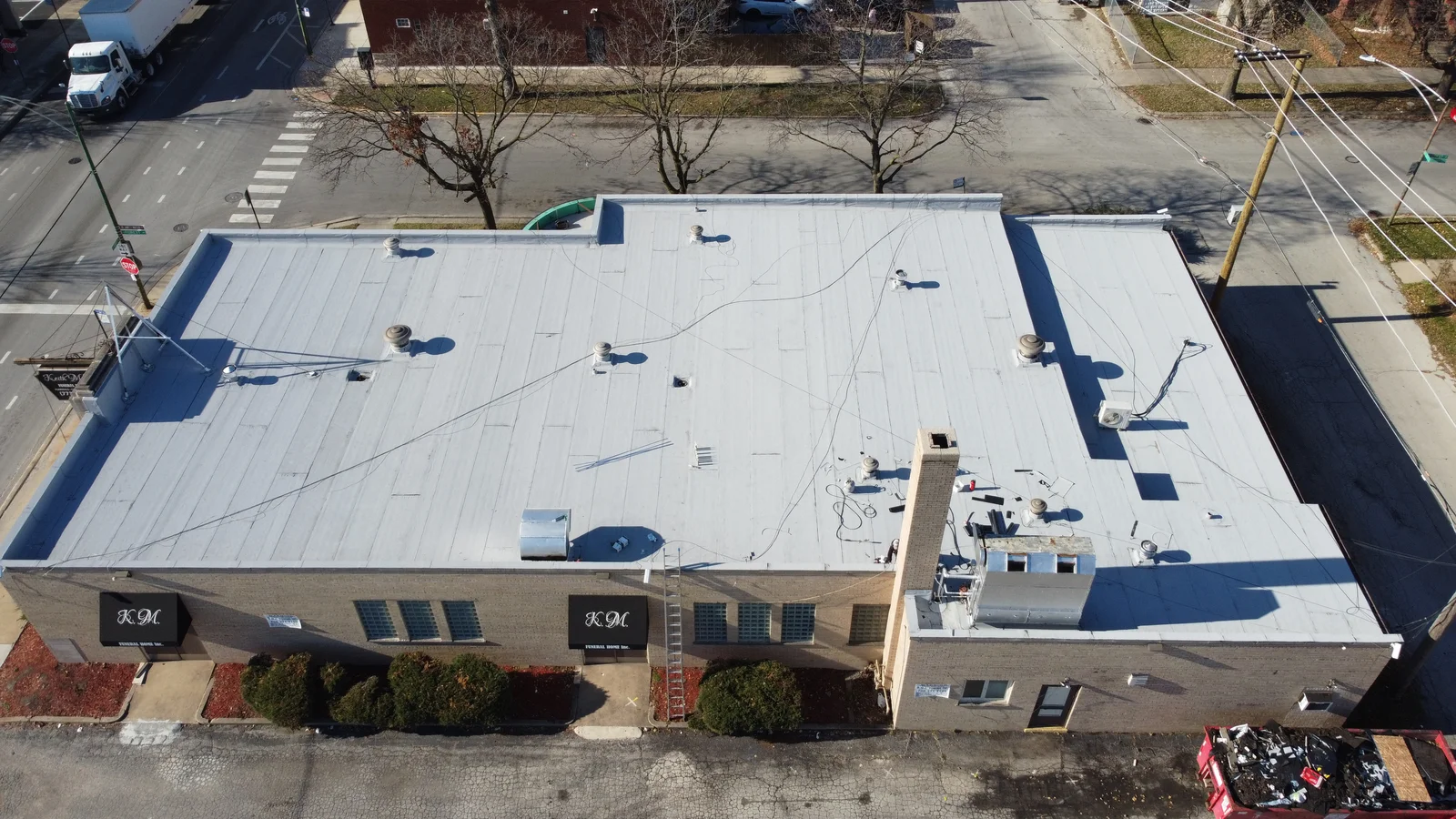
Commercial strip, coated end to end
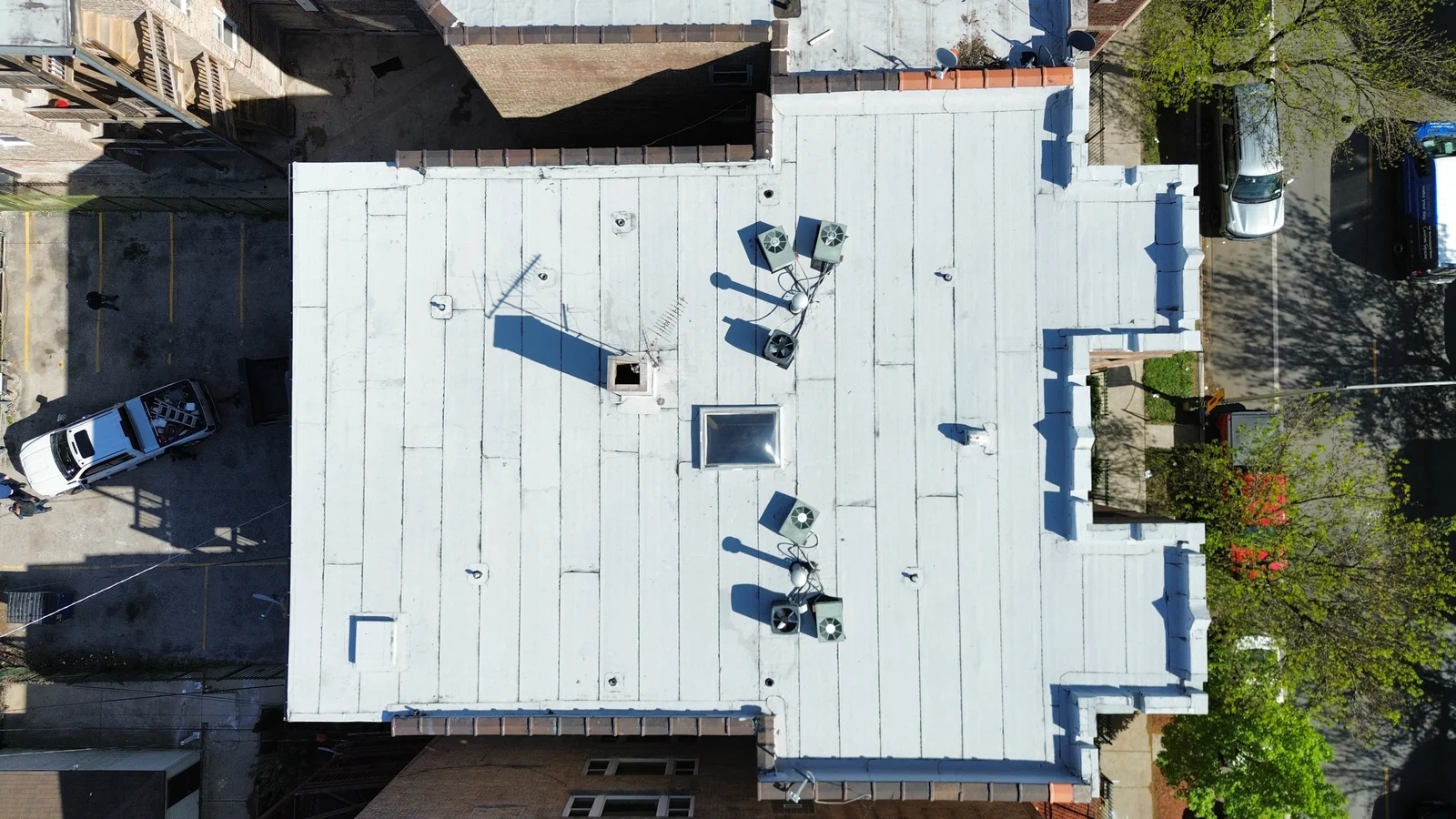
L-shaped field, one clean system

New membrane, clean field
New Flat Roof Questions
How much slope does a new flat roof actually need?
A quarter inch of fall per foot toward the drainage point is the target, built in with tapered insulation. Anything less and you get ponding, which is the single biggest life-shortener on a low-slope roof. If your existing deck is dead level we build the slope on top of it rather than pretending gravity will sort it out.
Can you tie a new addition roof into my existing roof?
Yes, and the tie-in is the part we plan hardest. Where new low-slope meets an old shingle slope we run a proper transition with the membrane carried up under the shingle course and flashed, not butted and caulked. Where it meets brick we cut a reglet. Mismatched materials meeting badly is the number one source of leaks on additions.
Do I need drains, or will scuppers work?
Depends on the building. Interior drains suit larger roofs and buildings where you cannot dump water off the edge onto a neighbor’s lot line. Scuppers through a parapet are simpler, cheaper and easier to inspect, and they work fine on garages and small additions. Chicago lot lines often decide this for us.
How thick should the insulation be on a new low-slope roof?
Thicker than most old Chicago roofs have. We size polyiso to the space available at door thresholds and window sills, and to what the framing can carry. On a rear addition with a heated room underneath, the insulation upgrade is usually the part homeowners notice most once winter hits.
Can I walk on it or put a deck over it after?
Tell us that before we pick the membrane. Foot traffic and furniture want modified bitumen or a membrane with walk pads, and a pedestal deck system needs to be planned into the assembly, not dropped on later. Retrofitting traffic onto a roof built for none is how brand new membranes get punctured.
Do you install flat roofs on garages and detached buildings?
Often. Alley garages are a large share of our low-slope installs across the south suburbs, and they usually finish in a single day. Same details as a house roof: real slope, real edge metal, real terminations. Call (312) 590-4853 and describe the building.
Tell Us What You Are Building
Addition, garage, porch deck or the back half of a two-flat. Describe it on the phone and we will talk through membrane options and give you a real number off satellite measurements before you hang up.