
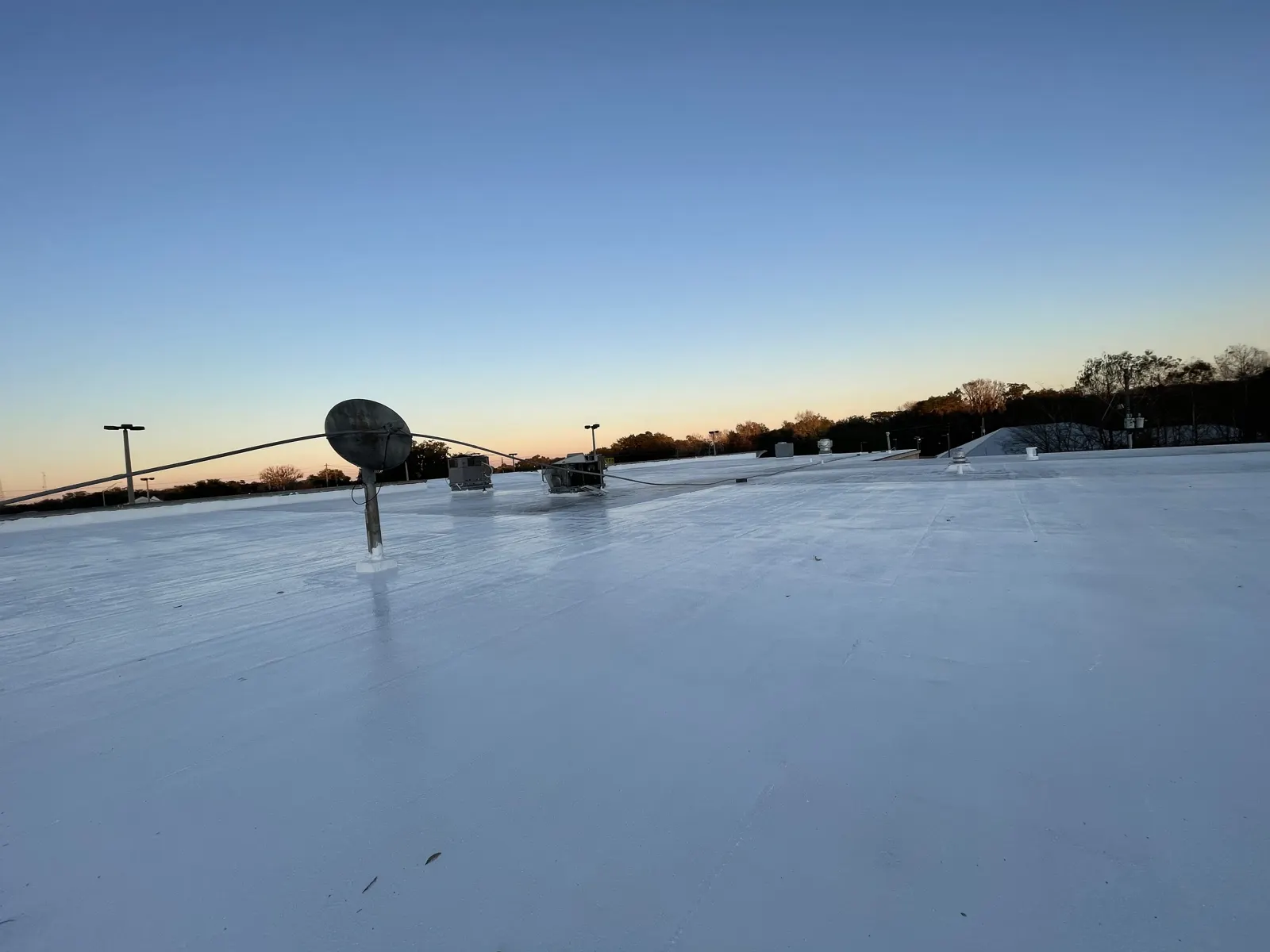
Seams walked and probed before dark
Find The Actual Leak, Then Fix The Actual Leak
Water on a flat roof travels. The stain on your ceiling is almost never under the hole. We chase low-slope leaks back to the split seam, the failed boot or the parapet joint that is really letting water in, fix that, and tell you straight whether the rest of the roof has years left or months.
The Five Things That Break On Low-Slope Roofs
After thirteen years on Chicago-area flat roofs, the failures repeat. Almost every service call we run comes back to one of these, and knowing which one you have changes both the fix and the price.
- Split seams. Wherever two sheets lap, thermal movement works the joint. On old asphalt roofs the lap dries out and opens. On mechanically fastened membranes the seam peels back at a fastener line. This is the most common leak we find, and on a sound roof it is a same-visit fix.
- Blisters. Trapped moisture or air under the membrane turns to vapor in July, lifts a bubble, and the bubble eventually cracks at the crown. A blister that has not broken can sometimes be left alone. One that is weeping needs to be cut, dried, and patched with a target patch, not smeared over.
- Ponding. Standing water forty-eight hours after a rain is not normal, it is a symptom. The roof has settled, the drain is high, the insulation compressed, or there was never real slope to begin with. Ponding does not itself make a hole, it just accelerates every other failure sitting under it.
- Parapet and wall flashing. Chicago party walls and parapets are where low-slope roofs die. Mortar joints go soft, surface-mounted counterflashing pulls loose, coping stones crack and let water down inside the wall. You get a ceiling stain along an exterior wall and everyone blames the roof field.
- Penetrations. Vent boots, drain bowls, HVAC curbs, old antenna mounts, abandoned pipes nobody ever cut off. Every one of them is a hole through your roof that depends on a seal, and seals age faster than membrane.
Why We Water-Test Instead Of Guessing
On a pitched roof, water runs downhill and the leak is usually uphill of the stain. On a flat roof water spreads sideways between the membrane and the deck, runs along a seam or a joist, and drops through the first low point in the deck it finds. We have traced stains twenty feet from the entry point.
So we do not caulk the first suspicious spot and call it done. We walk the roof cold and look for the physical evidence: soft spots underfoot, gravel or ballast displaced, chalky membrane, seams that lift with a probe. Then we isolate sections and water-test, working uphill from the drain, until the stain wets. That takes longer than a guess. It also means you stop paying for the same leak twice.
The Blizzard Call, And What Emergency Means Here
A Chicago three-flat owner called on a Friday night with water coming into a top-floor unit. It was blowing snow and there was nothing anybody could do on a roof in the dark. We told him the truth about that, told him what to put under the drip, and said the crew would be there in the morning.
The next morning our guys were on that roof shoveling ice off the field in conditions nobody wants to work in, cleared down to the membrane, found the failure and got a patch on it. The unit stayed dry through the rest of the storm. That is what emergency response actually looks like in February: not a miracle at midnight, but a straight answer at night and boots on the roof at first light.
Storm season is the same. If wind lifted an edge or a hailstorm bruised a coating, get the patch on first and sort the paperwork second. We handle storm damage repair and will walk the claim with you if there is one.
Repair, Re-Cover Or Replace
The honest conversation on any low-slope service call is whether repair is still the smart money. Here is roughly how we call it.
Repair makes sense when the failures are isolated, the field membrane still has flexibility, the insulation underneath is dry, and the roof is not near the end of its rated life. A handful of seams and boots on a twelve-year-old TPO roof is a repair, full stop.
You start talking about a coating or a re-cover when the field is sound but tired: chalking, minor crazing, a lot of small repairs stacking up, but dry insulation below. A silicone or acrylic coating can buy real years on a roof like that at a fraction of tear-off cost, and it is one of the more useful tools we have in this climate.
Replacement wins when the insulation is wet. Once water is in the polyiso or the fiberboard, no patch and no coating fixes it. Wet insulation loses its R-value permanently, holds moisture against the deck, and rots the structure from above. We find it by feel and by cutting a test square. If yours is wet we will tell you, and you can read what that job looks like on our flat roof replacement page.
What A Service Call Costs And How Fast We Move
Most low-slope repairs are a half-day visit. We give you a real number before we start, based on what we find on the roof rather than a menu price, and we photograph everything so you can see what you paid for. Non-emergency calls in Alsip and the south suburbs usually get scheduled inside the week. Active leaks jump the line.
Building managers and landlords: ask about a maintenance walk. Twice a year on the roof, seams probed, drains cleared, small stuff caught while it is still small, is dramatically cheaper than the leak you find through a tenant complaint. See recent low-slope work in the gallery, or send photos through the contact page and we will tell you what he is looking at. We run repair calls constantly in Oak Lawn, Harvey and Romeoville.
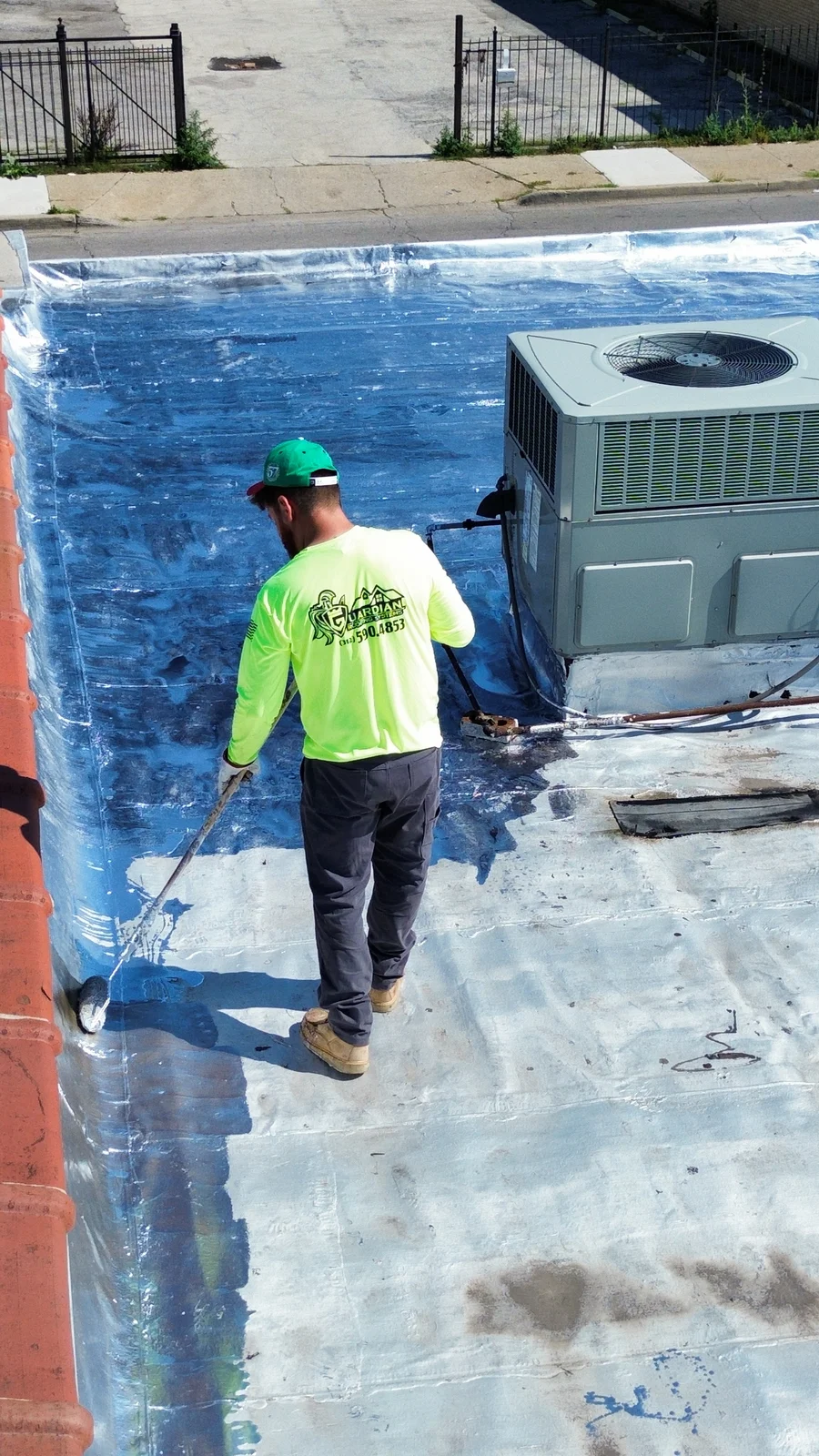
Coating rolled corner to corner
The Short Version
Seams, blisters, boots, parapet flashing and ponding. Water-tested so the fix lands on the real leak, not the stain.
Emergency patch response, including winter. Most repairs are a half day with a price before we start.
(312) 590-4853How A Leak Call Runs
Stop The Bleeding
Active leak gets a temporary patch fast, weather permitting. Interior protection advice on the phone before we arrive.
Read The Whole Field
Whole roof underfoot. Soft decking, lifted laps, failed boots, clogged drains, cracked coping all logged with photos.
Water Test
Sections isolated and flooded working up from the drain until the stain wets. No guessing, no caulking the wrong spot.
Fix & Report
Target patch, welded or torched to match the existing system. Then a straight read on how much life the roof has left.
Related work: roof past patching? Flat roof replacement. Adding a garage or an addition? Flat roof installation. White membrane specifically? TPO roof repair. Apartment buildings, storefronts and warehouses go through commercial roof leaks.
Repairs Checked From The Air
After a repair we fly the roof and photograph the field, because a patch you cannot see in context is a patch you have to take on faith.

Torch-down made whole again
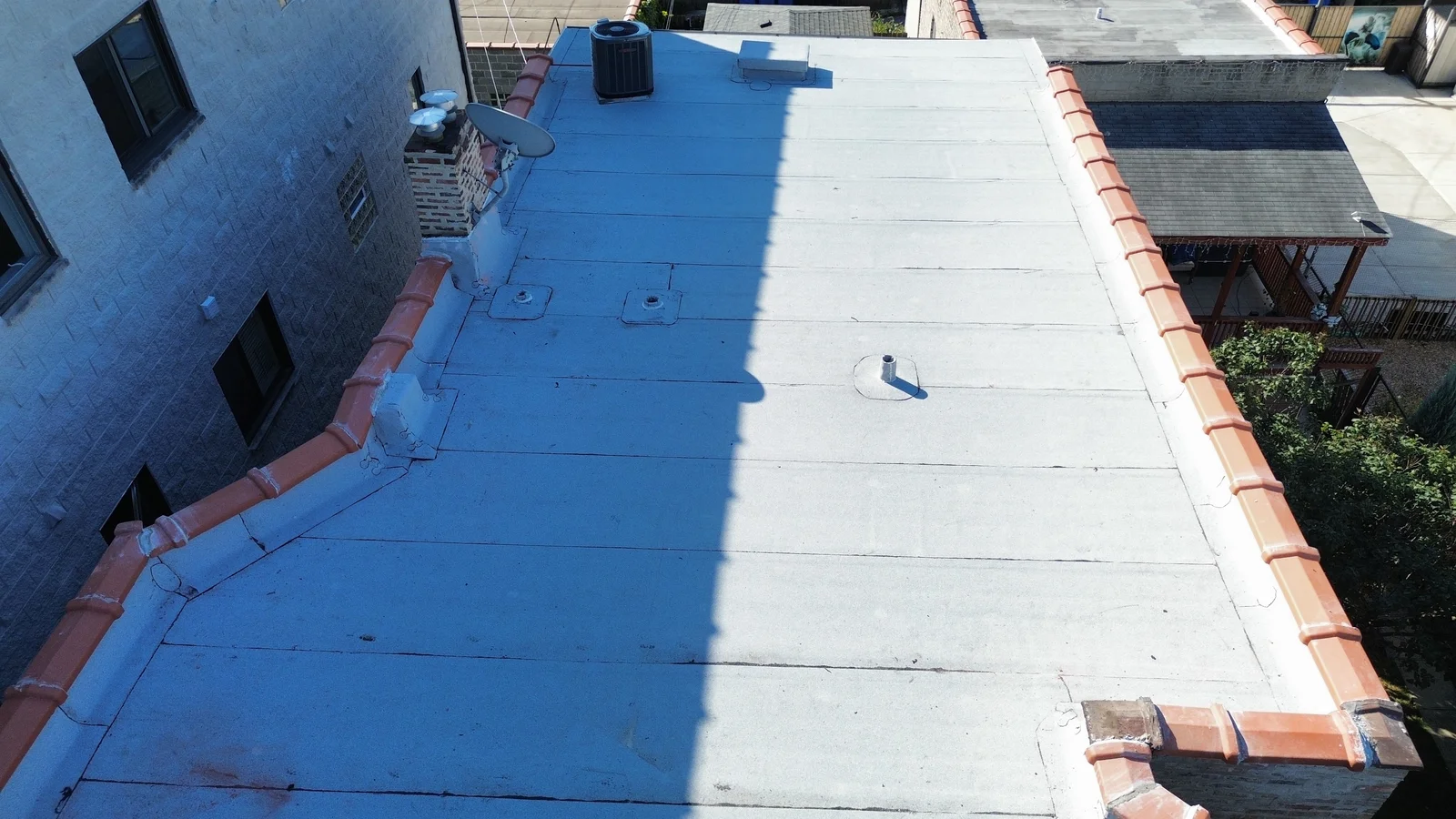
Halfway line, before and after
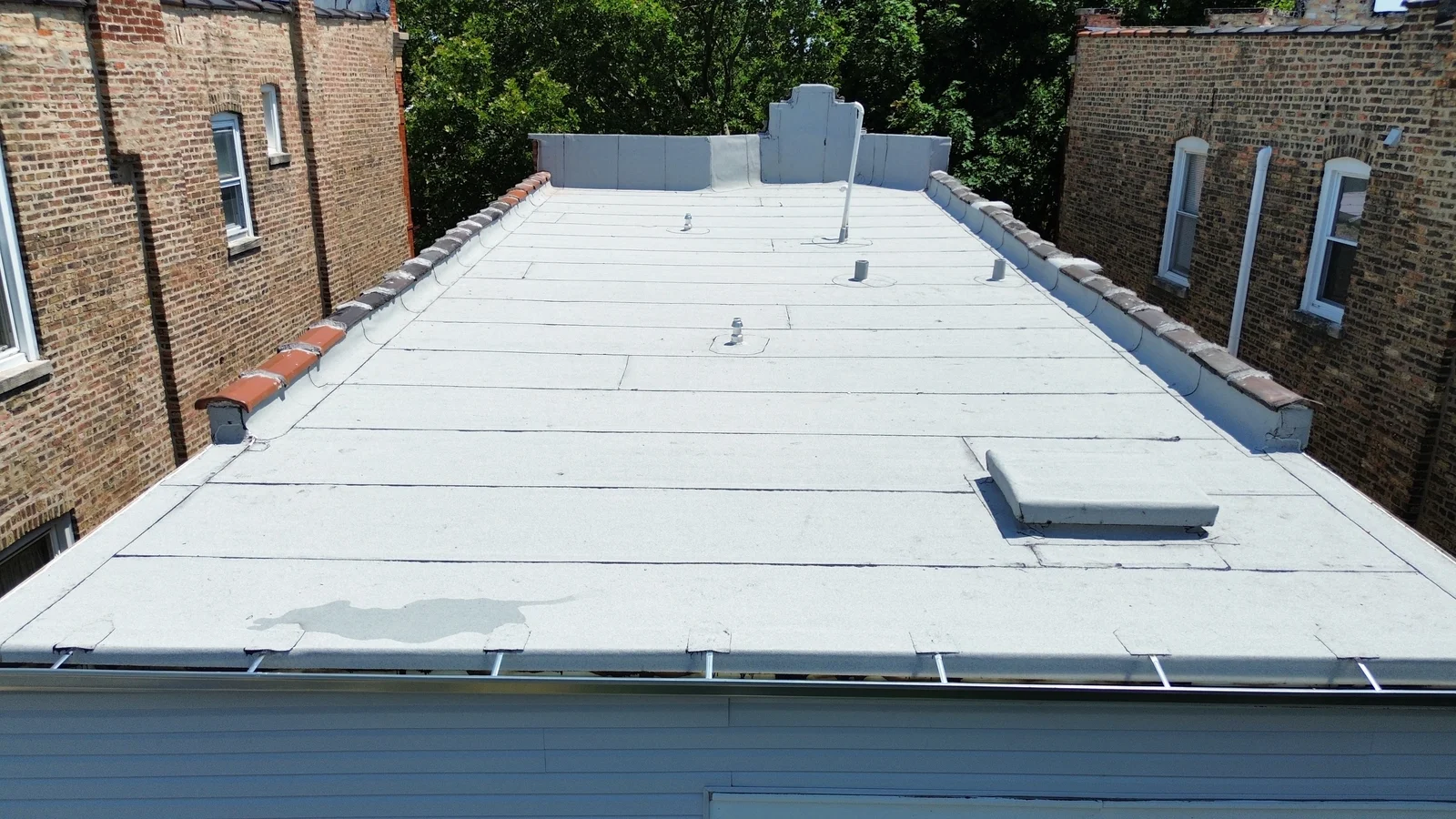
Hatch flashed, field sealed
Leak And Repair Questions
My ceiling is stained but the roof looks fine from up there. What now?
That is normal on low-slope. Water gets under the membrane and travels along a seam or a joist before it drops. The roof surface directly above the stain is often perfectly sound. We work backward from the stain with a water test rather than patching whatever looks worst, because whatever looks worst is frequently not the leak.
Will you come out in winter?
Yes. Cold weather changes what materials will bond, so a January visit may mean a solid temporary patch now and a permanent repair when it warms. We have shoveled ice off Chicago three-flats the morning after a Friday-night call. We will always tell you which of the two you are getting and why.
There is water sitting up there days after it rains. Is that a leak?
Not by itself, but it is a problem. Ponding means the roof lost its slope through settling, compressed insulation or a high drain. Standing water punishes seams with extra UV, weight and freeze-thaw. We look at whether tapered fill, a drain reset or a sump can move the water before that pond finds a seam.
Can you patch a roof somebody else installed?
Almost always. We work on TPO, EPDM, modified bitumen, built-up gravel roofs and coated systems, and we match the repair to whatever is already up there. What we will not do is weld a mismatched material onto your roof because it is what fits in the truck. If we cannot get the right material, we say so.
Is a coating a real repair or a band-aid?
It is a real tool used at the right time. Over a sound, dry field membrane with the seams and details properly prepped first, a silicone or acrylic coating adds legitimate years and cuts summer heat load. Sprayed over wet insulation or open seams it is a waste of money that hides the problem for one season.
Do you do maintenance contracts for landlords?
We do scheduled walks for owners of two-flats, three-flats and small commercial buildings. Twice a year: drains cleared, seams probed, penetrations resealed, condition photographed. Catching a lifted lap in October costs a fraction of the tenant call in January. Ask about it at (312) 590-4853.
Something Dripping Where It Should Not Be?
Call and describe what you are seeing. If it can be patched today we will tell you. If the honest answer is first thing tomorrow morning, you will get that instead of a promise nobody can keep in a snowstorm.