

Fascia line above the entry · Where sags show first
Gutter Repair Before The Water Finds Your Basement
Most gutter problems announce themselves the same way: a waterfall over the front edge, a stripe of soil splashed up the siding, or a wet spot in the corner of the basement after every storm. Those are fixable, usually in a morning, and usually for a fraction of what people expect.
The Four Failures We See Most
Gutters do not fail creatively. After thirteen years on Chicagoland houses, nearly everything we get called out for lands in one of four buckets, and knowing which one you have tells you most of what the fix will cost.
One: The Run Has Gone Belly
A sag in the middle of a run means the hangers lost their grip. Spike-and-ferrule systems, which is what most houses built before the mid-nineties got, hold with a single long nail driven through the front lip into the fascia. Wood swells and shrinks through every Illinois season, the hole gets a little bigger each cycle, and eventually the spike backs out under load. Once one lets go, its neighbors carry the extra weight and start walking out too.
You can see it from the driveway: the bottom line of the gutter should run dead straight against the fascia. A dip anywhere along it means water is pooling there instead of moving to the outlet. Pooled water is heavy, roughly eight pounds a gallon, and in a bellied run it keeps pulling the sag deeper.
The fix is not more spikes in the same tired holes. We pull the failed fasteners, check whether the fascia behind them is still solid wood, and rehang the run on hidden hangers at 24 inch spacing, re-chalking the pitch as we go. If the fascia is spongy, that board gets replaced first. Screwing a hanger into rot is a repair that lasts until the next heavy rain.
Two: Seams And End Caps Letting Go
Every joint in a gutter is a place aluminum meets aluminum with sealant in between, and sealant has a service life. On sectional gutter that means every ten feet. Even on seamless runs, the corners, outlets and end caps are joints.
End caps are the classic. The cap at the end of a run takes the full push of water arriving from forty feet away, and when its bead of sealant gives up, the leak is right at the corner of the house. Homeowners often mistake that steady corner drip for a roof leak. It is a two dollar joint that needs cleaning, drying and re-sealing with a proper gutter sealant, not a caulk from the garage that fails again by spring.
Split seams on sectional runs are a different call. We can clean and re-seal them and it holds for a while. But if we are re-sealing four laps on one elevation, you are paying to patch a system that will leak somewhere else next year. That is where gutter replacement with seamless runs stops being an upsell and starts being the cheaper math.
Three: Downspouts Dumping At The Foundation
This is the one with real money behind it. A downspout that discharges right against the block is aiming your entire roof onto the most vulnerable place on the property. A 1,500 square foot roof sheds close to 900 gallons in a one inch rain. Send even a quarter of that into the four feet of soil next to the wall and you are running a slow hydraulic test on your foundation every time it storms.
The failure modes are boring and constant. A missing elbow at the bottom. An extension knocked off by a lawnmower two summers ago. A buried line silted shut, so the downspout backs up and overflows above grade where the homeowner never sees it behind the shrubs. A splash block sunk so far into the mulch it now slopes back toward the house.
- Water should be leaving the base of the downspout at least four to six feet from the wall, farther on flat lots.
- Every extension should slope away with no dip that traps water and freezes.
- Buried discharge lines need a visible outlet you can check. If you cannot find where the line comes out, assume it is plugged.
- Downspouts tied into old clay sewer lines are worth reconsidering, both for backup risk and for what the municipality now allows.
Four: Ice Did It
Winter damage is its own category here. When an ice dam builds at the eave, the gutter fills with a solid block that can weigh several hundred pounds on a long run. That load bends the front lip outward, pulls hangers, tears end caps loose and sometimes rips a whole section off the fascia along with the wood it was screwed to.
When We Tell You Not To Repair
We would rather do a fair repair than sell you something you do not need. There are also gutters past it, and here is where we say so: aluminum cracked and brittle from decades of UV, runs visibly undersized for the roof feeding them, sectional systems where we are chasing the fourth or fifth seam, or gutter that is fine but hanging on fascia that has to come off anyway. Repairing any of those is renting time.
The other honest call: if your roof is close to the end and a shingle roof replacement is coming in the next year or two, hold off on major gutter money. New gutters coming off during a tear-off is wasted labor, and the drip edge should be set with the roof anyway. We will tell you to wait and just stabilize what you have.
How We Handle A Repair Call
You describe what the water is doing, we come look, and you get told what we found rather than what we can sell. Small jobs, a couple of end caps, resetting hangers on one elevation, adding downspout extensions, are often done the same visit. Bigger work gets a straight price before we start.
Angelo runs the jobs himself, the way Frank ran his. If a repair will hold, we say how long. If it will not, we tell you that too, and you decide. Finished work is up in the gallery, and you can send photos of what your gutters are doing through the contact page if you would rather show than describe. We repair gutters most weeks in Cicero, Villa Park and Naperville.
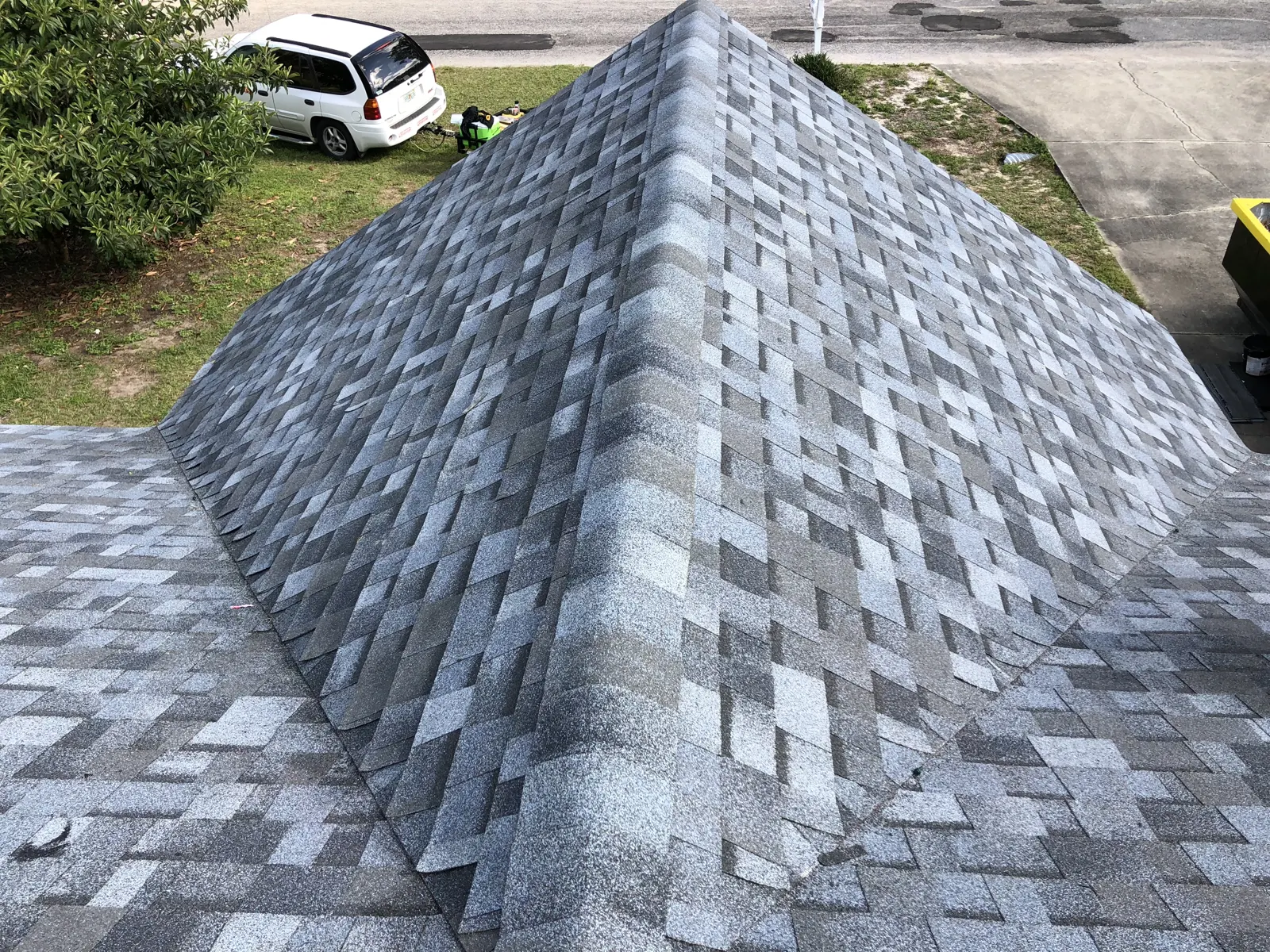
Steep hip · Valleys concentrate the runoff
The Short Version
Sagging runs rehung on hidden hangers into sound wood. Seams and end caps cleaned and properly sealed. Downspouts discharging four to six feet out. Ice-bent sections straightened or swapped.
Small repairs often same visit. Straight price before anything bigger starts.
(312) 590-4853What A Repair Visit Looks Like
You Describe It
Where it overflows, when it drips, what the basement does after a storm. Photos help. Most of the time we know the cause before we arrive.
We Find The Cause
Ladder up, check pitch, hangers, seams, outlets and the fascia behind them. A hose test tells the truth faster than a guess does.
Straight Answer
Worth repairing, or throwing money at it. You get the number and the reasoning, including when the right move is waiting for the roof.
Fix And Flush
Hangers reset, seams sealed, downspouts extended, then every run flooded with water while you watch it drain.
Related work: past the point of patching? Gutter replacement with seamless runs. Adding gutter where there is none, or building on? Gutter installation. Roof and gutter both aging out? Shingle roof replacement. Ice or wind tore the run off? Storm damage repair. We take repair calls across Cicero, Villa Park and Naperville.
Gutter Repair Questions
My gutter overflows in heavy rain but it is clean. Why?
Usually one of three things: the run is undersized for the roof feeding it, a valley is dumping onto a short section faster than it drains, or the pitch is wrong so water pools instead of moving to the outlet. Cleaning fixes none of those. We check pitch and capacity first.
Can a gutter problem actually cause a wet basement?
Constantly, in this soil. A downspout discharging next to the wall puts hundreds of gallons into the clay beside your foundation during one storm. Clay holds it, saturated soil pushes, and any hairline crack in the block leaks. Check the downspouts before you price drain tile.
Do you clean gutters as part of a repair?
We clear whatever we have to clear to see what is going on and to test the run with water. Standalone seasonal cleaning is not our business, but a run packed with debris and shingle grit gets emptied before we call anything fixed.
My gutter tore off in an ice storm. Is that insurance?
Sometimes, depending on the policy and how the damage happened. Wind tearing a run off is more often covered than gradual ice load. We photograph what we find, and if a claim makes sense we will walk you through it on our roof insurance claims page rather than guessing at your coverage.
How much of a gutter can be repaired versus replaced?
Section by section is normal. Replacing one bent elevation and keeping three good ones is a fair job and we do it often. Color match on aluminum a decade old will not be perfect, and we tell you that before we hang it rather than after.
Can you repair gutters in the winter?
Emergency work, yes. We have gone out mid-storm to clear ice and stop water getting inside. Sealant does not cure properly in the cold, though, so seam work done in January is a temporary hold we come back and do right once it warms up. We are upfront about which one you are getting.
Tell Us What The Water Is Doing
Call Guardian Roofing and describe the overflow, the drip or the wet corner in the basement. Half the time we can name the cause on the phone and tell you whether it is a morning of work or something bigger.