
Two Mokenas, And We Roof Both Of Them
There is the Mokena around Front Street and the Rock Island tracks, small and old and built when this was a farm stop. Then there is everything that filled in around it after 1990. Same village, two completely different roofing problems, and we get called for both in the same week.
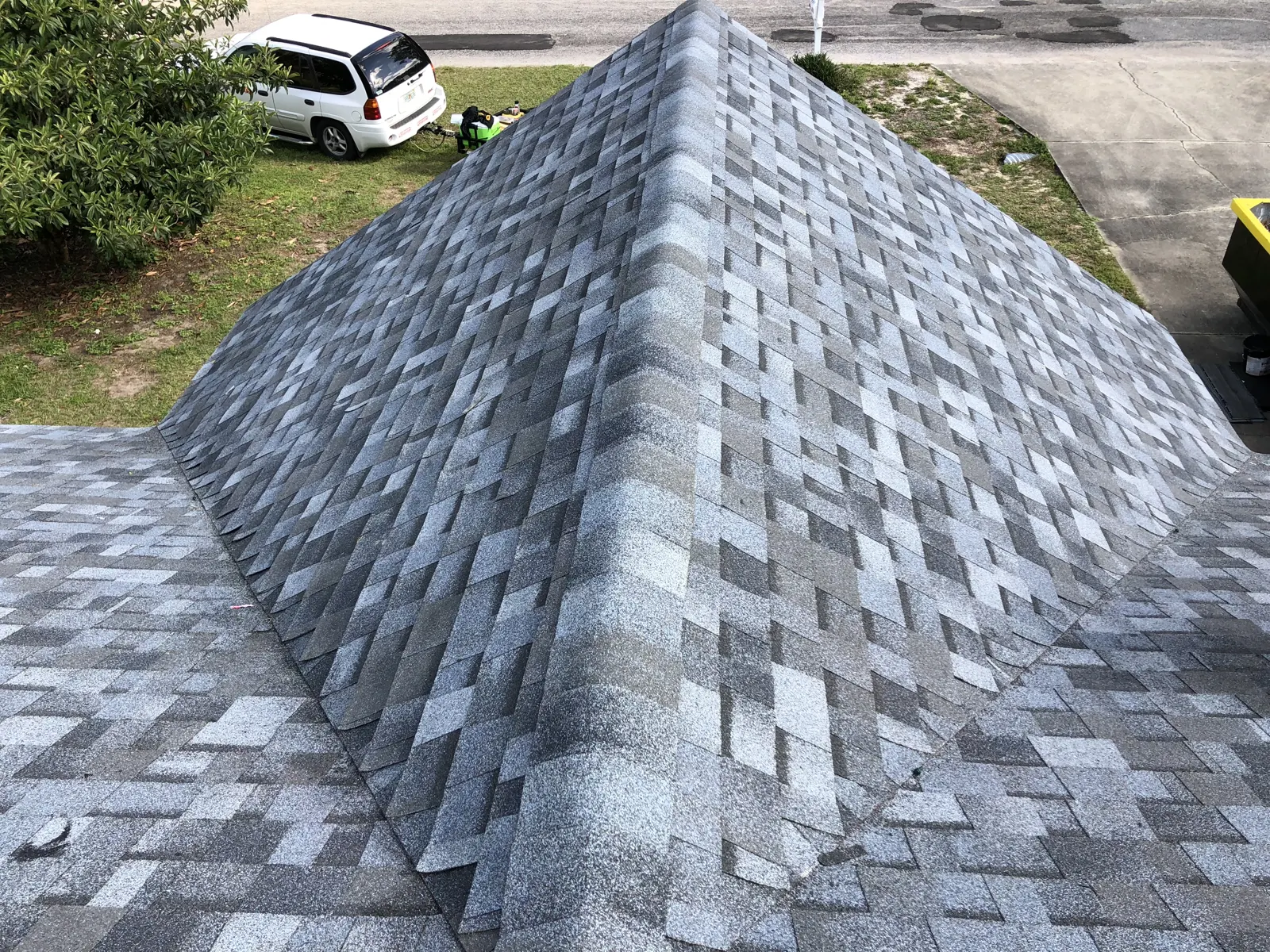
Steep hip, hips and ridge capped clean
Old Village Core, New Village Everything Else
The blocks near Front Street and the Metra station still hold the original village: small older houses, some going back a century, tight lots, mature trees hanging directly over the roofs. Push a few minutes in any direction and you are in the boom that turned Mokena into a commuter town, big two-stories with steep hips and multiple gables built from the early nineties through the late 2000s.
Those two halves need different things from a roofer. In the old core we are dealing with additions, older decking, chimneys, and tree damage from limbs that have been growing over the house since the Ford administration. In the subdivisions we are dealing with roofs whose original install quality decides everything, and with rooflines steep enough that walking them is genuinely a skill. A crew that only does one of those two well is going to be wrong on half of Mokena.
Steep Hips Are A Different Animal
A lot of the newer Mokena houses were built with steep pitches and full hip roofs, which look sharp and hold up well and are considerably harder to work. Hips mean cap shingles on every angle, more cut waste, more fastening at the hip line, and no easy place to stage material. It is slower work and it needs staging equipment rather than somebody scrambling.
What that means practically is that the hip line is where these roofs fail first. Caps lift in wind before field shingles do, and once a cap is gone the hip is open. When we handle wind damage repair out here it is usually hips and ridges rather than a whole slope. When we do a full shingle roof replacement we set the hip and ridge with the right cap product and the right nail placement rather than cutting three-tabs into caps the way production crews used to. It is a small detail that decides whether the roof makes twenty-five years.
What We Work On In Mokena
- Shingle roof replacement on steep-hip two-stories with proper hip and ridge cap product.
- Shingle roof repair in the older Front Street blocks, including tree-limb damage and chimney flashing.
- Wind damage repair at hip lines and ridges, the first thing to go on these rooflines.
- Gutter replacement under heavy tree cover where runs fill every fall and pull away from the fascia.
- Storm damage repair with photos and claim documentation handled before we clean anything up.
- Commercial roofing on the LaGrange Road and Wolf Road business buildings, most of them low-slope.
Trees, Gutters And The Fall Routine
Mokena has real tree cover, especially in the older sections, and trees are hard on roofs in two ways most people never think about. Limbs that touch or hang low abrade shingles every time the wind moves them, wearing granules off a strip you cannot see from the ground. And in fall, the gutters pack solid. A packed gutter freezes into a solid block in January, and that block of ice pulls the run down off the fascia and forces water back under the shingle edge.
We check for both on every visit here. Trimming back what overhangs the roof is the cheapest roof maintenance that exists, and if your runs are already sagging or leaking at the corner joints, gutter repair now beats a fascia rebuild in two years. On roofs under heavy cover we often talk about larger downspouts and cleaner run pitch during a replacement, since the crew is already up there and the fascia is exposed.
Valleys Do The Real Work On These Rooflines
The nineties and 2000s builders out here liked complicated rooflines. A front gable over the entry, a bump-out for the dining room, a side-load garage at its own angle, and a bonus room dormer stuck above it. Every one of those intersections creates a valley, and a valley is where two whole roof planes send their water into one narrow channel. On a big Mokena two-story a single valley can carry the runoff of half the house during a hard rain.
That is why we treat valleys as their own line item rather than something the shingle crew handles on the way past. Ice barrier gets run up the valley the full width it needs, not the twelve inches somebody could get away with. We decide closed cut or open metal based on how much water the valley actually carries and how much debris drops into it from the trees, and where a valley dumps directly onto a lower roof we build in a kickout and a splash detail so the water is not chewing a hole in one spot for the next twenty years. Nearly every valley leak we get called for on these houses traces back to one of those three details being skipped.
Picking Shingles For An Exposed Subdivision
Material choice matters more here than it does on a sheltered lot. The newer sections of Mokena were cut out of open farm ground, so a subdivision built in 1998 has trees that are still twenty years from doing anything useful about wind. On a steep hip with no windbreak, we spec a laminate shingle with a wind rating that means something and we install to the high-wind nailing pattern rather than the standard one. It is six extra nails per shingle and it is the cheapest insurance on the whole job.
The Kind Of Roofer You Can Actually Reach
Mokena is a commuter town and people here are not home during the day, which means the roofing relationship is mostly phone calls. Ours works because Angelo Ristich runs the company his father Frank trained him in and supervises the jobs himself. You are not routed to a call center or handed off to a salesman who disappears after the contract. Straightforward roofs get priced off satellite measurements while you are on the phone, and financing help is there when the number lands hard.
Guardian has been at it since 2013, A+ with the BBB, HomeAdvisor Elite Service award, licensed and insured in Illinois. Recent jobs are photographed in the gallery, and the contact page gets you a callback the same business day.

Underlayment run tight to the peak
Mokena At A Glance
Old village core plus nineties and 2000s subdivisions. Steep hip roofs, heavy tree cover, and gutter work that matters more than people think.
Mon to Sat, 9 to 5, with emergency patch response when a limb or a storm opens a roof up.
(312) 590-4853Where Else The Trucks Go Around Here
Mokena is one stop on a Will County loop we run constantly. New Lenox is minutes west with almost the same building years, Frankfort is south with bigger lots and steeper roofs still, and Homer Glen is north where the houses were built one at a time instead of by the block. Same crew, same trucks, same week. If a wind event takes caps off hips on your street, odds are we were on somebody’s hip roof two towns over the day before. The whole list is on the service areas page.
Mokena Roofing Questions
My roof is too steep to walk. Does that raise the price?
Yes, and any honest roofer will say so. Steep pitch means staging, harnesses and slower production, and hips add cap material and cut waste on top of that. We tell you the pitch factor is in the number rather than hiding it in a lump sum.
A branch came down on my roof. What now?
Call and tell us whether it is still up there and whether water is coming in. We patch first and assess second. Then we photograph the damage properly, because a tree strike is usually a covered loss and the documentation has to be right before anything gets cleaned up.
Why do my hip caps keep blowing off?
Almost always the cap product or the nail placement. Cut-up three-tab used as cap on a steep hip does not hold in the kind of wind this open ground gets. We use rated hip and ridge cap and set the fasteners where they belong, which is the whole difference.
Do you work on the older houses near Front Street?
Regularly. Those need a roofer willing to price decking and flashing rebuilds as real line items, because the original details on a house that age were solved differently. We inspect and tell you what we expect to find before the tear-off starts.
My gutters overflow every fall. Bigger gutters or gutter guards?
Depends on the tree. Under heavy cover, guards still need cleaning and some clog worse than open gutters do. Often the better fix is correct run pitch, more downspouts and a fall cleaning habit. We will tell you what your specific roof and trees need instead of selling you a product.
Can you schedule around my commute?
Yes. Most Mokena roofs are a one-day job and we do not need you home for it. We need the driveway clear, and we magnet-sweep the yard and drive before we pull out. Set it up through the contact page or by phone.
Caps Missing Off The Hip? Call Before The Next Rain.
Call Guardian Roofing, tell us what your Mokena roof is doing, and get a straight answer with a real number. Or send the details through the contact page and we will call you back the same business day.