Roofing A Town Built On A Limestone Bluff
Lemont does not roof like the rest of southwest Cook. The old town sits down in the valley by the I&M Canal, the newer subdivisions sit up on the bluff catching wind off open ground, and the housing runs from 1880s limestone cottages to 2010s two-stories. We take the drive out Archer for it, and we bring the right crew for whichever half of town you live in.
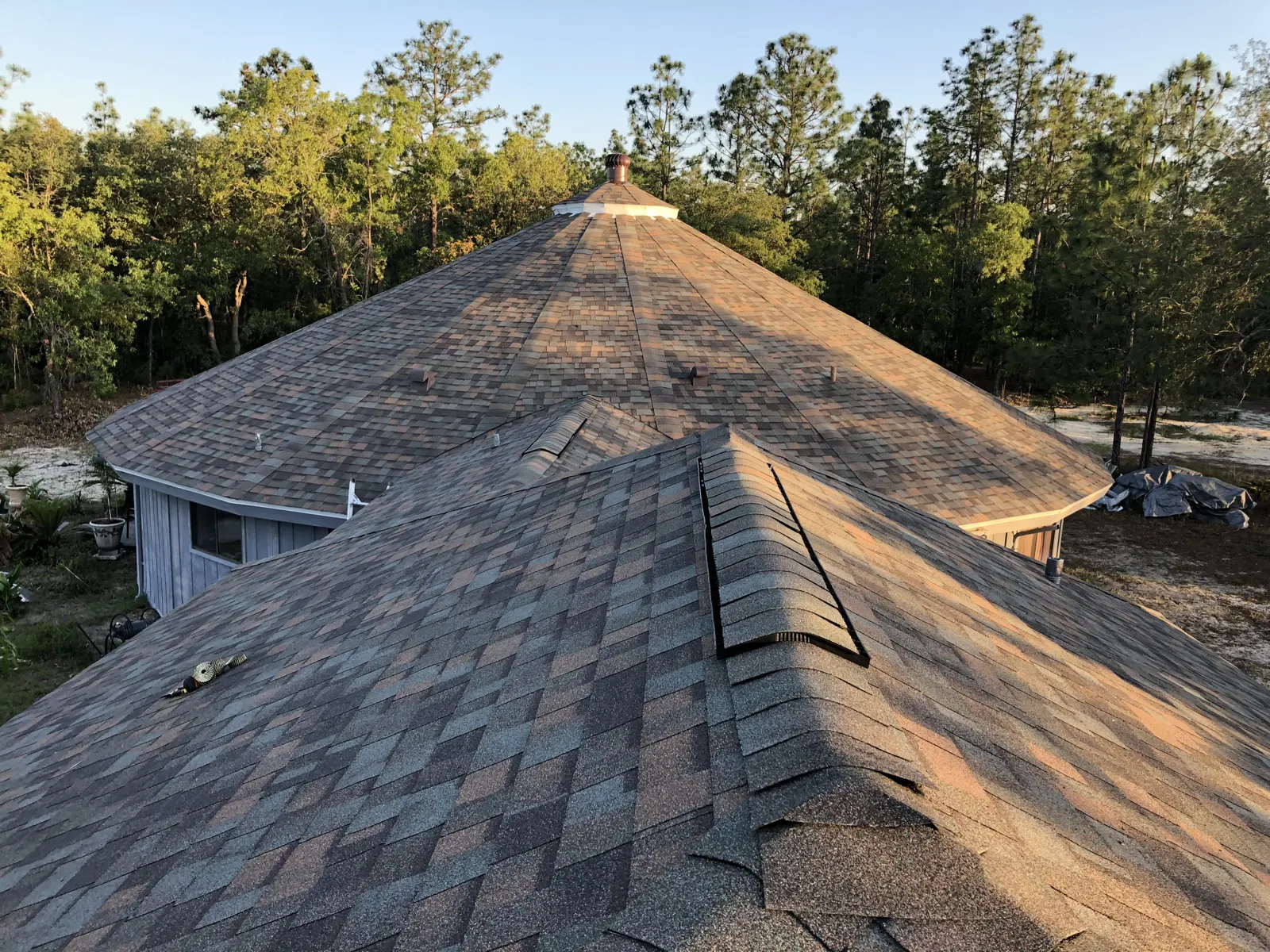
Architectural shingle, last light on the ridge
Old Town Down Low, New Town Up High
The quarries that built half of Chicago are the reason Lemont looks the way it does. Cut stone from the local pits went into the churches, the storefronts on Main and Illinois Street, and a lot of the little worker houses that still stand on the slope above the canal. Those buildings are steep, narrow and old, and their roofs were designed in an era when nobody thought about ice-and-water membrane or ridge ventilation. Working on them means dealing with masonry walls that meet the roof at odd angles, chimneys that were never meant to shed a modern snow load, and framing you cannot assume anything about until you get the old layers off.
Up on the bluff it is a different job entirely. The subdivisions north of Bluff Road and out toward the county line are 1990s and 2000s construction on big lots with little shelter, so wind is the enemy rather than age. Those roofs are large, steeply pitched and cut up with front gables and turret-style bump-outs that look terrific and take patience to flash. When we quote up there we are pricing complexity and access as much as square footage, because a walkable ranch and a 12/12 with three valleys are not the same day of work.
Grade is the other Lemont variable nobody mentions until the dumpster shows up. Streets that drop toward the canal, driveways cut into the slope and lots that fall away behind the house all change how we stage material, where equipment sits, and how the crew gets shingles onto the roof safely. We look at that on the inspection instead of finding out on delivery morning.
Work We Do Most In Lemont
- Shingle roof replacement on bluff-side homes, full tear-off with ice-and-water carried well past the wall line for those exposed north slopes.
- Metal roof repair and standing seam work on porches, bay projections, turret roofs and the older buildings downtown that already carry metal.
- Shingle roof repair after wind events, especially ridge cap and hip loss on the exposed upper streets.
- Gutter installation and repair where roof water needs to go somewhere sensible on a sloped lot instead of straight at a foundation.
- Insurance claim help when a storm does real damage and the carrier wants documentation before they will talk numbers.
Metal Where It Earns Its Keep
We do not push metal on people who do not need it, but Lemont has more good reasons for it than most towns we work. Standing seam sheds snow off steep slopes instead of letting it sit and dam. It handles the wind exposure up on the bluff without lifting. It suits the look of the older stone-and-brick buildings in ways asphalt never quite manages, and it lasts long enough that the price stops looking crazy once you divide it across the years.
The catch is that metal punishes bad detailing. Panels move with temperature, so fastener choice, clip spacing, valley detail and the transition where metal meets an adjoining shingle roof all have to be right the first time. Half the metal repair calls we take in Lemont are fixing somebody else’s flashing, not the panels themselves. If you want a straight opinion on whether metal makes sense for your roof, ask and you will get one, including when the answer is no.
Wind, Snow And The Exposed Slopes
Homes on the high ground west and north of downtown take weather harder than the sheltered old blocks. Open farmland and forest preserve to the west means nothing slows a straight-line wind before it hits your ridge. We see lifted ridge caps, torn starter courses and peeled hip shingles up there after storms that barely scratched the valley.
Snow behaves differently on the two halves of town as well. Deep valley lots hold drift longer. Steep bluff roofs shed fast, which is good for load and bad for whatever is standing under the eave. Either way, the roofs that survive Lemont winters are the ones with real ice-and-water coverage, balanced attic ventilation and gutters big enough to carry a hard thaw. That is what we build, and it is why we look at the attic and the gutter line on an inspection instead of just counting shingles.
Permits, Inspections And The Paperwork Side
Lemont pulls its own permits and sends its own inspector, and that is our paperwork rather than yours. We file, we schedule the inspection, and we make sure the underlayment and flashing details are done to what the village actually wants to see before anybody signs off. On the older downtown blocks there can be an extra conversation about how the work affects a building’s exterior, and it is easier to have that conversation before the tear-off than to redo a detail afterward.
Tear-off day logistics get planned the same way. On the tight streets near the canal we time the dumpster drop so it is not sitting in front of a neighbor’s driveway for four days, and we sweep the street with a magnet before the crew pulls out. Up on the bluff where the lots are wide, the staging is simpler but the shingle delivery has to get placed where a boom truck can actually reach the roof.
Who Shows Up
Guardian Roofing Systems is second generation, running since 2013. Angelo Ristich learned this trade from his father Frank and supervises jobs himself, so the person who quoted your roof is the person on it. A+ with the BBB, HomeAdvisor Elite Service award, licensed and insured in Illinois. Most Lemont pricing starts with satellite measurements while we are on the phone, which gets you a real number the same day, and financing help is available when the timing is bad. Finished work is in the gallery, photographed the day each job wrapped.
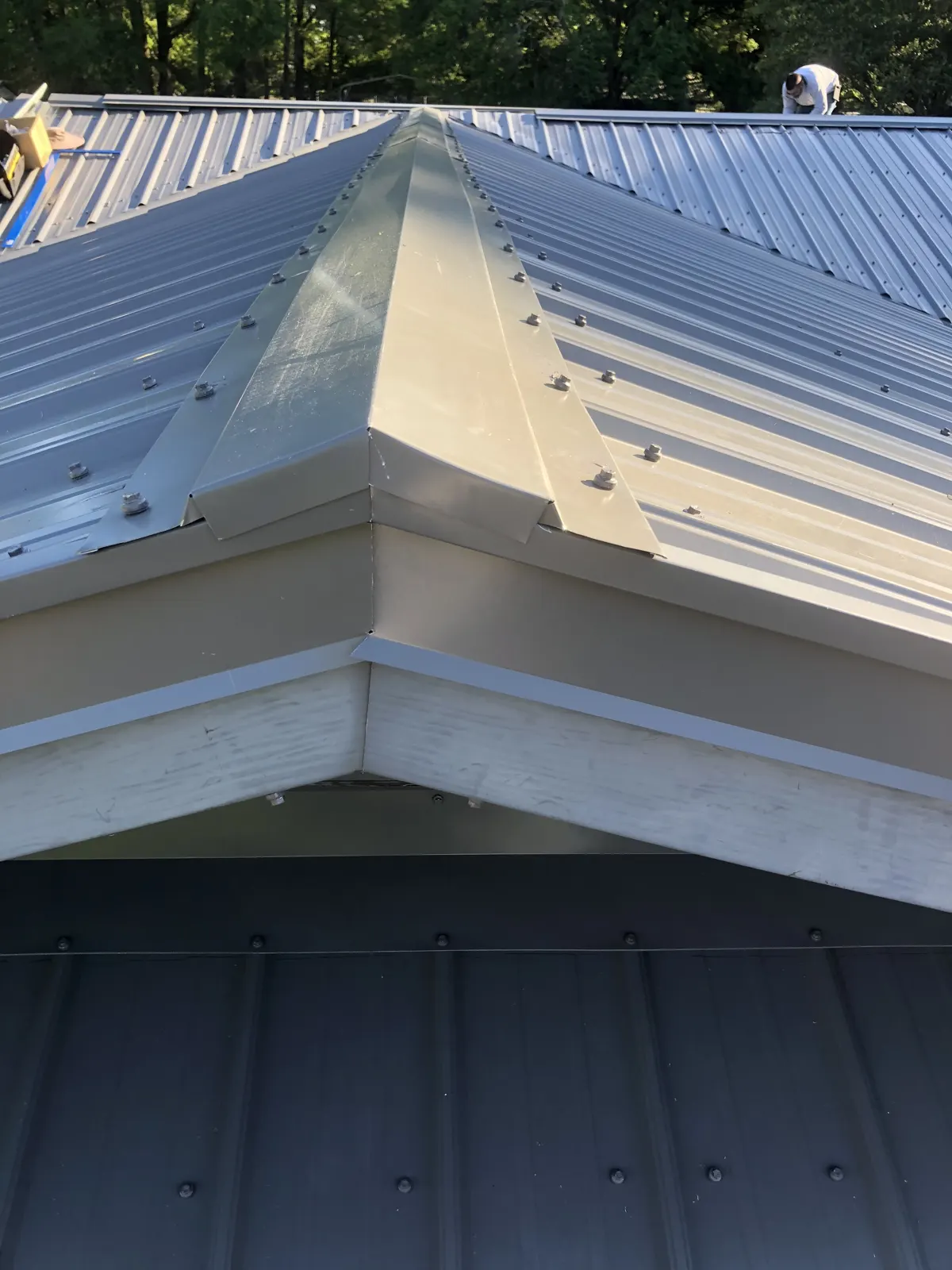
Standing seam hip, panels closed clean
Lemont At A Glance
Out Archer Avenue from the Alsip shop. Limestone-era cottages downtown, big steep-pitch bluff homes north and west, metal work on both.
Mon to Sat, 9 to 5, with emergency patch response when weather forces it.
(312) 590-4853The Western Edge Of Our Map
Lemont anchors the far southwest corner of our Cook County work. Burr Ridge sits north of us with the same appetite for complex rooflines and metal accents, Palos Park puts us back into wooded ridge country on the way home, and Orland Park covers the subdivision side of the same drive. Route 83 and Archer tie all of it together, which is how a crew finishing a Lemont tear-off on Thursday morning ends up patching a Palos Park roof the same afternoon. The whole coverage map is on the service areas page.
Lemont Roofing Questions
My house downtown is over a hundred years old. Will you work on it?
Yes, and we would rather you call us than a crew that has only ever done subdivision tear-offs. Old framing, plank decking and stone walls all change how the roof gets built back. We inspect first, tell you what we expect to find under the layers, and price deck repair as an approved line item so there are no mid-job surprises.
Is standing seam metal worth it on a bluff-side house?
Often, yes. It sheds snow off steep slopes, handles the wind exposure up there, and lasts decades. It costs more up front and it demands careful detailing at valleys and transitions. We will price both metal and shingle so you can compare real numbers instead of guessing.
Wind stripped shingles off my ridge. Is that a claim?
Maybe. It depends on how much came off, how old the roof is and what your policy says about wind. We inspect free, photograph it the way an adjuster expects, and give you a straight read on whether filing makes sense. Sometimes the honest answer is that a repair costs less than your deductible.
Can your trucks get to a house on the slope?
Usually, and where they cannot we plan around it. Steep driveways, narrow old-town streets and lots that drop off behind the house all get looked at during the inspection. We figure out dumpster placement and material staging before the delivery truck shows up, not after it is stuck.
Do you fix metal roofs somebody else installed?
Constantly. Most metal problems we see are flashing and fastener issues rather than bad panels, particularly where metal meets a shingle roof or a masonry wall. We will tell you plainly whether it is a repair or whether the install was wrong enough that patching just delays the bill.
Any Lemont work we can look at?
Ask when you call and we will point you at finished roofs around town, plus the photo gallery. Thirteen years working the southwest suburbs means there is usually something nearby worth a slow drive-by.
Get A Real Number On Your Lemont Roof
Call Guardian Roofing, describe the house and what the roof is doing, and get a straight price. Or send photos and the address through the contact page and we will call you back the same business day.