

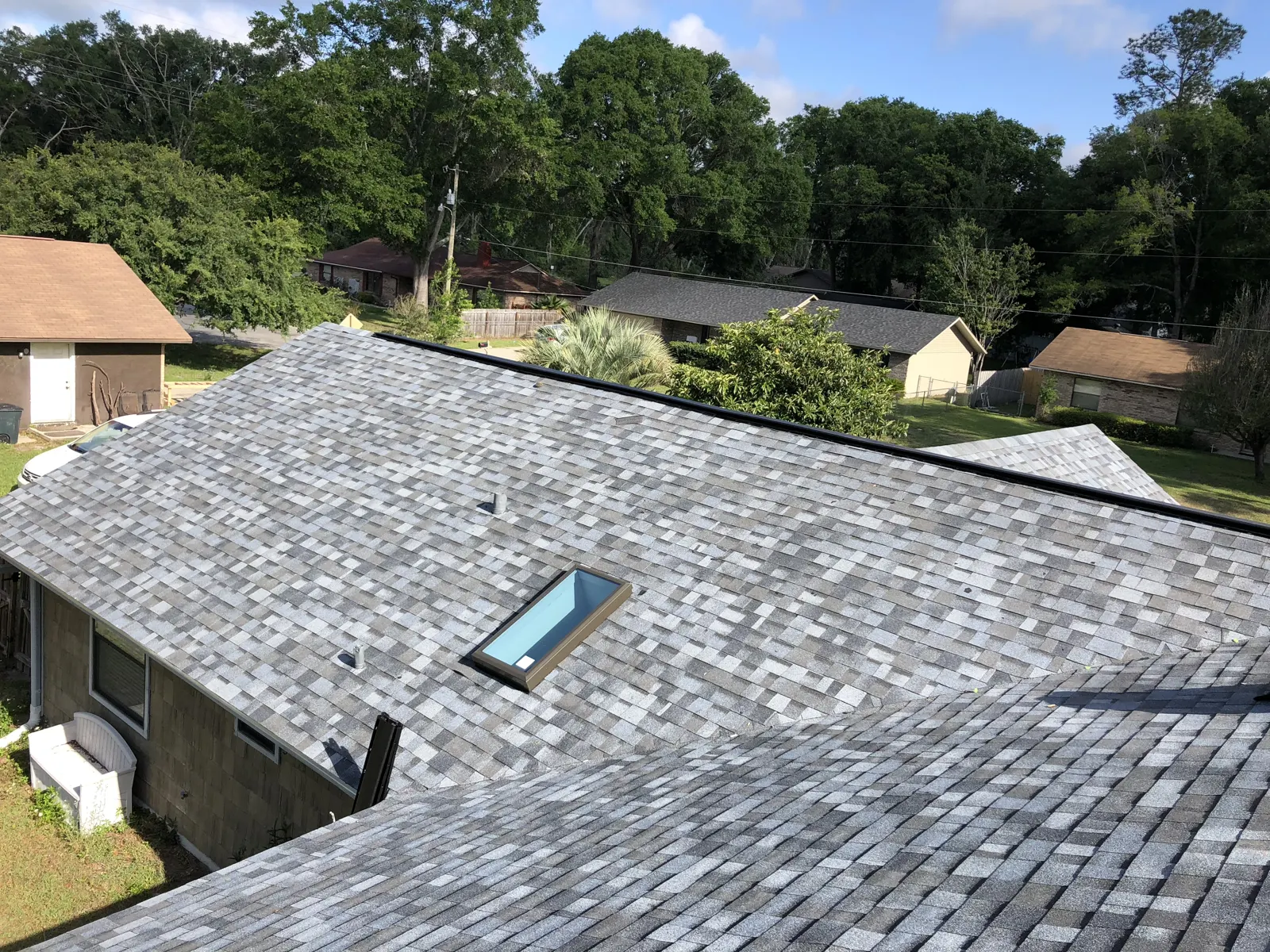
Slope stripped, deck dried in the same day
Hail Rarely Leaks The Week It Lands
That is the whole problem with it. A storm crosses open ground, works your shingles over, and the roof keeps the rain out for another two or three years while the damage quietly gets worse underneath. By the time there is a stain, the storm is old news and so is the window to do anything about it.
Nothing Upwind To Slow It Down
There is nothing standing between this town and the weather coming at it, which is the plain fact behind most of what we see up here. It matters more for hail than for anything else, because hail rides in on that wind rather than falling straight down. A stone dropping vertically hits a pitched slope at an angle and glances. A stone driven sideways at thirty or forty miles an hour hits square, and square is what bruises.
It also means the damage lands directionally. On a house with nothing between it and the open country to the west, the west and northwest planes take the beating and the opposite side of the same roof can come through clean. Homeowners call after a storm and tell us the roof looks fine, and they are usually looking at the side they can see from the driveway.
An Architectural Shingle And An Aging Cedar Shake Fail Differently
Barrington has both, sometimes on the same block, and they do not tell you the same story after a storm.
On an architectural asphalt shingle, hail leaves a bruise. The stone crushes the granules into the mat and fractures the asphalt underneath without necessarily breaking the surface. Press a thumb into it and it feels soft, like a spot on a piece of fruit. The granules are gone from a circle about the size of a dime or a quarter, and that bare spot is the actual injury: granules are the shingle’s sunscreen, and the exposed asphalt starts cooking off from the day the hail hit. That is the delay people find so confusing. The roof is not leaking. It is aging at five times the normal rate in fifty places at once.
Cedar does none of that. A lot of the estate stock west and north of town was built or reroofed with cedar shakes, and those roofs are now at the end of the line anyway. Hail on old cedar splits it. You get a fresh fracture running with the grain, usually at the thin end, sometimes knocking a whole shake loose. The hard part is that cedar in northern Illinois already cups, splits and grows moss on the north-facing planes on its own, so a split is not automatically a hail split. What separates them is age and pattern: a hail fracture is bright and raw inside where the weathered wood around it is gray, and it shows up in a scatter across a plane rather than following the worst-weathered course.
What We Check Before We Ever Look At Shingles
The shingles are the last thing we read, not the first. Asphalt and wood are subjective. Soft metal is not, and that is why an inspection here starts on everything that is not roofing.
- Gutter aprons, downspouts and any aluminum or copper trim. These dent, and a dent is a physical record of stone size and impact direction that nobody can argue about.
- Roof vents, turbines and the caps on pipe collars. Thin metal takes a dimple from a stone that leaves an asphalt shingle looking untouched from six feet away.
- Skylight flashing and the pans on light wells. Barrington rooflines carry a lot of these, and the flashing metal around them is thinner than the skylight itself.
- Valley metal, chimney counterflashing and the step flashing where a dormer cheek meets a main slope.
- The north-facing planes, walked early, because on cedar those are the planes already weakest before anything hit them.
Once the soft metals confirm a storm actually worked this house, we know what size stone we are hunting and we go find it on the field. Without that, an inspector is just looking at an old roof and deciding how he feels about it.
Many Gables Means Many Planes, And They Never Match
Land is why the roofs here dwarf anything we work on in the south suburbs. Large lots are the rule around the village and out through the horse country beyond it, so a house sprawls sideways where a city lot would have forced it upward. You get long roof planes, multiple intersecting gables, dormers, turrets on the 1990s and 2000s custom builds, and enough valleys that a single house can carry more linear feet of valley metal than a whole block of Alsip bungalows.
For hail inspection that geometry is the entire job. A ranch has four planes and you can read it in twenty minutes. A multi-gable house with dormers and a turret can carry a dozen or more planes facing six different directions at four different pitches, and the storm hit each one at a different angle. We have walked houses where the main west slope was destroyed, the dormer cheeks eight feet away were fine, and a small turret roof nobody thinks about had lost granules everywhere because it presents a curved face to every direction at once.
So we do not sample. Every plane gets walked and marked separately, and the count comes back per slope. That is also what makes the difference on a claim, because a scope written off two test squares on the front of the house is a scope that misses half the roof.
Repairing A Slope Or Replacing It Is Decided On The Roof
Nobody can answer that question from the ground or over the phone, and we do not pretend to. What decides it is what the shingles do in our hands.
A slope with a handful of bruises in a field of shingles that are still flexible, still holding granules, still sealing down along the tab line, is a repair. We pull the damaged courses, replace them, and the roof goes on doing its job. A slope where the mat is brittle enough that lifting a shingle cracks the one above it is not a repair at any price, because every shingle we touch to fix one creates two more. Old roofs stop being repairable before they stop being roofs.
The other thing we weigh is match. On a 1990s second roof the original shingle line may not exist anymore, and a repaired slope that reads as a patch from the street is a different conversation than one that blends. We will tell you which you are going to get before we start rather than after. If the answer comes back replacement, the tear-off runs through shingle roof installation and the cedar conversion questions get answered there.
Photographs An Adjuster Can Actually Use
An adjuster is not going to take our word for anything, and he should not have to. What settles a hail file is documentation that matches the way he was trained to look at a roof, which means slope by slope, with the plane identified, the impacts marked, a scale in the frame and the soft-metal evidence shot alongside the shingle evidence.
We photograph as we walk. Overall shots that place the plane on the house, then close work on the marked impacts, then the gutter apron and the vent caps that prove stone size, then the flashing details. The written scope comes out of the same walk. When the adjuster schedules his inspection, we would rather be on the roof with him than send paper, because half the disagreements in this business come from two people looking at different slopes and thinking they are looking at the same one.
We do not act as your adjuster and we do not tell anyone what a claim is worth. We document the damage honestly and we say plainly whether what we found looks like storm damage or looks like a cedar roof that reached the end of its life on its own. Owners who want that process walked through from the first call run it through roof insurance claims.
Patch First, Sort Out Scope Later
A call that comes in at three in the morning gets a patch, and the scope gets worked out afterward. That order is not negotiable here. If a stone took a shingle clean off or cracked a skylight pan and water is coming in, the tarp and the patch go up before anybody writes a word about scope, and doing that does not hurt anything downstream. Barrington gets the same emergency patch response our home suburbs do.
The rest of the timing depends on the calendar. A hail inspection that is not urgent rides the schedule. An active leak does not wait for it.
Photos of finished work are in the gallery, and you can send us your own through the contact page. General hail work across the whole service map lives on the hail damage repair page.
What The Walk Covers
Soft metals first, then vents, skylight flashing and valley metal, then the north-facing planes. Every slope marked and counted on its own.
Bruised and granule-stripped asphalt, split and cupped cedar, dented aluminum. Photographed the way an adjuster reads a roof.
(312) 590-4853No Travel Charge
Barrington work is grouped into scheduled runs out of our Alsip shop, so a crew is already up here for the week. No travel charge for the drive. Active leaks skip the queue.
From Your Call To A Marked Roof
Date The Storm
When it hit, which direction it came from, and what else on the property took a beating. That narrows where we start.
Read The Soft Metals
Gutter apron, downspouts, vent caps and skylight flashing. Dents prove stone size before we judge a single shingle.
Walk Every Plane
Each slope marked and counted separately. Dormer cheeks, turret faces and north-facing planes all get their own read.
Say It Straight
Repair the slope, redo it, or leave it alone another season. With photographs, in writing, and a real number.
Same storm, other damage: ridge caps and rake edges go to wind damage repair, and water coming over the eave instead of through the roof is gutter repair. A slope past saving becomes shingle roof installation, and the paperwork side runs through roof insurance claims. Everything we do up here is listed on the Barrington page.
What Owners Ask After A Storm
The storm was two years ago and nothing leaks. Is it too late to look?
Looking is never too late and it is worth doing, because bruised shingles lose granules and age fast whether or not they leak yet. Whether a storm that old is still worth reporting is a question for your carrier, not for us. We will document what is up there and tell you honestly what we think it is.
My roof looks completely fine from the driveway. Do I still need somebody up there?
Usually yes, because the side you see from the driveway is often not the side that got hit. Hail here arrives with the wind rather than straight down, so the damage lands directionally. We have walked plenty of houses where the front was clean and the west planes were covered in impacts.
How do you tell hail splits from a cedar shake that is just old?
By how the break looks and where it sits. A hail fracture is bright and raw inside while the weathered wood around it is gray, and the splits scatter across a plane instead of following the most weathered course. Cedar up here cups and splits on its own, so we say plainly when that is what we are seeing.
Can you repair just the slope that got hit?
Often, and we decide it on the roof with the shingles in our hands. If the field is still flexible and sealing down, we pull the damaged courses and replace them. If lifting one shingle cracks the one above it, repairing creates more damage than it fixes and we will say so.
Will the repaired section match the rest of my roof?
Sometimes exactly and sometimes not. On a roof from the 1990s the original shingle line may no longer be made, and the closest available color can read as a patch from the street. We tell you which one you are getting before we start rather than after.
Water is coming in right now and I have not called my insurer yet. What happens first?
The patch happens first. We tarp and seal the opening so the inside of the house stops taking damage, then we photograph and write the scope in daylight. Stopping active water does not work against you later, and leaving it running while paperwork happens is how a roof problem becomes a ceiling problem.
Tell Us When The Storm Came Through
Give us the date, the direction it came from and anything else on the property that took a hit. We will walk every plane, mark what we find, and give you a straight price on whatever the roof actually needs.