
Gutter Installation Sized For Chicago Rain
Gutters are the cheapest part of the roof and the part that decides whether your basement stays dry. We roll seamless aluminum on site, size it to your actual roof area instead of whatever the last guy hung, and put downspouts where the water really wants to go.
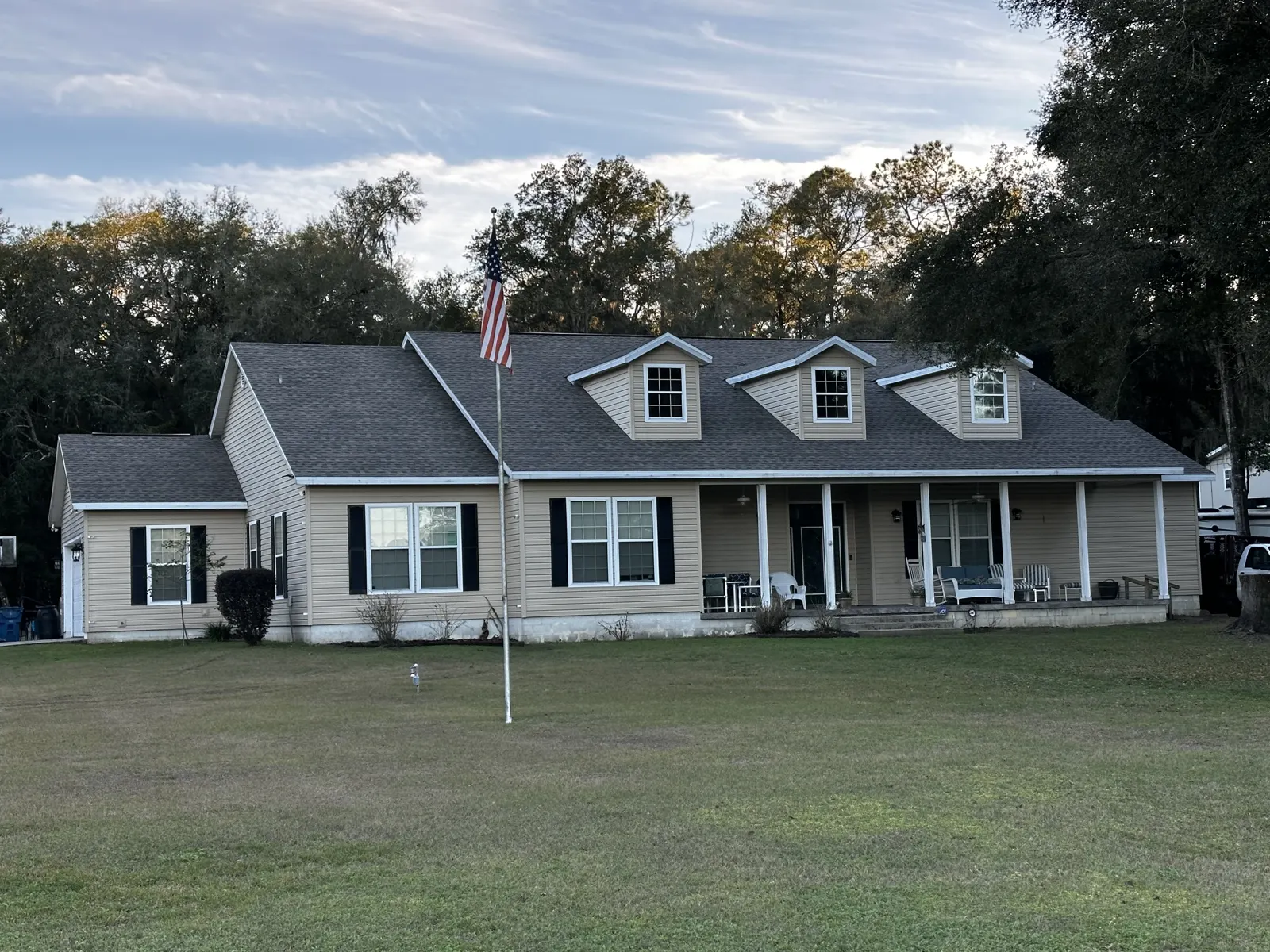
Long eave runs · Where the water lands first
Rolled On Site, Not Cut From Stock Lengths
A coil of aluminum goes into a forming machine on our trailer, and the machine rolls out one continuous piece the full length of your eave. A 42 foot run comes off as one 42 foot gutter. The only joints on the whole house are at the corners and the outlets, and those we seal and rivet by hand.
Sectional gutter, the kind sold in ten foot sticks at the box store, puts a lap joint every ten feet. Aluminum moves roughly an eighth of an inch per ten feet between a January morning and a July afternoon here, and it moves at every one of those seams. Sealant survives that a few years. Then it does not, and you get the drip line that stains the siding under the joint. Rolling the run on site removes the problem instead of sealing around it.
Color goes on at the coil, baked enamel over aluminum, so there is no painting and no chalking after two seasons. Around Alsip that usually means white, almond or a brown that plays with brick. On newer builds out in Naperville it is more often black or bronze to line up with the window frames.
Five Inch Versus Six Inch, And Why It Matters Here
Most houses in the south suburbs came with five inch K-style gutter, and on a small ranch with a shallow pitch it is genuinely enough. It stops being enough fast. A six inch gutter does not hold twenty percent more water, it holds closer to forty percent more, because the cross section grows in both directions. Pair that with a three by four inch downspout instead of the old two by three and you have roughly double the drainage capacity of a standard setup.
Here is what pushes a house to six inch in our climate:
- Steep roof pitch. Water coming off an 8/12 or 10/12 slope arrives fast and shoots past the front lip of a narrow gutter instead of dropping into it.
- Large roof planes. One long unbroken slope dumping into a single run needs more channel than four small planes splitting the same square footage.
- Valleys emptying onto a short section of eave. A valley concentrates two slopes into one point, and a five inch gutter under one overflows in every heavy rain no matter how clean it is.
- Any history of water in the basement. If the foundation is already the weak link, we are not handing you the smallest gutter that technically passes.
Chicagoland gets its rain in bursts, and a five inch gutter on a steep roof will overshoot during the first ten minutes of a real summer thunderstorm, which is exactly the ten minutes that matter. We size for the burst, not for the average.
Downspout Count And Placement
The gutter is a holding tank. The downspouts are the drain. Undersize the drain and the tank overflows no matter how big it is. Rule of thumb we work from: one downspout for roughly every 30 to 35 feet of run, more if the run is fed by a valley, and never fewer than two on any elevation long enough to need them.
Pitch: The Quarter Inch That Does All The Work
Hidden hangers screwed into the fascia every 24 inches hold the run. Not spikes and ferrules, which were fine in 1970 and work loose every time the wood expands. Not 36 inch spacing, which is what you use when you are trying to make a number work. Snow load in this area is the reason for 24 inches, and it is the reason a gutter full of ice in February either holds or peels off the house.
Why We Want To See Your Drip Edge First
Here is the piece almost nobody mentions. The gutter does not attach to the roof, it attaches under it, and where those two systems meet is where installs go wrong. Drip edge is the L-shaped metal flashing along the eave that carries water off the deck edge and out over the gutter lip.
So before we hang anything we look at the eave. If the drip edge is right, we hang to it. If it is missing or damaged, we say so and price the correction. That is also why gutters and roofs belong in the same conversation: one crew sets the drip edge, the ice and water shield and the gutter in the right order, with no gap between two contractors pointing at each other. If a shingle roof replacement is already on your list, put the gutters in the same job.
Guards And Screens: The Honest Version
We install guards. We also tell people the truth about them, which is that no guard on the market makes a gutter maintenance free. The good ones cut cleaning from twice a year to once every few years. The bad ones trap shingle grit and maple seeds into a mat on top of the guard and cost you more than bare gutter would have.
Under mature silver maples and cottonwoods, which the older south suburban blocks are full of, a fine micro-mesh guard on a properly pitched six inch gutter genuinely works. Under pine, where needles thread into any mesh, results are worse and we will say so upfront. Foam inserts we do not sell at all. They wick water, hold debris and turn into a planter within three years. Ask us on the contact page what we would put on our own house and you will get the version we would give a neighbor.
What The Job Looks Like
Most single-family gutter installs run one day. We show up with the coil trailer, pull the old runs if there are any, look at the fascia, chalk the pitch, roll and hang the runs, cut and mount the downspouts, then flush every run with a hose while you watch. That last part is not for show. Water finds a low spot faster than a level does, and if a run holds anywhere we adjust hangers before we pack the trailer.
Angelo supervises the work the way his father Frank ran jobs: the owner is on site, not on the phone. Old aluminum leaves in our trailer for recycling, and the ground gets swept before we go. Finished work is in the gallery if you want to see runs and corner miters up close. We install gutters weekly around Blue Island and Frankfort, and satellite measurements let us give you a straight price on the phone before anybody drives out.

Low ranch eave · Straight run, single outlet
The Short Version
Seamless aluminum rolled on site. Five inch or six inch sized to the roof, not to the price. Hidden hangers every 24 inches, quarter inch fall per ten feet, downspouts placed with the grade.
One day for most homes. Straight price by phone from satellite measurements.
(312) 590-4853How A Gutter Install Runs
Measure & Size
Roof area, pitch and valley points decide five inch or six inch and how many downspouts. Satellite measurements get you a number fast.
Check The Eave
Drip edge, fascia and soffit inspected before anything hangs. Rot or missing flashing gets shown to you and priced, never covered up.
Roll & Hang
Runs formed on site to full length, chalked for fall, hidden hangers every 24 inches, corners riveted and sealed by hand.
Flush & Walk
Every run flooded with a hose while you watch. Low spots corrected on the spot, old aluminum hauled, ground swept for fasteners.
Related work: gutters up but failing? Gutter repair. Past fixing? Gutter replacement. Roof going on too? Shingle roof replacement. We hang gutters regularly in Oak Lawn, Blue Island and Frankfort.
Gutter Install Questions
How long does a seamless gutter install take?
One day on most single-family homes, including pulling the old runs. Big houses, three-story work and homes needing fascia repair stretch into a second day. We tell you which one you are before we start, not partway through.
Do I really need six inch gutters?
Not every house does. Steep pitch, large unbroken roof planes, valleys dumping onto a short eave or any past water in the basement push toward six inch with three by four downspouts. A modest ranch with a shallow pitch is often fine at five inch, and we will tell you that rather than upsell you.
Can you hang gutters on rotted fascia?
No, and anyone who says yes is hanging your gutter on wet cardboard. Hangers need solid wood to bite. We check the fascia first, show you anything soft, and price the board replacement separately before you decide.
What color options do you carry?
Baked enamel aluminum coil in the standard house colors, white, almond, brown, black and bronze among them, with special orders to match existing trim. The finish is factory applied, so there is no painting after install.
Where does the water go once it leaves the downspout?
We walk the grade with you. Options run from splash blocks to buried extensions that discharge past the landscaping. Discharging four feet from the foundation on flat ground is how you end up wet in the basement, so we pick locations with the slope in mind.
Do you install gutters without doing roof work?
Yes. Plenty of our gutter jobs are on roofs with years left. We still look at the drip edge first, because a new gutter under bad flashing will not solve the problem you called about.
Put The Water Where It Belongs
Call Guardian Roofing, tell us what the water is doing during a hard rain, and get a real number from satellite measurements while you are on the phone. If your existing gutters just need work, we will say that instead.