
A Town Where The Roof Is Rarely The Whole Story
Lockport has houses older than the state’s roofing code and subdivisions younger than most of our crew. Between the limestone blocks along State Street and the new construction out past Farrell Road, this is the town where we open a roof up and find something. We would rather tell you that before we start than after.
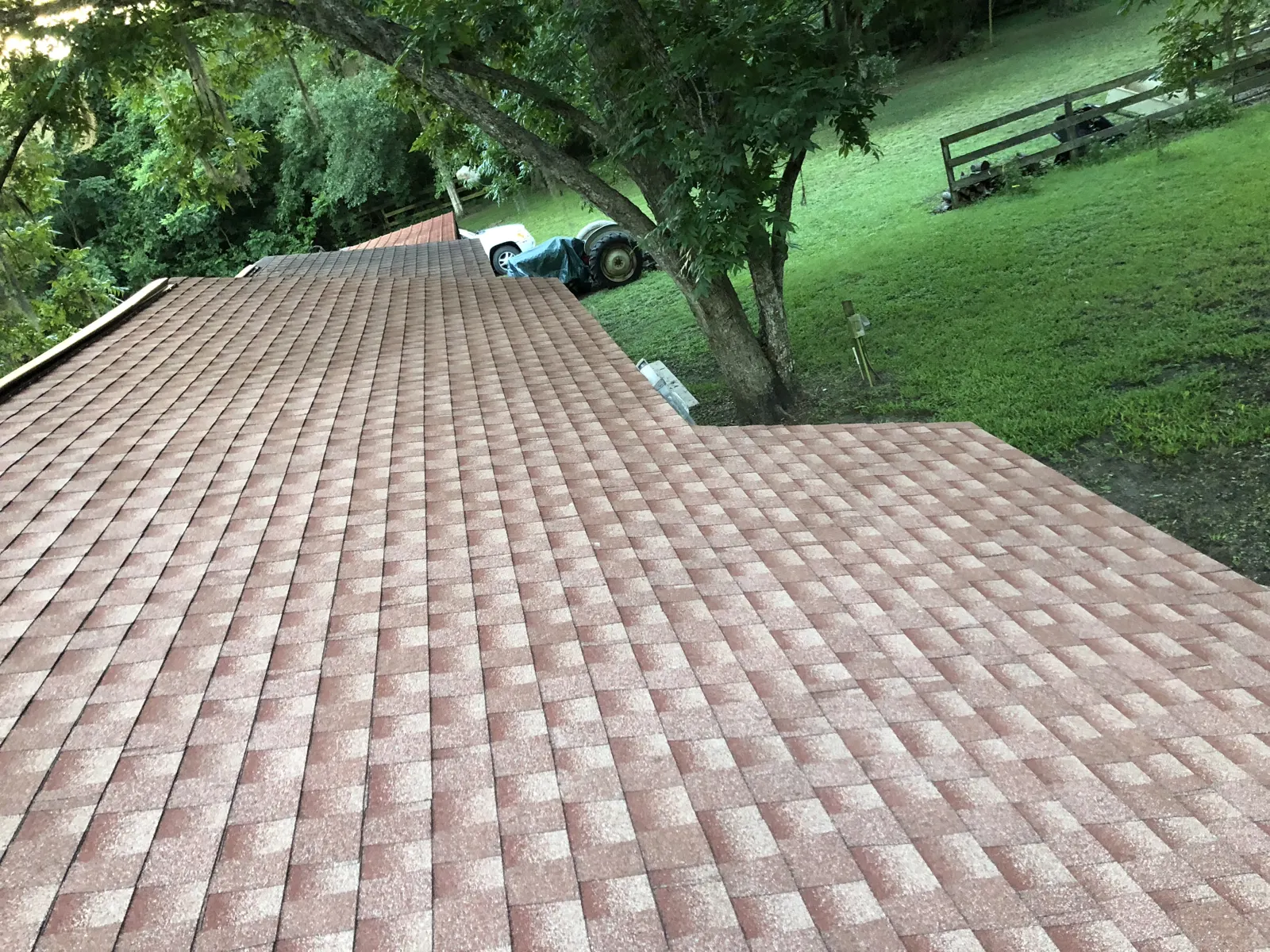
Light brown shingle over rebuilt decking
The Old Core And Everything Built After It
Lockport grew up around the Illinois and Michigan Canal, and the oldest part of town still looks it. Limestone buildings, tight lots, houses from the 1800s that were added onto in the 1920s and again in the 1970s, worker cottages, and a downtown along State Street where the roofs are low-slope and hidden behind facades. Then the town spread east and south into postwar blocks and, after that, into full subdivisions.
The result is that two roofing jobs a mile apart in this town can share almost nothing. On the new side we are doing clean tear-offs and gutter runs on houses whose framing we can predict. In the old core we are dealing with board decking with wide gaps, three layers of roofing history, hand-cut rafters that were never sized for a modern snow load plus a second layer, and flashing details that were solved with roof cement at some point in the last fifty years. Both jobs are worth doing right. They are not the same job, and they should never be priced like they are.
Why We Say The Hard Part Out Loud
The single most useful thing we do on old Lockport houses is tell you what we expect to find before we find it. When we walk a roof here, we say things like: your decking is board rather than sheet, so if it is soft we are replacing sections; the previous crew tarred the chimney instead of counterflashing it, so we are rebuilding that detail; the rear addition has a pitch too low for shingles and somebody put shingles on it anyway. Every one of those becomes a line item you approve in advance rather than a phone call from the roof at ten in the morning.
Sometimes the honest answer is smaller than a replacement. If your roof has good years left and the actual problem is a valley and a chimney, a targeted shingle roof repair is the right call and we will say so. And sometimes the honest answer is that the framing needs attention first, in which case we are talking about rebuilding the deck and installing new rather than laying shingles over a problem. Neither answer is a sales pitch. Both are just what is up there.
What Lockport Keeps Us Busy With
- Shingle roof replacement with decking repair priced up front on the older housing stock.
- Shingle roof repair at valleys, chimneys and additions where the original detail was never right.
- Flat roof repair and replacement on downtown storefronts and the low-slope rear sections on old houses.
- Gutter replacement where original fascia and rafter tails have to be rebuilt before anything gets hung.
- Storm damage repair when a summer cell comes up the canal corridor and takes the oldest slopes first.
- Commercial roof leak tracing on State Street buildings where the water shows up nowhere near where it got in.
Limestone, Masonry And Where Water Actually Enters
Lockport was built out of the rock it sits on, and this town has more masonry meeting more roofline than almost anywhere else we work. Parapets on the old commercial buildings, limestone and brick chimneys on the houses, stone wall sections where an addition ties into the original structure. Mortar joints a hundred years old are porous, and water that soaks into masonry travels sideways and comes out of a ceiling six feet from the wall.
Homeowners call that a roof leak. Sometimes it is. Often it is the wall, or the counterflashing that should have been cut into the mortar joint and instead was surface-mounted with sealant that gave up years ago. We check where roof meets masonry on every inspection here, because replacing a roof above a leaking wall means paying us for a new roof and still having the stain on the ceiling.
Half The Diagnosis Happens Under The Roof
On a canal-era house the attic tells you more in ten minutes than the shingles tell you in an hour. Daylight through a board gap where the sheathing has shrunk. A rafter with a dark stain trailing down it that says water has been tracking along the wood and dripping somewhere else entirely. Frost on the nail points in February, which means moist air is getting up there and the ventilation is not moving it out. Old knob-and-tube runs or a bath fan venting straight into the insulation, both of which we flag even though neither is our trade.
What A Tear-Off Day Looks Like On A Tight Lot
Old town lots do not leave much room to work. Dumpster placement gets sorted on the inspection, not the morning of, and where a truck cannot get down an alley we plan for wheeled containers and a longer haul by hand. Houses sit close enough that we tarp the gap between buildings so nothing lands where somebody parks. Landscaping and the porch roof below get covered before the first shovel goes in, and the walk and parkway get swept with a magnet at the end of each day rather than the end of the job.
Second Generation, No Surprises
Angelo Ristich learned this trade from his father Frank and supervises the work himself, which is how we can promise the person who quoted your roof is the same person standing on it. Guardian has been running since 2013, we are A+ with the BBB, we hold a HomeAdvisor Elite Service award, and we are licensed and insured in Illinois. Straightforward roofs get priced off satellite measurements over the phone, complicated old ones get looked at, and financing help exists for when a roof picks a bad month. Recent jobs are in the gallery, and questions are welcome through the contact page.
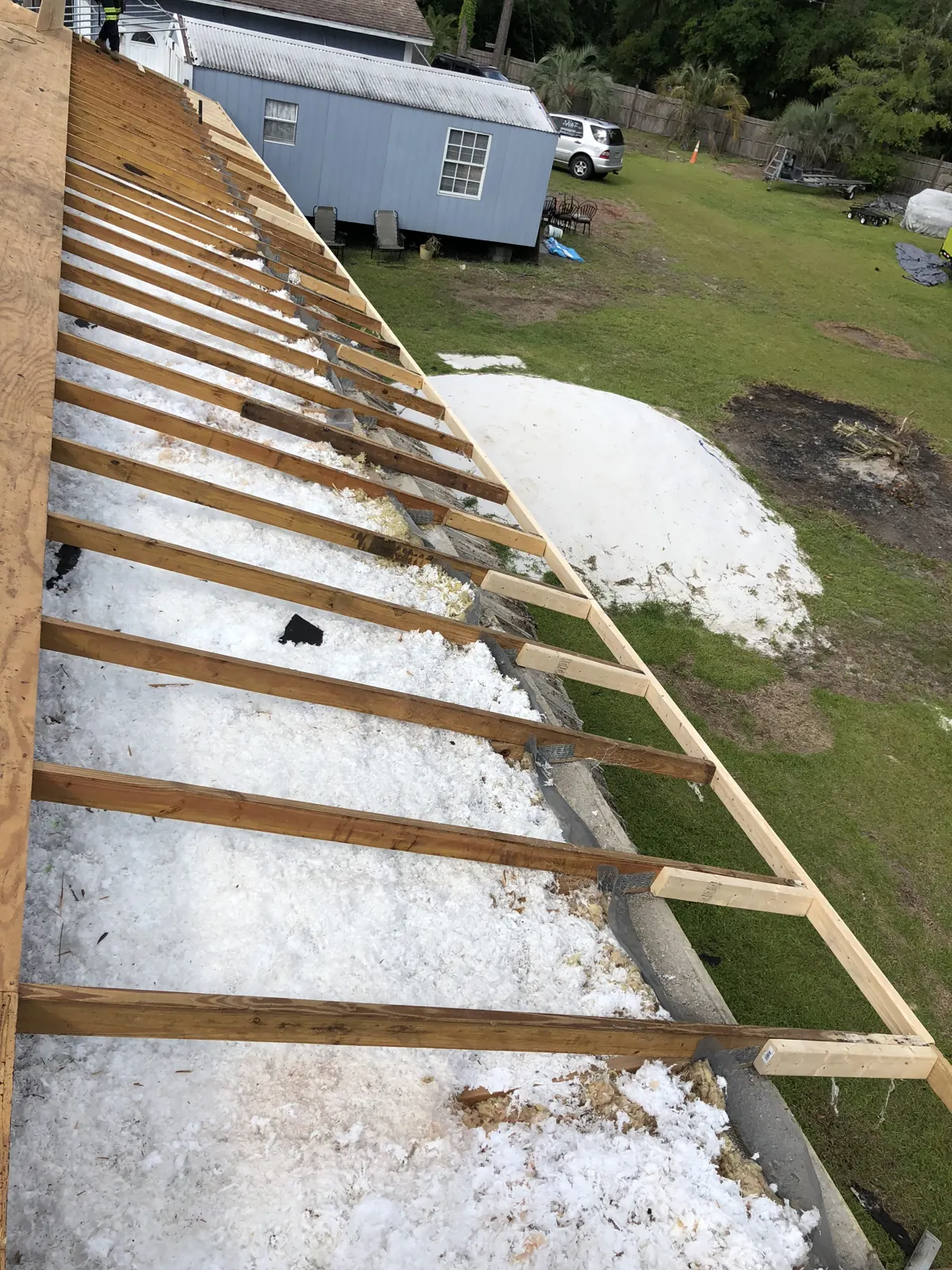
Rafter tails and fascia rebuilt first
Lockport At A Glance
Canal-era housing, limestone masonry, low-slope downtown roofs and newer subdivisions on the outskirts. Decking and flashing work is normal here, not an upsell.
Mon to Sat, 9 to 5, emergency patch response after storms. Angelo prices the old ones in person.
(312) 590-4853Towns We Run With Lockport
Lockport sits in the middle of our Will County route. Joliet is right down the canal with the same era of housing and a lot more of it, Romeoville is a few minutes north on the other side of the river, and Homer Glen is east with custom homes that could not be more different from a State Street cottage. Working all four means our trucks carry material for hundred-year-old board decking and for 2015 tract framing on the same day, which is exactly what this stretch of the county requires. Everywhere we go is listed on the service areas page.
Lockport Roofing Questions
My house is from the 1890s. Will you even work on it?
Yes, and it is some of the work we do best. Old houses need a roofer who will price decking, rafter tails and flashing rebuilds as real line items instead of pretending the roof is just shingles. We inspect from the attic side when we can get up there, so fewer things are a surprise later.
What happens if you find rotted decking mid-job?
You already know the price, because we set a per-sheet or per-board number before we start and you approved it. We photograph what we pull off and you get the count. Nobody renegotiates a job from a ladder on our crews.
The stain is on the ceiling near the chimney. Roof or masonry?
Could be either, and around here it is often the masonry. Old mortar takes on water and moves it sideways. We check the counterflashing, the mortar joints and the chimney crown before we tell you to replace anything. Fixing the wrong one costs you twice.
Can you do a downtown storefront roof without shutting me down?
Yes. Low-slope work on the State Street buildings gets scheduled around your hours, and we stage material so the sidewalk and your entrance stay usable. See commercial roofing for how we handle occupied buildings.
Someone told me my roof can take another layer. True?
Almost never in the old part of town. Board decking and century-old rafters were not sized for two or three layers of modern architectural shingle, and code limits layers anyway. We tear off. It costs more up front and it is the only version that lasts.
Do you work the newer subdivisions too, or just the old town?
Both, every week. The newer east and south sections are straightforward tear-offs and gutter work and we price plenty of those over the phone off satellite measurements. The old core is where we slow down and go look.
Tell Us What The Ceiling Is Doing. We Will Tell You Why.
Call Guardian Roofing and describe the problem on your Lockport roof, and you will get a straight answer and a real number. Or send details through the contact page and we will call you back the same business day.