
Aurora Roofing From A Second-Generation Crew
Aurora is the second-largest city in Illinois and it roofs like three cities stacked together. Victorians and worker cottages near the river, mile after mile of 1990s and 2000s subdivision out east, and a downtown full of flat commercial roof. We work all three, and we tell you which one your problem actually is.
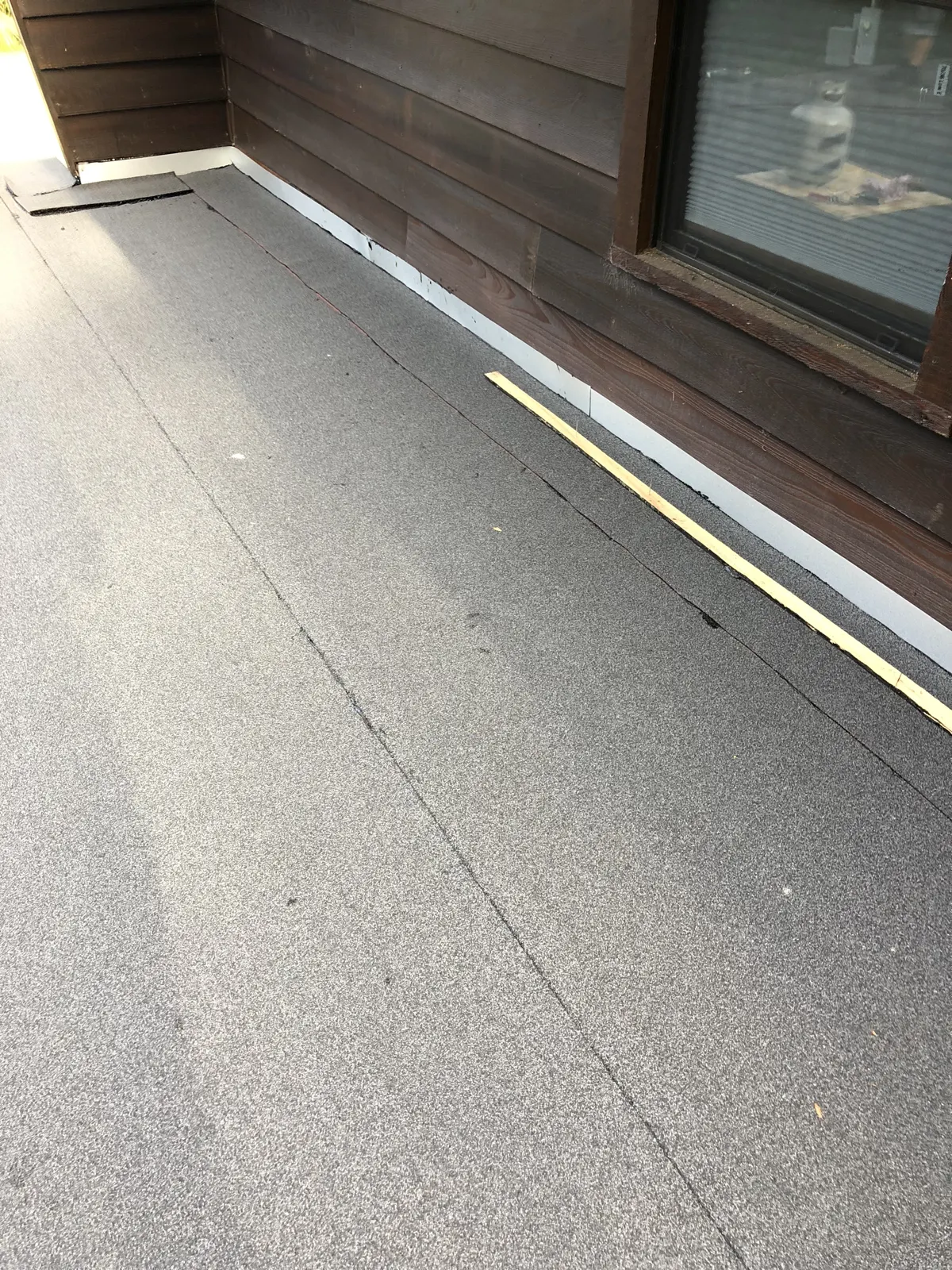
Modified bitumen, low-slope deck
Three Aurora Roofs, Three Different Jobs
Near downtown you have housing that predates the automobile: tall Victorians with steep pitches, turrets and slate history, plus block after block of worker cottages built for the mills and the rail yards. Those roofs are cut up. Dormers, valleys, additions grafted on in the 1940s, masonry chimneys with mortar that gave up decades ago. Most of what leaks there is flashing and detail work, not field shingle, and the crews who cannot tell the difference end up replacing a whole roof to fix a chimney.
Drive east past Eola Road and it flips completely. The far east side is subdivision country, tens of thousands of homes built from the early 1990s through the mid 2000s, most of them under builder-grade architectural shingle with a twenty-five or thirty year label on a product that performs like twenty in this climate. Those roofs are all coming due at once. Same street, same builder, same crew, same year of installation, and now the same failures showing up in the same order: ridge caps, west-facing slopes, then the valleys.
Downtown is the third city. Storefronts with apartments over them, restaurants, converted mill and civic buildings, all under low-slope membrane and modified bitumen. Flat roofing has been this company’s specialty since Angelo’s father Frank ran the crews, and those roofs almost never fail in the middle of the field. They fail at seams, drains, parapets and rooftop equipment curbs, which is exactly where a proper inspection spends its time.
Hail Alley Runs Right Through Here
Aurora sits in a corridor that gets hit regularly, and hail is the sneakiest damage in the trade. It bruises the shingle mat and knocks granules loose without opening a single hole, so the roof looks fine from the driveway all summer while the exposed asphalt bakes brittle. The bill arrives the following winter when the freeze finds every soft spot at once.
Our advice here does not change: get any Aurora roof looked at within two weeks of a hail or high-wind event, keep the photographs even if you file nothing, and do not sign anything with a door-knocker running out-of-state plates before a local crew has been on the same roof. We inspect and photograph the way adjusters need it, we handle hail damage repair and insurance claims start to finish, and if the damage does not justify a claim we say so and hand you the documentation instead of a pitch.
The Work We Do Most In Aurora
- Shingle roof replacement on east-side subdivisions, full tear-off, never a layer over the builder’s original.
- Shingle roof repair where wind stripped a slope that still has real life left in it.
- Flat roof repair and replacement on downtown storefronts, mixed-use buildings and rear additions.
- TPO installation with welded seams on commercial low-slope fields, plus coatings when a sound membrane just needs more years.
- Gutter replacement and repair, because plenty of Aurora water problems start at a split seam, not a bad shingle.
Commercial work runs on your hours, not ours. Restaurants, retail and office buildings get inspections and repairs scheduled around business, with photo reports an owner or a board can read directly. See commercial roofing for how we handle occupied buildings.
Whole Streets, One Crew, Better Numbers
The east-side timing problem is also the east-side opportunity. When one roof on a subdivision street needs replacing, three or four neighbors usually do too, and grouping those jobs cuts setup cost, delivery cost and dumpster rotations across all of them. Talk to your neighbors before you call. We still quote each roof honestly on its own condition, but a grouped Aurora street routinely lands better than any single house would on its own.
The near west side deserves its own mention, because the blocks between the river and Lake Street get skipped by contractors who only chase the east-side subdivision money. Those are compact lots with steep-roofed two-flats, corner storefronts with living space above, and detached garages sitting so close to the alley that dumpster placement has to be worked out before anybody orders material. We would rather spend ten minutes on the phone figuring out where the roll-off goes than show up and improvise in front of your neighbors. Alley access, parkway trees and the trucks that use Broadway all get planned around, not discovered on the morning of.
Timing matters here more than most people expect. Spring in Aurora is the season nobody can schedule, because the hail cells arrive and every roofer in Kane County gets buried in the same two weeks. Late summer through October is the stretch where materials sit on the truck instead of on backorder and a crew can start when the calendar says. If your roof made it through last winter but you know it is close, call in August rather than April. You will get a better date, the same price, and a roof that is finished before the first freeze rather than racing it.
How We Work, And What The Drive Means
Guardian Roofing Systems is second generation. Angelo Ristich learned the trade under his father Frank, took the company over in 2013 and still supervises every job in person. He prices most residential work off satellite measurements while you are on the phone, and helps sort financing pre-approval when a roof fails at the wrong time of year. We are A+ with the BBB, hold a HomeAdvisor Elite Service award, and stay licensed and insured in Illinois. Finished work is in the gallery.
One straight answer about geography: our shop is in Alsip, roughly forty-five minutes east of Aurora. We run the Fox Valley on scheduled days and group jobs so the drive never lands on your invoice, and we would rather tell you a visit is Thursday than promise this afternoon and miss it. Leaks are the exception. Water coming through a ceiling gets tarped and patched first, and we sort out the rest afterward.

Tear-off in progress, down to deck
Aurora At A Glance
Scheduled Fox Valley runs from our Alsip shop, no travel charges. Leak calls get tarped first, usually within a day.
Mon to Sat, 9 to 5, with emergency patch response when storms come through.
(312) 590-4853Nearby, Same Crew
Aurora anchors our work across Kane County, and the towns around it ride the same schedule. North Aurora shares the river and most of the same housing stock, Montgomery brings us subdivision streets that all went up in the same three years, and Naperville keeps us busy just over the DuPage line. Storm cells do not stop at municipal boundaries, so the crew that documented hail on a Montgomery street Tuesday is often on an Aurora roof Thursday carrying photographs of what that same cell did two miles away. Full coverage map on the service areas page.
Aurora Roofing Questions
My subdivision roof is about twenty years old and looks okay. Is it done?
Probably close. Builder-grade architectural shingle from the 90s and early 2000s tends to give you around twenty years here regardless of the number printed on the wrapper. We look at granule loss, ridge caps, the west-facing slope and the valleys, then tell you whether you have two more seasons or two more years. No scare tactics, and no sale if the roof does not need one.
Can you put a new layer over what is there?
No. Illinois code caps layers, and a second layer over twenty-year-old decking hides rot, adds weight and complicates every future repair. We tear off to the deck, replace what the old roof was covering up, and build it once.
My house is near downtown and over a hundred years old. Who does that work?
We do, and it is a different job than a subdivision tear-off. Steep pitches, cut-up rooflines, old chimneys and additions that meet at awkward angles need a careful crew and real flashing work. Angelo walks those roofs himself before pricing anything.
Hail came through last spring. Is it too late to do anything?
Not necessarily. Claim deadlines vary by carrier and policy, and some allow more time than homeowners expect. Call us, we will inspect and document what is up there, and you will know where you stand before you talk to anybody. Details on the insurance claims page.
Do you work on downtown Aurora commercial buildings?
Regularly. Storefronts with apartments above, restaurants with kitchen exhaust curbs, and converted older buildings all run flat systems we inspect, patch, coat or replace around your operating hours. Send the address through the contact page if you want a photo-documented inspection report.
How fast can you get out here from Alsip?
Non-emergency work usually lands within a few days on our next Fox Valley run. Active leaks get moved to the front and we will give you a real arrival window, not a hopeful one. Either way the drive is our cost, not yours.
Get A Straight Price On Your Aurora Roof
Call Guardian Roofing, tell us what the roof is doing and which part of Aurora you are in, and get a real number back. Or send the address through the contact page and we will pull satellite measurements before we call you.