
After The Hail, Before The Door Knock
A bad hail cell does not pick one house. It takes a swath, and within a day the block has out-of-town trucks parked on it working door to door. What happens over the next two weeks decides whether you end up with a properly documented roof or a signed contract you regret.
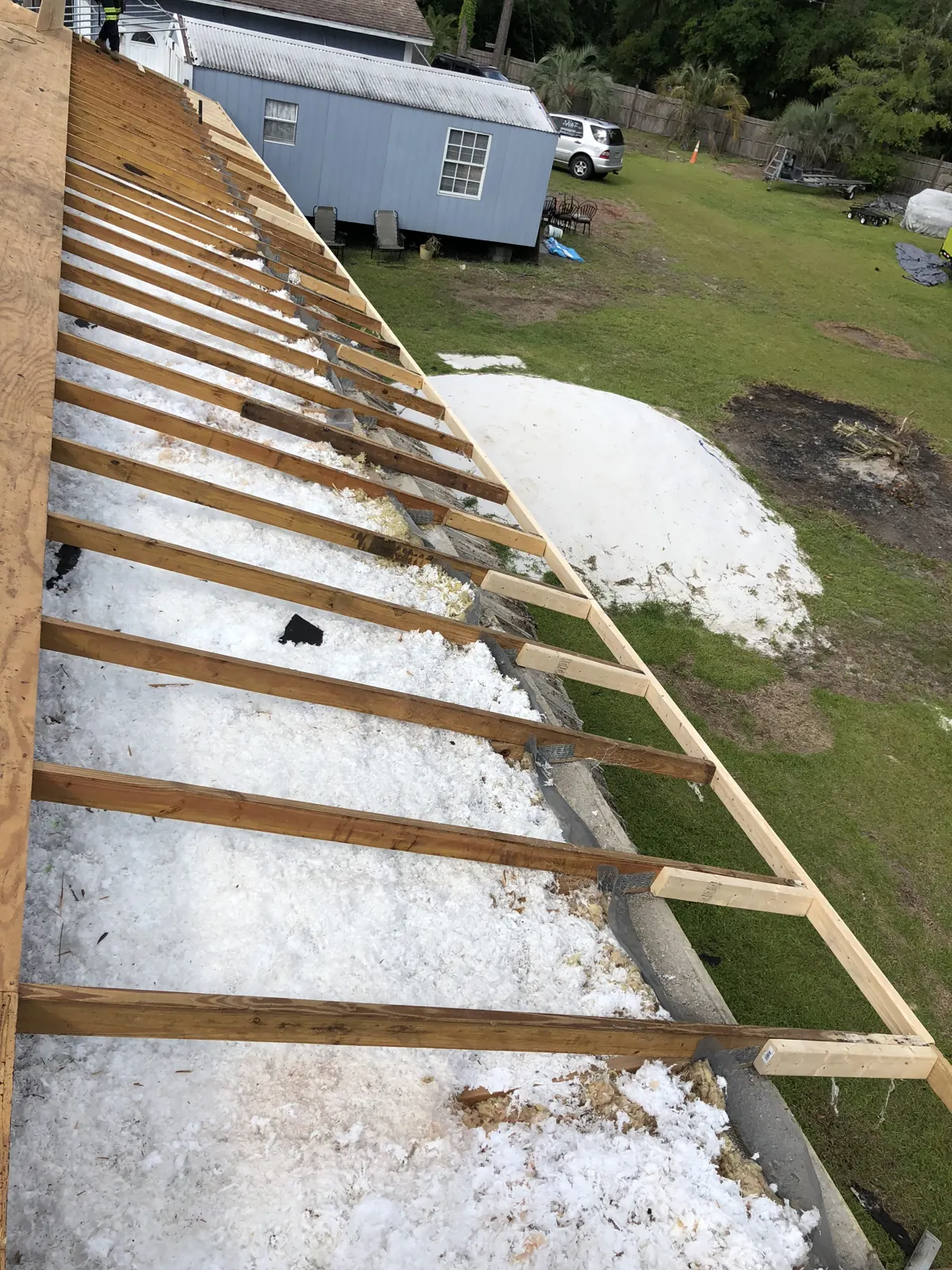
Rafter and fascia, rebuilt after the storm
What Hail Actually Does To An Asphalt Shingle
Hail damage is mostly invisible from your driveway, which is the source of nearly every argument that follows. A hailstone hitting an asphalt shingle at speed does two things. It knocks the granules loose, which are the sacrificial layer that keeps ultraviolet light off the asphalt mat underneath. And on a harder hit it bruises the mat itself, leaving a soft dark spot you can feel with a thumb before you can see it. That bruise is a crack in the waterproofing layer even though nothing is leaking today.
People get blindsided because a roof with genuine hail damage frequently does not leak for a year or two. The granules are gone, the mat is exposed, and the sun spends the next several summers finishing what the storm started. A homeowner looks up, sees nothing dripping, and assumes it missed them. Then the claim window closes and the roof fails on its own schedule.
Wind works differently and shows itself faster. Straight-line wind gets under a tab edge, breaks the factory sealant strip and lifts. Sometimes the shingle tears off completely and you find it in the yard. More often it flops back down and looks perfect from the ground with its seal permanently broken, which means the next storm gets under it more easily than the last one did. That is why a roof can look untouched after a windstorm and then open up all at once two years later.
Where You And The Adjuster May Disagree
Insurance carriers separate functional damage from cosmetic damage, and that distinction is where most claims live or die. Functional means the shingle’s ability to keep water out has been compromised. Cosmetic means it looks worse but still performs. An adjuster sorts what he sees into those two buckets, and he is on your roof for a limited time with a lot of other addresses on his list that week.
What tends to get called cosmetic is scattered granule loss with no bruising underneath, blistering from manufacturing or heat that predates the storm, and normal wear on a roof that was already near the end. What tends to be accepted as functional is bruised mat you can feel, hail hits with fractured fiberglass, creased shingles from wind, torn or missing tabs, and damage to soft metals like vents, flashings and gutter runs that corroborates the storm even when the field is arguable.
- Soft metal evidence matters. Dents on vent caps, flashings and gutter aprons are hard to explain away, and they establish that hail actually landed on this address rather than the next town over.
- Age counts against you. A roof already past its service life will be depreciated hard, which is another reason to have the condition documented before a storm rather than after it.
- Direction counts. Damage should be worse on the slopes facing the storm’s approach. A uniform pattern on all four sides usually reads as wear, not an event.
We do not decide any of that, and we will not tell you what your carrier will do. What we do is get on the roof, find and photograph what is there, and give you an honest read on whether it is worth opening a claim at all. Real damage gets photographed to the standard your adjuster works from, and we are up there with them when they come out, so the conversation happens with both parties looking at the same shingle. No real damage, and you hear that instead, with a written read on where the roof stands and no claim on your history that did not need to be there. Either way, looking costs you nothing.
Timing, And Why Two Weeks Is The Number To Remember
Have the roof walked inside two weeks of any hail or straight-line wind, dripping or not. Nothing forces you to file. What it does is establish what the roof looked like right after a dated weather event, while the evidence is fresh and while soft-metal dents are unambiguous. Photographs age badly as proof. A bruise found in October after a June storm invites a debate about which storm did it, and that debate is one you cannot win with a memory.
Keep your own record too. Photograph the yard the morning after, including shingle pieces and hailstones next to something for scale, and keep the date. If water is actively coming in, that is a separate and faster problem. Patching a live leak jumps the queue. Water in a ceiling does not wait for a claim to be opened, and neither do we.
The Free Inspection That Costs You Something
A day after a real storm the blocks here fill with trucks from out of state, knocking door to door with a clipboard and a promise to take care of all of it. Some are honest crews chasing work. The rest will have a different company name on the door by the time you have a warranty question in year three, and the one on your paperwork will ring to nobody.
The other hazard is subtler. A crew with no stake in the neighborhood has no reason to be careful about what it calls damage, and an aggressive inspection can create marks that were not there. Our advice does not require hiring us. Do not sign on the day of the knock. Have someone whose shop you could drive to look at it before you commit. Ask who is actually doing the work, because storm-chase contracts are often sold by one company and subcontracted to whoever is available.
This is a second-generation shop and the person who prices your roof is the person who climbs it. Nobody hands you off to a crew you have not met. We hold an A plus rating with the BBB, carry a HomeAdvisor Elite Service award, and are licensed and insured in Illinois. Finished repairs are in the gallery, and you can send storm photos through the contact page.
Arlington Heights Storm Work
Hail bruising, creased and torn shingles, wind-lifted tabs, damaged vents and flashings, rafter and fascia rebuilds.
No charge to look. Photographed the way adjusters need, and we will meet yours on the roof.
Emergency patching runs on its own timeline when water is actively coming in.
(312) 590-4853Before The Adjuster Comes
Write down the storm date. Keep any photos you took that day. Do not sign anything left on the porch. Ask for our findings in writing so you and the adjuster are reading the same report on the roof.
How We Work A Storm Call
Stop The Water
Active leaks get patched first. Documentation and paperwork are second when a ceiling is wet.
Document Slope By Slope
Field, ridge, every vent cap and flashing, and the soft metals that show hail first. Everything shot the way an adjuster expects to receive it.
Honest Read
Whether this is worth a claim, worth a repair on your own terms, or worth leaving alone.
Meet On The Roof
If you file, we are there with your adjuster so both sides are looking at the same shingle.
Related work in the village: isolated wind loss on an otherwise sound roof is shingle roof repair, while a field the storm finished off goes to shingle roof replacement. Membrane over a rear addition or a garage is flat roof repair, and runs torn loose in the same wind belong with gutter installation. Local background is on the Arlington Heights page, with sitewide detail on storm damage repair and insurance claim help.
Storm Questions We Get Asked Most
Nothing is leaking. Do I still need it looked at?
Yes, and this is the part that catches people. Hail strips granules and bruises the mat without opening a hole, so the roof often does not leak for a year or two while the sun finishes the job. Get it looked at within two weeks of the storm even if the ceilings are dry.
What is the difference between cosmetic and functional damage?
Functional means the shingle can no longer be relied on to keep water out. Cosmetic means it looks worse but still performs. Carriers treat those very differently, which is why bruised mat, creasing and dented soft metals matter more than scattered granule loss on its own.
Someone knocked on my door the day after the hail. Should I sign?
Not that day. Have a shop you could drive to look at it first, and ask who will actually be doing the work, because storm contracts are often sold by one company and handed to whoever is available. Nothing good requires a signature that afternoon.
Will you tell me whether my claim will be approved?
No, because that decision is not ours and anybody promising you an outcome is selling. What we give you is what is actually on the roof, photographed properly, plus an honest opinion on whether filing is worth it at all.
Do you charge to inspect after a storm?
No. If there is real damage we photograph it to the standard an adjuster works from and we are on the roof with them when they come out. If there is none, you hear that instead, and you are left with a clean claim history and a written record of where the roof stands.
Water is coming in right now. What happens first?
The patch. Emergency work runs on its own timeline regardless of where the schedule sits, including weekends and bad weather, because water in a ceiling does not wait on paperwork. Documentation for a claim happens after the water has somewhere else to go.
Have It Looked At Before The Window Closes
Tell us the date of the storm and the address and we will get on the roof and tell you what is actually up there. No charge for the look, no pitch attached, and a straight price if there is work worth doing. Send it through the contact page or call the shop.