
The wrapper says 30 years. The salesman said 30 years. You did the math in your head and figured you would be handing this problem to whoever buys the house in 2048.
In Chicagoland that shingle is going to give you somewhere around 20 to 24 years, and if it faces south with no attic ventilation worth mentioning, closer to 17. That is not a defect and it is not a scam. It is what happens when a product tested in a laboratory gets installed in a climate that freezes and thaws it dozens of times a winter, then bakes it at 150 degrees in July.
My father Frank was pulling roofs off Chicago houses long before I was, and the pattern has not changed. I want to walk you through exactly why the number shrinks here, what the failure looks like year by year so you can read your own roof, and how to plan the replacement on your calendar instead of on a January night with a bucket in the hallway.
Where The 30-Year Number Actually Comes From
Asphalt shingles get rated through accelerated weathering tests. Panels go into a xenon-arc weatherometer that cycles UV, heat, and water spray on a schedule, and manufacturers correlate that exposure to field years. There are also long-running outdoor test farms, and a lot of those sit in places with milder swings than ours.
The warranty length is a marketing decision layered on top of that engineering data, and the fine print tells on itself. Read your warranty and you will find the non-prorated period is usually the first 10 years. After that, coverage drops on a schedule until year 30 is worth almost nothing. The warranty also excludes damage from inadequate ventilation, ice damming, and improper installation, which happen to be the three things that kill most Chicago roofs.
So the 30 on the wrapper describes a shingle that lives somewhere pleasant, was installed perfectly, and breathes properly. Change any of those three and the clock speeds up.
The Freeze-Thaw Cycle And What It Does To Asphalt
This is the core mechanism, and once you understand it the whole timeline makes sense.
An asphalt shingle is a fiberglass mat saturated with asphalt, with ceramic-coated granules pressed into the top surface. The granules do two jobs: they block UV from hitting the asphalt, and they give the surface its color and fire rating. The asphalt underneath is the waterproofing. The mat is the structure.
Chicago runs roughly 40 to 60 freeze-thaw cycles in an average winter, and a roof surface sees more than the air temperature suggests because sun on a south slope can push a shingle above freezing on a 25-degree day, then it refreezes after sundown. Each cycle, water that has worked into microscopic voids in the asphalt expands about 9 percent as it turns to ice. That expansion widens the void. The next thaw lets more water in. Repeat forty times a winter for twenty winters and you have run that shingle through 800 expansion events.
At the same time the asphalt is losing its volatile oils to UV and heat, which is a one-way process. Fresh asphalt is flexible. Aged asphalt is brittle. A flexible shingle absorbs the ice expansion. A brittle one cracks. That crossover point, where the material has hardened enough that freeze-thaw starts breaking it instead of flexing it, is what sets the real lifespan here, and in this climate it arrives well before year 30.
Add thermal shock on top. A July roof surface hits 150 to 160 degrees, then a thunderstorm drops 60-degree rain on it in ninety seconds. Asphalt expands and contracts with those swings, and so does the deck underneath, and the nails are the only thing holding the two together.
Reading Your Own Roof Year By Year
Here is the sequence we see over and over on Chicago houses. Find where yours is and you know roughly what is coming.
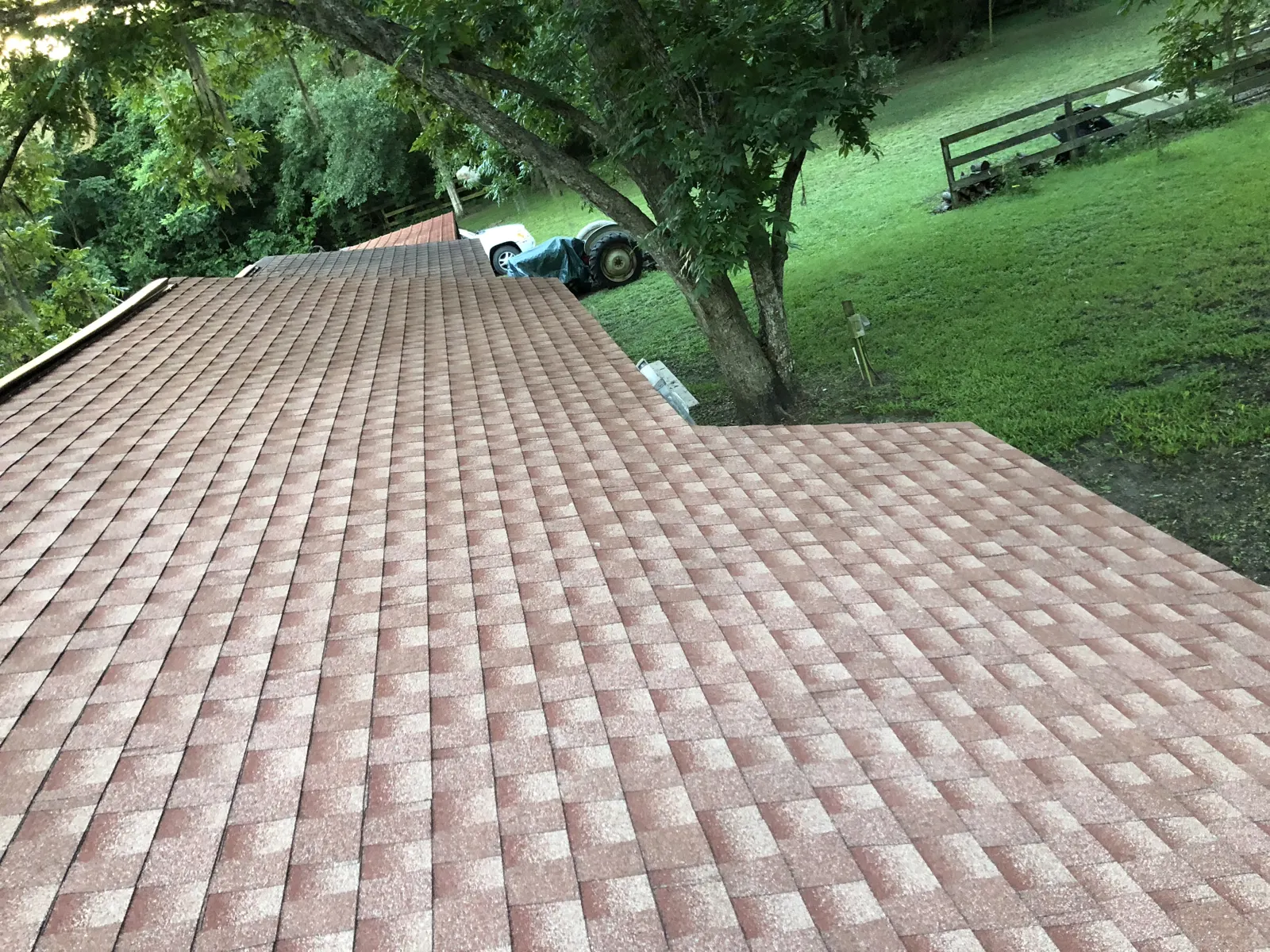
Years 1 through 6. Nothing to see. You get some initial granule shedding in the first rain or two, which is loose manufacturing granules and completely normal. Shingles seal down in the first warm spell after install. The roof looks new because it is.
Years 7 through 12. Color starts going slightly uneven, usually south and west slopes first because that is where the UV load is. If you look closely at the gutters in spring you might find a thin line of granules, still light. The sealant strips are fully cured and holding. This is the roof’s prime, and it is also the window where a small repair is cheapest and most worth doing.
Years 13 through 17. Granule loss becomes visible from the ground as patchy darkening, because you are starting to see the asphalt through thinning granule cover. Corners of individual tabs may begin curling on the most exposed slopes. Gutter cleanouts produce a noticeable pile of granules now. This is the point where wind events start pulling the occasional shingle, because the sealant strips are aging and the shingle has less flex to absorb a gust.
Years 18 through 22. The failure phase. Curling spreads, cracking appears across the field of the shingle rather than at edges, and exposed asphalt goes chalky gray. Nail heads start backing out as thermal cycling works them loose, and each backed-out nail is a puncture waiting to leak. Around chimneys and valleys the shingles get brittle enough that walking on them breaks them, which is why a repair at this stage often creates new damage. Most Chicago roofs are done somewhere in here.
Years 23 and up. You are on borrowed time and every winter is a coin flip. The shingles have little water resistance left and the only thing keeping your house dry may be the underlayment, which was never designed to be the primary layer. This is the roof that fails during a February thaw and takes a ceiling with it.
Why The South Slope Always Goes First
Walk any Chicago block in year 19 and you will see roofs where one plane looks fifteen years older than the other. That is not your imagination.
South and west-facing slopes take dramatically more UV hours and run hotter, so the asphalt loses its oils faster and hardens sooner. They also see more freeze-thaw cycles specifically because they warm above freezing on winter afternoons when a north slope stays frozen solid all day. A north slope in January might freeze once and stay frozen for two weeks. A south slope in the same period cycles ten times.
North slopes have a different problem: they stay damp, hold snow longer, and grow algae and moss in shaded spots, especially under a big silver maple. The black streaking you see is Gloeocapsa magma, a cyanobacteria that feeds on limestone filler in the shingle. It is mostly cosmetic early on, but heavy moss holds moisture against the surface and accelerates the mat breakdown underneath.
Practical upshot: judge your roof by its worst slope, not its best. When the south face is cracking at year 19 the whole roof is 19 years old, and replacing one plane leaves you doing the rest in four years with a visible color mismatch in the meantime.
Ventilation Is The Difference Between 17 Years And 24
Of all the factors that move the number, attic ventilation moves it most, and it is the one homeowners have actual control over.
A properly vented attic pulls cool air in at the soffits and exhausts warm air at the ridge, so the underside of the deck stays close to outdoor temperature. That does two things. In summer it keeps the shingle from cooking at 170 degrees from both sides at once, which meaningfully slows the asphalt aging. In winter it keeps the deck cold enough that snow on the roof does not melt, which is the entire mechanism behind ice dams.
Most Chicago houses are under-vented and a lot are vented wrong. The classic error is exhaust with no intake: somebody installs ridge vent or a few box vents, but the soffit bays are packed with blown insulation from a 1980s energy retrofit. With no intake, that ridge vent pulls its makeup air from the path of least resistance, which is usually your ceiling, and now you are exhausting heated indoor air through the attic. The other classic error is mixing systems, running both a ridge vent and gable vents, which short-circuits airflow so the ridge pulls from the gable instead of from the eaves and the far corners of the attic never move air at all.
The rule of thumb is 1 square foot of net free vent area per 150 square feet of attic floor, split roughly half intake and half exhaust, and closer to half at the eaves than at the peak. On a tear-off we open the eaves and check, add baffles where insulation is blocking the bays, and correct the balance. It is the cheapest lifespan you can buy, and it is why two identical roofs installed on the same block the same summer can be five years apart at the end.
What Cheap Installation Costs You In Years
Material quality matters less than most people think. Installation matters far more.
Nailing is the big one. Every architectural shingle has a nail zone, a narrow band usually about an inch tall, and the nail has to land in it. High-nailed shingles miss the layer above and hold by one lamination instead of two, so they blow off in the first serious wind event. Over-driven nails cut through the mat and leave a hole. Under-driven nails leave a head standing proud that telegraphs and wears the shingle above it. Four nails per shingle is code minimum; six is what Chicago wind deserves and what the manufacturer requires for the high-wind warranty.
Ice and water shield coverage is the second. Illinois roofs need membrane from the eave up past the interior wall line, which means two courses on most houses and three on a low pitch or deep overhang, plus full valley coverage. Cut that to one course to save a few hundred dollars and the first bad ice dam year puts water into your soffit.
Then there is flashing. Reusing old step flashing at a dormer wall because pulling siding is a hassle is the single most common shortcut in this trade, and it is why so many leaks show up at wall intersections on roofs that are otherwise fine. Same with counter-flashing at the chimney: a bead of roof cement smeared over an old joint is a two-year fix presented as a permanent one.
A well-installed 30-year shingle in Chicago gets you 22 or 23. A poorly installed one gets you 14 and a lot of shingle roof repair calls in between.
Repair Or Replace: The Honest Cutoff
People ask us to just fix the one spot, and sometimes that is the right answer. Here is how we decide.
- Under 15 years with localized damage. Repair, almost always. A wind-lifted section, a failed pipe boot, or damaged shingles around a chimney are worth fixing on a roof with real life left. Boots in particular are a $200 problem that people let become a $3,000 ceiling problem.
- 15 to 19 years, damage in one area. Usually repair, but we tell you where you are in the timeline so the replacement does not surprise you in four years. Color match is already imperfect at this stage because the existing roof has weathered.
- 19 to 22 years, or damage in multiple areas. Replacement is generally the better spend. Brittle shingles break when a repair crew walks them, so you pay to fix one area and create damage in another. Money into a roof at this stage is money you spend twice.
- Any age with widespread cracking, granule loss to bare asphalt, or backed-out nails across multiple slopes. Replacement. The failure is systemic and no patch addresses it.
- Storm damage at any age. Different track entirely. Get it documented before you touch it, because wind damage repair may be a claim rather than an out-of-pocket job, and creased shingles that have not blown off yet still count as damage.
Planning It On Your Schedule Instead Of The Weather’s
The worst version of this is the emergency version. A roof fails in a February thaw, water gets into a ceiling, and now you are hiring in a panic during the worst month of the year to be doing roof work, with whoever can come Tuesday.
The better version starts around year 16. Get a real look at the roof, know which slope is aging fastest, and put a rough year on the calendar. Then you get to pick your season, which in Chicago means late spring through early fall when sealant strips will actually bond in the sun rather than needing hand-sealing. You get to collect real numbers from two or three contractors without a deadline. You get to line up financing if you want it. And you get to schedule around your own life instead of around a leak.
A shingle roof replacement planned twelve months out costs the same as one done in a panic and goes considerably better. The only thing urgency buys you is fewer options.
What We Look At When We Come Out
An inspection at year 16 or 18 is a genuinely useful thing to have and takes about 45 minutes. We check granule loss at the gutters and on the field, flex a few shingles by hand to feel whether the asphalt has gone brittle, look at nail head position, check every flashing intersection, pull the pipe boots to see if the rubber has split, and get into the attic to look at ventilation, insulation coverage, and any staining on the underside of the deck.
Attic staining is the useful one, because it shows you leaks that have not reached a ceiling yet. Dark rings around nail penetrations mean condensation, which points at a ventilation problem rather than a roof problem, and those two get confused constantly.
You get photos of everything and a straight answer about where you are in the timeline. If you have six good years left, we will say six good years. Angelo does these himself and there is no closer riding along.
We work the whole Chicago metro, from Alsip and the south suburbs out through Cook County and into DuPage, Will, Kane, and Lake. Call (312) 590-4853 and we will pull the aerial measurement while you are on the phone and give you a range on the spot. Have a look at the roof photo gallery first if you want to see the workmanship, and when you are ready for real numbers the contact page reaches us directly.
Thirteen years in business, second generation, A+ with the BBB, and the same crew doing the work every day. If your roof has years left, that is what we will tell you. When it does not, get in touch and we will do it right the first time.